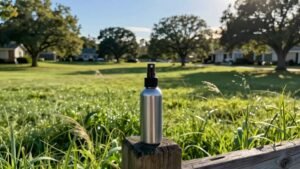

Fertilizer doesn’t kill weeds directly; it feeds the grass so it can outgrow and shade them. Nitrogen‑rich feeds boost turf vigor, creating a dense canopy that suppresses weed germination, but they can also increase weed biomass if nutrients are unbalanced. Herbicides are still needed for true weed control, and “weed‑and‑feed” blends combine a selective herbicide with fertilizer for that purpose. Proper timing, rates, and balancing nutrients keep your lawn healthy while minimizing weed pressure, and the next sections will show you how to apply both effectively.
Does Fertilizer Actually Kill Weeds? The Short Answer
Can fertilizer really kill weeds? No, standard grass fertilizer doesn’t. You apply nutrients—nitrogen, phosphorus, potassium—at a proper fertilizer application rate and timing to boost grass vigor, not to poison weeds. The evidence shows that healthy grass outcompetes weeds over weeks, but the fertilizer itself lacks toxicity. Weed death still requires herbicides; fertilizer alone won’t eliminate a clover patch or dandelion. When you use a weed‑and‑feed blend, the herbicide does the killing while the fertilizer feeds the grass, but that’s a dual‑action product, not a pure fertilizer effect. Stick to the recommended rate and schedule for ideal grass growth, and pair with targeted herbicides if you need actual weed control. Nitrogen also stimulates weed growth, making post‑emergent herbicides more effective. Vinegar’s acetic acid works as a natural weed killer by burning foliage without harming surrounding grass when applied carefully. Acetic acid can be used at a 30% concentration for a potent, natural herbicide. Hydrogen peroxide can be applied as a 3% solution diluted with water to scorch weed seedlings, offering an organic, chemical‑free alternative.
How Regular Fertilizer Impacts Weeds – Nutrients or Toxicity?
While fertilizer doesn’t poison weeds, the nutrients it adds can make them thrive. You’ll see higher weed density and biomass when soil nitrogen and phosphorus rise; Galium aparine can reach 138 plants m⁻² under N‑P regimes. Yet over‑application triggers toxicity: excess ammonia, salts, and micronutrients stunt growth, burn leaves, and even kill seedlings. To keep weeds in check, match rates to crop needs and avoid high‑ammonia blends. Flush excess fertilizer with water to push toxins beyond the root zone, and prioritize Controlling nutrient availability to weed uptake. Remember, controlling excess nutrient runoff protects water quality, while managing fertilizer toxicity effects on plants preserves crop health and reduces the unintended boost you give to weeds. Proper lawn fertilizer also soil health by delivering balanced nutrients that support microbial activity and root development.
How Nitrogen‑Rich Fertilizer Indirectly Suppresses Weeds
When you apply nitrogen‑rich fertilizer, you boost grass blade production and chlorophyll content, creating a denser, darker canopy that shades the soil and limits light for weed seedlings. The extra nitrogen drives photosynthesis enhancement, so each blade captures more sunlight and proliferates faster. Within 45 days the turf thickens, and potassium added alongside maintains turgor pressure, keeping blades upright for ideal light interception. Balanced nutrient ratios prevent a single element from becoming limiting, allowing the grass to sustain vigorous growth throughout spring and fall. This vigor outcompetes weeds for resources, suppressing seedling emergence without any chemical action. Consistent applications keep the canopy closed, denying weeds the light and space they need to establish. Soil testing ensures the correct nutrient balance for optimal turf health. Proper timing of fertilization aligns with the lawn’s seasonal growth cycles, maximizing nutrient uptake efficiency and further reducing weed pressure. Applying fertilizer at the recommended application rate helps avoid nutrient runoff and promotes uniform growth.
Why Plain Fertilizer Can’t Replace a True Herbicide
One key reason plain fertilizer can’t replace a true herbicide is that the two products serve fundamentally different functions, and their application methods reflect that distinction. Fertilizer must be spread over the whole lawn to balance nitrogen absorption dynamics, while herbicides are applied only where weeds grow, often less than 10 % of the area. This targeted use prevents the 20‑30‑fold excess pesticide load seen with broad‑leaf treatments. Granular fertilizer delivers uneven coverage; liquid versions lack any weed‑killing chemistry. Without an active herbicidal ingredient, fertilizer merely fuels grass growth and can even suppress microbial diversity impacts, weakening soil health. Separate, timed applications let you match herbicide windows to temperature cues, avoiding runoff, waste, and ineffective weed control. Liquid insecticides are generally more effective for kill and residual liquid insecticides. Proper timing and dosage are essential to protect nearby desirable plants and maintain environmental safety. Applying a thin layer of organic mulch can further inhibit weed emergence by blocking sunlight and conserving moisture. Pre‑emergent herbicides work by stopping seed germination, offering a complementary strategy to fertilizer‑based weed management.
What “Weed‑and‑Feed” Products Do and How They Kill Weeds
A typical “weed‑and‑feed” product packs a broadleaf herbicide—usually a phenoxy compound such as 2,4‑D, dicamba, or MCPP—right alongside a complete N‑P‑K fertilizer. When you spread the granules, they sit on the lawn for a 2‑3‑day fallow period, allowing herbicide absorption before you water. During that rest, the systemic ingredient infiltrates leaf tissue, moves through the vascular system, and reaches the roots, while contact components damage foliage. After the fallow, watering activates the fertilizer and completes herbicide uptake, ensuring full weed kill. The product targets dandelions, chickweed, clover, and other broadleaf species, sparing grass because the herbicide is selective. Follow label timing, keep the lawn slightly moist, and avoid spreading onto non‑target plants for maximized efficacy. This product is designed to cover up to 5,000 sq ft per bag. Selecting a tractor with suitable horsepower helps manage larger lawns efficiently. Active herbicide concentrations must be monitored to prevent damage to nearby ornamental plants. Applying a pre‑emergent weed‑and‑feed before seed germination can inhibit new grass growth.

Up to 2X more powerful dandelion and clover control (vs. previous formula)

Coverage: This 39 lb. bag of weed and feed lawn fertilizer provides comprehensive treatment for up to 15,000 sq. ft., delivering both fertilizer for grass and effective weed control in one convenient application
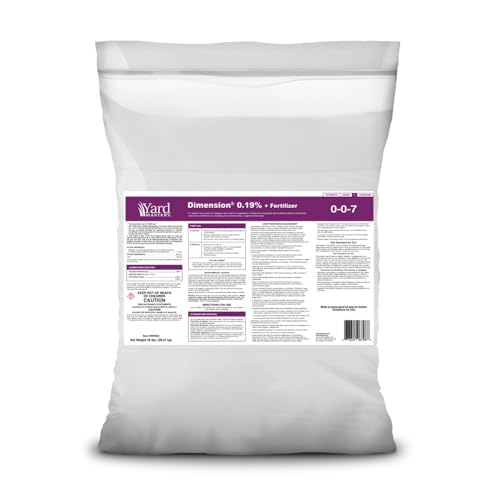
Prevents crabgrass and broadleaf weeds before they appear with Dithiopyr
Choosing Pre‑Emergent or Post‑Emergent Herbicides in Weed‑and‑Feed Products
Wondering whether to reach for a pre‑emergent or a post‑emergent blend in your weed‑and‑feed? Understanding pre emergent vs. post emergent treatments is essential. Pre‑emergents form a soil barrier at 55 °F, halting seed germination and blocking 80 % of crabgrass if applied before the spring window. They won’t affect existing weeds, so they’re useless on dandelions. Post‑emergents act on visible foliage, traveling systemically to roots; selective types spare lawns while non‑selective ones clear driveways. Apply post‑emergents mid‑season when weeds are actively growing, and wait 24–48 hours before mowing. Combining pre emergent and post emergent products gives you a two‑step defense: the pre‑emergent stops new seedlings, and the post‑emergent mops up escapes that slip through. Check labels for target species and chemical compatibility to avoid mishaps. Forsythia bloom signals when soil temperatures are right for crabgrass germination. Proper soil moisture levels help the herbicide absorb evenly and increase its effectiveness. Applying herbicide during a light rain can improve soil penetration and reduce runoff. The speed of weed control depends on whether the product is systemic or contact‑based, with systemic herbicides often showing visible results within a few hours.

Date stamped on packaging is the Manufacturing Date, NOT an expiration date.

STOP WEEDS BEFORE THEY START: This pre-emergent and post-emergent herbicide targets weed seeds just as they're germinating; Say goodbye to troublesome weeds like crabgrass and creeping charlie before they take over your lawn or garden

Mesotrione, a potent herbicide, immediately absorbs and starts working upon application, yet it may take 2-3 weeks for full weed death. Activation requires water; if no rainfall occurs within 10 days, apply 0.15 inches of water.
When to Apply Fertilizer and Weed‑Control for Best Results
If you want the most bang for your buck, time your fertilizer‑and‑weed applications to the grass’s active growth phases and the right weather windows. Your grass maintenance schedule should include a spring feed right after the first or second mowing—mid‑April to early June for cool‑season lawns, March to early June for warm‑season. Keep daytime temps 60‑90 °F, pick a calm, wind‑free day, and guarantee no rain for at least 24 hours. Early morning or early evening is best; avoid heatwaves and drought. In fall, apply early September through mid‑October, before soil cools; this strengthens roots and hits overwintering weeds. Limit applications to twice a year, spacing them at least two months apart. For newly seeded areas, wait two‑to‑three mow cycles before the first weed‑and‑feed. Proper timing of applications maximizes nutrient uptake and herbicide efficacy. Early spring fertilization supports leaf development and improves lawn density. Applying fertilizer when soil temperatures exceed 85 °F can cause nutrient burn and stress to the grass. Cool‑season grasses typically require less frequent feeding than warm‑season varieties.

One application prevents crabgrass all season long

3-IN-1 FORMULA: Scotts Turf Builder Triple Action1 is a three-in-one lawn fertilizer and weed control formula that kills listed lawn weeds, prevents crabgrass, and feeds grass to build thick, green lawns

Up to 2X more powerful dandelion and clover control (vs. previous formula)
Common Misconceptions About Fertilizer “Killing” Weeds
Timing your fertilizer and weed‑control applications is only half the battle; what follows is separating fact from the many myths that claim fertilizer alone can kill weeds. First, more fertilizer doesn’t equal better weed control. Excess nitrogen fuels grass but doesn’t target weeds; it can even disrupt the soil microbiome and create nutrient imbalances. Second, fertilizer lacks herbicidal action—there’s no evidence it directly kills weeds, and “weed‑and‑feed” mixes often miss targets or harm turf. Third, chemical fertilizers aren’t superior for suppression; they greening quickly but ignore balanced nutrition and microbial health that organic inputs provide. Finally, over‑application stresses grass, invites disease, and forces extra mowing without any weed benefit. Stick to balanced nutrition, test soil, and manage weeds with proper cultural practices. Applying 24D chemicals can increase the risk of cancer and canine malignant lymphoma. Boiling water can be an effective, chemical‑free method to kill weeds, providing a safe alternative to herbicide use.
Separate vs. Combined Fertilizer & Herbicide – Which Kills Weeds Better?
Because nitrogen fertilizer and herbicides peak at different times of year, applying them together usually hampers both nutrient uptake and weed control. You’ll find that pre‑emergent herbicides need 65‑70 °F air in early March, while warm‑season grasses shouldn’t see nitrogen until May. Mixing them wastes fertilizer and lets weeds establish. Separate applications let you follow diverse herbicide scheduling: water in pre‑emergent, wait, then fertilize; or apply a post‑emergent herbicide days after a synthetic fertilizer, letting the grass grow vigorously for better uptake. Organic fertilizers can share a day with post‑emergents because they need no watering. This separation gives you targeted weed control, avoids feeding weeds, and reduces drift risk to ornamental plants. Synthetic fertilizers must be watered in for effectiveness.

Designed to prevent weeds; will not aid in eliminating existing weeds. Prevents grassy and broadleaf weeds, including crabgrass, poa annua, goosegrass, henbit, and more.

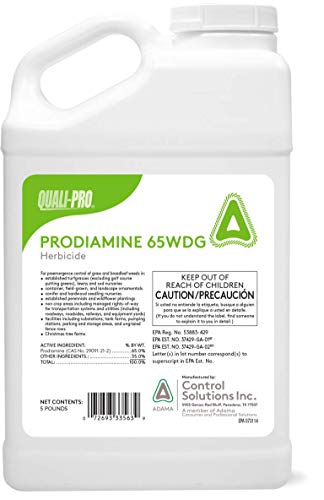
PRE-EMERGENT HERBICIDE: Quali-Pro's Prodiamine 65 WDG provides pre-emergent grass and broadleaf weed control. Flexible application allows for both spring and fall use providing season long crabgrass control. Available in a 5 pound bottle.
Quick Tips for a Healthy, Weed‑Free Lawn
Start by treating your lawn like a living system: keep the grass thick, healthy, and well‑fed, and weeds will struggle to gain a foothold. Apply a ¼‑inch layer of high‑quality compost each year, then top‑dress with compost tea every few weeks to boost microbes and nutrient availability. Mow at 3‑4 inches, never removing more than one‑third of blade height, and raise the cut in summer to shade weed seeds. Overseed bare spots in early fall, covering seed with straw to retain moisture. Water deeply but infrequently, and use slow‑release nitrogen fertilizer in spring and late fall. Integrate ground covers like clover for biodiversity enhancement, and employ integrated pest management—hand‑weeding, corn gluten meal, and vinegar sprays—to suppress weeds without chemicals. Ensure proper mowing height throughout the seasons to prevent weak growth that invites weeds.
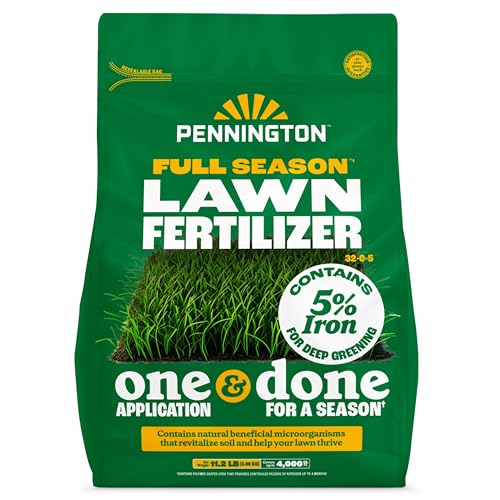
This spring lawn fertilizer is one application and done for a season

WHERE TO USE: Lawn fertilizer for grass can be used on any grass type

You don’t have to worry about streaks, stripes, or accidentally burning your lawn when you use Milorganite fertilizer!