
You’ll need roughly 150–250 lb of pure live‑seed per acre, but the exact amount varies by species and lawn goal. For Kentucky bluegrass, aim for 75–125 lb/acre for a new lawn, 40–65 lb/acre when overseeding, and up to 175 lb/acre for thin turf. Perennial ryegrass requires 30–40 lb/acre for a pure stand, 5–7 lb/acre in mixes, and about 435 lb/acre for a barren area. Adjust down if soil compaction is high or if budget constraints demand a lower rate, and you’ll see how seed‑to‑soil contact and method choice affect cost and coverage speed.
How Much Grass Seed Does an Acre Require?
To figure out how much grass seed you need per acre, start by converting the standard lawn‑establishment rate of 4–7 lb per 1,000 sq ft to an acre basis. Multiply 4–7 lb by 43.56 (the number of 1,000‑sq‑ft units per acre) to get 175–250 lb per acre for a generic mix. Adjust for species: Perennial Ryegrass 300–400 lb, Fine Fescue blends 250–350 lb, Kentucky Bluegrass 100–175 lb, Tall Fescue 15–20 lb, Creeping Bentgrass 23–67 lb. Factor seed availability by calculating bulk pounds needed to meet pure live seed (PLS) targets. Choose a seed application method—broadcast, drill, or hydroseeding—based on soil compaction, slope, and desired seed‑to‑soil contact, then apply the calculated weight uniformly. Seed spacing should be considered to ensure even coverage and optimal germination. Understanding soil pH helps optimize seed germination and lawn health. Selecting the right grass type for your climate zone maximizes establishment success.
Choose Your Grass Type and Define Lawn Goals
When you pick a grass species, match its seeding rate and growth characteristics to the specific lawn goals you have—whether you need high‑traffic durability, shade tolerance, or low‑maintenance aesthetics. Kentucky bluegrass delivers dense, high‑traffic turf at 2‑3 lb per 1,000 sq ft, but it thrives on well‑drained soils and demands moderate maintenance. Perennial ryegrass, 4‑5 lb per 1,000 sq ft, offers rapid germination for quick cover, yet it requires frequent mowing. Fine fescues excel in heavy shade and poorer soils at 4‑5 lb per 1,000 sq ft, with low maintenance requirements. Tall fescue tolerates drought and foot traffic at 5‑8 lb per 1,000 sq ft, fitting medium‑maintenance yards. Adjust mixtures—e.g., 65 % bluegrass, 20 % ryegrass, 15 % fescue—to align with soil conditions and the maintenance level you can sustain, ensuring ideal stand density and weed resistance. Selecting the right blend also helps achieve optimal soil compatibility for long‑term lawn health. The presence of essential nutrients in the seed coat supports early root development and disease resistance. A close‑up view of the seed’s tiny grain texture can aid in confirming you have the correct type before planting.

HIGH TRAFFIC GRASS SEED - It's great for backyards, sports fields, curb strips, or anywhere aggressive foot traffic from athletes, children, and pets occurs. Our cool-season grass seed mix contains tall fescues and perennial rye turfgrass varieties.
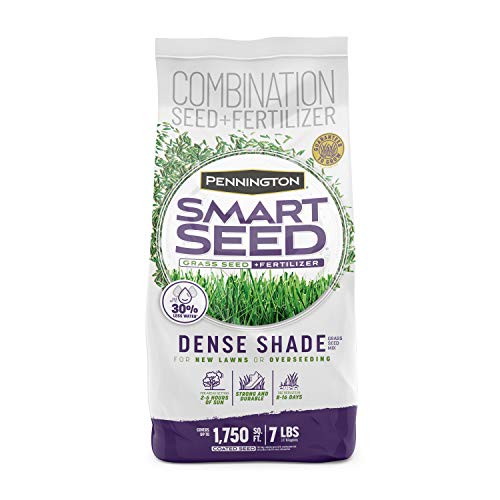
This shade grass seed is the perfect mix of Perennial Ryegrass, Kentucky Bluegrass, and Tall Fescue grass seed to thrive in shady conditions

FOR TALL FESCUE LAWNS: Scotts Turf Builder Grass Seed Heat-Tolerant Blue Mix combines kentucky bluegrass seed and tall fescue grass seed for lawns that resist extreme heat and features Root-Building Nutrition for a stronger lawn
Convert Live‑Seed Density to Pounds per Acre
The conversion from live‑seed density (plants per square foot) to pounds per acre hinges on three variables: target plant population, seed weight per thousand seeds (TSW), and the seed’s pure live seed (PLS) percentage, which combines purity and germination. First, calculate the total plants needed per acre (target population × 43,560). Divide that by the seeds per pound, which equals 453.592 g ÷ TSW_g, then apply the seed purity adjustment by multiplying the result by the PLS fraction (purity × germination). Finally, convert the adjusted plant count back to weight: (target × TSW_g) ÷ (Germ × Purity × 43,560 × 453.592). This yields the exact pounds of bulk seed required for the specified live seed density, ensuring precise drill calibration and ideal stand establishment. Grass seed origins illustrate how natural pollination and human cultivation have shaped the diversity of species used in modern agriculture. Proper storage of seed dry, cool conditions preserves viability and maximizes germination success. The high cost of quality seed is driven by genetic breeding expenses and rigorous testing.
Kentucky Bluegrass: Seed Need for New, Overseed, and Poor Lawns
If you’re planting Kentucky bluegrass, the seed rate varies sharply with lawn condition: new lawns demand 75‑125 lb/acre (≈2‑3 lb per 1,000 sq ft), overseeding calls for 40‑65 lb/acre (≈1‑1.5 lb per 1,000 sq ft), and thin or poor lawns push the upper end to 120‑175 lb/acre. For new turf, aim for 75‑125 lb/acre to achieve a seed germination rate of 14 days under optimal soil micronutrients. Overseeding at 40‑65 lb/acre supplies sufficient seed density without excessive competition, maintaining a 1‑1.5 lb per 1,000 sq ft ratio. Poor or thin areas require 120‑175 lb/acre, boosting seed count to close gaps quickly. Apply at 1/8‑1/4 in depth, water 1‑2 in, and maintain soil pH 6.0‑7.0 for maximal uptake of micronutrients. Grass plants also produce seeds that can be harvested for future sowing. The most reliable method for finding grass seeds in Terraria is to explore the surface layer of the world during spring, where they naturally spawn among grass tiles. Properly prepared soil improves germination and root development, especially when using a soil testing kit to confirm nutrient levels.

Kentucky 31 Tall Fescue is the original turf for your home
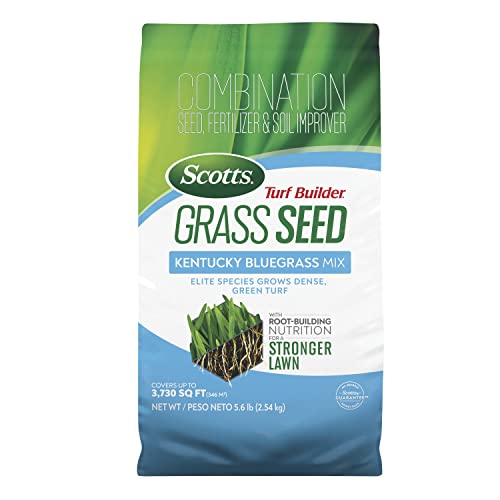
STRONGER LAWN FROM THE ROOTS UP: Kentucky Bluegrass seed with our Root-Building Nutrition, a combination of expertly crafted ingredients, helps establish deep roots to grow a thick, green lawn
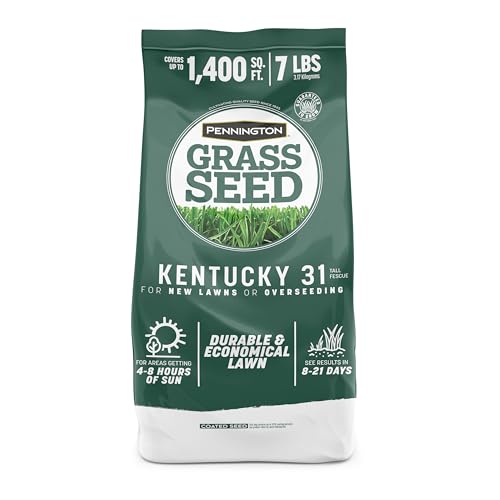
A grass seed for lawns that grows thick blades of grass that stand up to hot summers and heavy rains
Perennial Ryegrass: Seed Need for New, Overseed, and Poor Lawns
Because perennial ryegrass establishes quickly, its seeding rates differ markedly across lawn conditions. For a new, pure‑stand lawn you’ll need 30–40 lb / acre; if you seed alone in a mixed stand, apply 5–7 lb / acre. Barren new lawns demand 10 lb / 1,000 sq ft (≈435 lb / acre) for strong perennial ryegrass establishment. Overseeding an existing lawn calls for 5 lb / 1,000 sq ft (≈217 lb / acre) in late fall or early spring, with up to 5 lb / acre annually for maintenance. In mixtures, use 6–10 lb / acre, and in rye‑fine fescue blends apply 7–8 lb / 1,000 sq ft (300–400 lb / acre). Poor or barren sites require 10 lb / 1,000 sq ft (≈435 lb / acre) for erosion control, or double the broadcast rate on unprepared soils. These figures promote favorable perennial ryegrass maintenance. Some grass seed types, such as bluegrass, can be toxic to dogs if ingested. Proper soil preparation enhances seed‑to‑soil contact, improving germination rates.
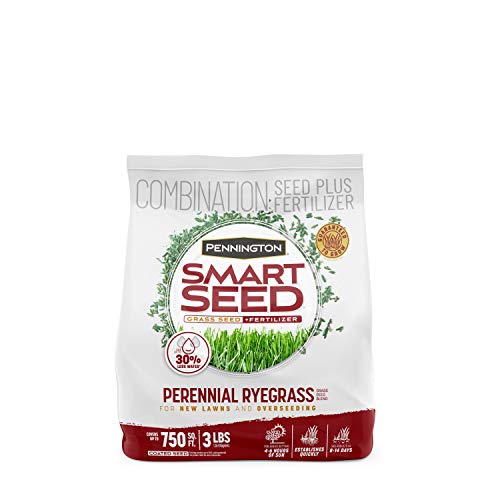
This lawn seed is great for areas getting 4 to 6 hours of sun
REGENERATING PERENNIAL RYEGRASS SEED BLEND: Combines innovative RPR technology and elite perennial ryegrass varieties to create a beautiful outdoor space year-round
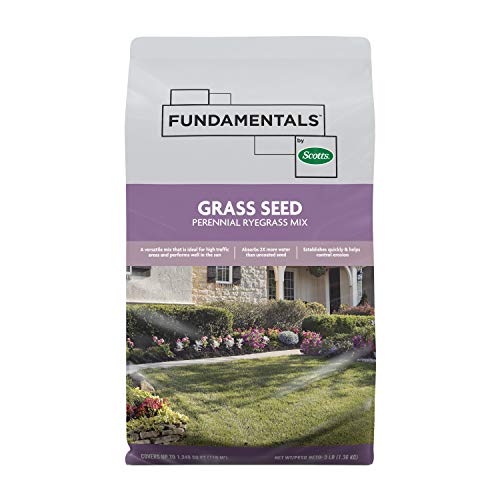
Grow a lawn in sunny and high traffic areas with Fundamentals by Scotts Grass Seed Perennial Ryegrass Mix
Tall Fescue & Fine Fescue: Acre‑Based Seed Requirements
Perennial ryegrass seeding rates set the stage for understanding tall and fine fescue requirements, which vary widely by use and mixture. When you plant new turf‑type tall fescue, apply 400‑500 lb / acre; for overseeding established lawns, reduce to 300‑400 lb / acre (≈4‑5 lb / 1,000 ft²). In forage or pasture, drill 15‑20 lb / acre or broadcast 20‑25 lb / acre. Mixes with legumes or other grasses lower the tall fescue seed rate to 4‑10 lb / acre, yielding total rates of 150‑250 lb / acre when fine fescue comprises 60 % of the blend. Fine fescue seed rate adjustments range from 125‑200 lb / acre for pure lawns to 150‑250 lb / acre in 60 % fine fescue mixes, using 200,000‑640,000 seeds per pound. These Tall fescue seed rate variances and Fine fescue seed rate adjustments let you fine‑tune acre‑based inputs for specific goals. Proper soil preparation is essential for successful germination, especially when optimal seed‑to‑soil contact is achieved. Using a lawn roller can help achieve even weight distribution across the surface. For best results, consider seed‑to‑soil contact during the spreading process.

Sun and shade grass seed for use in full sun to medium-shaded areas

NON-RETURNABLE NON-REFUNDABLE - All Grass Seed Sales are final

Advanced generation cultivators
Adjust Seed Amount for Soil Compaction and Budget Limits
When compacted soil limits seed‑to‑soil contact, you can cut the seeding rate in half and still achieve full coverage by applying the first half in one direction and the second half perpendicular, then water consistently; this is the core of seed amount modifications. Measure compaction level adjustments with a penetrometer: values above 2 MPa merit a 50 % reduction, while 1.5 MPa allows a 25 % cut. After core aeration, spread the reduced seed volume at the label’s throw rate, add 0.25‑0.5 in. compost, and water heavily for 24 h. If budget constraints prevent full aeration, apply the half‑rate technique alone; data show germination still exceeds 80 % when moisture is maintained. Track emergence, and if gaps appear, perform spot‑overseeding at the original rate. Using a thatch rake creates a fine, powdery soil texture that improves seed‑to‑soil contact. Properly timing aeration in early fall maximizes root development and overall lawn resilience. Adding a light top‑dressing of sand can further enhance drainage and soil aeration. Consider using a garden fork to manually break up compacted patches before seeding.
Speed vs. Cost: How Fast Do You Want Full Coverage?
If your soil’s compaction already limits seed‑to‑soil contact, you can now decide how quickly you need full coverage and balance that against cost. Standard rates (4–7 lb per 1,000 ft²) cost $70–$230 per 1,000 ft² and deliver acceptable turf quality within a 14–35‑day seeding timeframe. Raising density to 150 seeds/ft² (≈200–325 lb/acre) shortens canopy establishment by 2–3 weeks but adds material expense without yield gain. Premium blends cost more per pound and only marginally accelerate coverage. For steep slopes, increase to 60 seeds/ft² to meet erosion‑control deadlines. Overseeding costs 40–50 % less than new establishment, using 1–4 lb per 1,000 ft², but yields slower seeding timeframe. Choose the rate that aligns with your budget and desired turf quality.
Walk‑through: Using a Seed Calculator for One Acre
Since the calculator converts your acreage input directly into seed weight, you simply type “1” into the acreage field, confirm the 43,560 ft² baseline, and the tool instantly displays the required pure‑live‑seed (PLS) pounds, ounces, and cost for each species based on the seeds‑per‑square‑foot rates you entered. You then assign 10 seeds ft² to a sedge, 20 seeds ft² to a grass, and adjust percentages until the total reaches a balanced species mix of 30 seeds ft² PLS. The calculator multiplies each species’ seeds‑per‑pound factor, converts to ounces or pounds, and adds regional cost multipliers. Output shows precise PLS weight, cost per acre, and confirms the mix meets regional targets without manual arithmetic. Iowa Conservatism is higher for mixes that prioritize species with higher Conservatism Coefficients.

LAWN BARE SPOT REPAIR: Scotts PatchMaster Lawn Repair Mix Sun + Shade Mix is a combination mulch, seed, and lawn fertilizer product specifically designed to provide all-in-one bare spot repair and grass patch repair for lawns
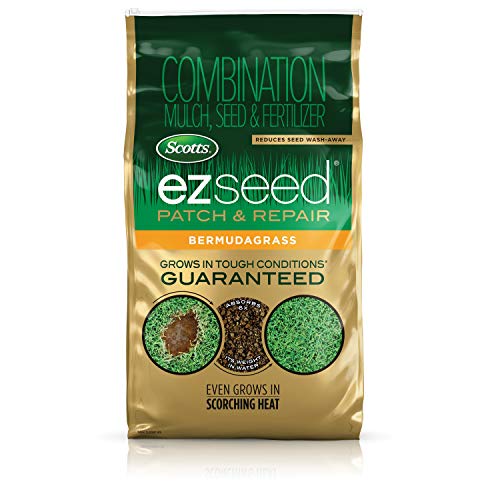
BERMUDAGRASS: Contains a combination of high performance grass seed for lawns, mulch that expands to surround the seed, controlled release fertilizer, tackifier to help keep seed from washing away and a protectant to help keep seedlings safe from harmful diseases

HEAT TOLERANT GRASS SEED - Our cool-season grass seed mix contains tall fescue and Texas bluegrass. This turfgrass mix performs best in full sun to lightly shaded growing conditions and has the ability to tolerate heat up to 100°F.
Common Mistakes to Avoid When Buying Grass Seed for an Acre
A common pitfall when purchasing grass seed for an acre is neglecting climate and light compatibility, which can reduce germination rates by up to 40 % if the chosen variety—such as Kentucky bluegrass in a hot, arid zone—doesn’t match regional temperature, precipitation, and sun‑shade patterns. You must verify seed‑type suitability for local weather and sun‑shade maps; otherwise you risk uneven sprouting. Conduct Soil pH optimization before seeding; test pH and amend only when results fall outside the 5.5‑7 range, avoiding unnecessary lime. Choose high‑germination, low‑inert seed from reputable manufacturers; bulk bin mixes often contain >90 % filler. Apply selective overseeding where light varies, and calculate exact acreage after excluding structures to prevent over- or under‑seeding. These data‑driven steps maximize yield and minimize waste. Accurate soil testing is essential to determine the specific pH adjustments needed.