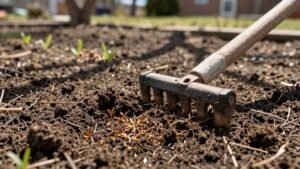

Yes, lawn fertilizers do expire, and the timeline depends on the type and storage. Granular synthetic blends stay potent indefinitely if kept dry, cool, and sealed, while granular organics lose effectiveness after 1‑5 years due to microbial activity and nitrogen loss. Liquid synthetics last 8‑10 years unopened but drop a year once opened; liquid organics degrade within weeks after water contact and up to two years unopened. Heat, humidity, and light accelerate breakdown, so proper containers and climate control are key. Keep reading to uncover how to extend shelf life and spot expired product.
Do Lawn Fertilizers Actually Expire? (Shelf Life Answer)
You might think a bag of fertilizer could go bad, but under proper storage the nutrients remain stable for years. Your fertilizer composition—whether synthetic mineral or organic—determines longevity. Synthetic granular fertilizers retain efficacy indefinitely when kept cool, dry, and sealed; their mineral matrix resists microbial decay. Granular disadvantages arise if moisture intrudes, causing clumping that reduces uniform spread, though dried granules stay usable. Organic granular blends, especially nitrogen‑rich ones like blood meal, degrade after 1–5 years because microbial activity and nitrogen loss accelerate in humid or hot conditions. Liquid synthetics persist at least eight years, but recommend use within three years to avoid sedimentation. Unopened liquid organics stay stable until water is added, yet lack chemical stabilizers, shortening practical shelf life. Proper containers and shaded storage mitigate degradation across all types. Weed killer expiration can be influenced by similar environmental factors. Using the wrong oil in a lawn mower can cause premature wear, especially because small‑engine oils have different viscosity requirements than automotive oils.
How Long Do Different Types of Fertilizer Last?
Fertilizer longevity varies dramatically across formats, so you’ll need to match storage practices to each type’s chemistry. Organic granular products last 1–5 years; nitrogen‑rich ingredients degrade faster with heat or moisture, and mold can appear if stored poorly, lowering nutrient value and affecting fertilizer application timing. Liquid synthetic solutions remain effective for up to 8 years unopened, but once opened they lose potency within a year, so monitor fertilizer leaching impact to avoid nutrient loss. Liquid organic emulsions (fish, kelp) are stable until water is added, yet after opening they deteriorate within weeks and persist only 2–4 weeks in soil, influencing leaching risk. Weed‑and‑feed blends retain efficacy 1–4 years, limited by herbicide decay. Microbial inoculants have the shortest shelf life, 6 months–2 years, requiring refrigeration to preserve viability. Proper nutrient balance supports root development and overall turf vitality. Apply fertilization during the optimal seasonal windows to maximize nutrient uptake and lawn health. Understanding soil nutrient cycles helps you time applications for the best results.
Why Can Granular Synthetic Fertilizers Be Stored Indefinitely (Shelf Life)?
Because the mineral salts in granular synthetic fertilizers are chemically inert, they don’t break down over time; as long as they stay dry and sealed, their nitrogen, phosphorus, and potassium content remains fundamentally unchanged. You can store these granules indefinitely by maintaining moisture‑free conditions, which prevents fertilizer crystallization prevention and protects the nutrient stabilization processes that keep the salts soluble. Use airtight, waterproof containers, keep the environment cool (below 100 °F) and dry, and avoid temperature swings that could cause clumping. When stored correctly, the formulation shows no measurable potency loss even after a decade, because the stable mineral salts lack biological or oxidative pathways that would otherwise degrade them. Proper timing of application during the early spring period maximizes nutrient uptake and promotes vigorous growth. Over‑fertilization can lead to nutrient burn, causing brown patches and weakened turf. Understanding soil pH helps ensure the fertilizer’s effectiveness across different lawn types.
What Is the 1‑5 Year Shelf Life of Granular Organic Fertilizers?
Granular organic fertilizers typically retain their efficacy for two to five years when kept dry, sealed, and cool. You’ll achieve the upper end of that range by maintaining ideal storage conditions: airtight containers, stable low temperature, and minimal moisture. Powdered humic formulations benefit from low water content, which suppresses microbial growth and makes them more stable than liquid organic fertilizers. In a Powder vs. liquid comparison, powders sustain nutrient integrity for up to five years, while liquids degrade after one to two years due to higher microbial activity and temperature sensitivity. Avoid air, pest, and moisture ingress; inspect seals regularly. Following manufacturer packaging guidelines guarantees the product remains effective throughout its advertised shelf life. Understanding the natural habitats of grass species can inform optimal storage practices for these fertilizers, especially when considering the role of seed pollination in nutrient cycles. The presence of essential amino acids in seed protein supports early root development and enhances nutrient uptake.

Package contains 16 Pounds organic all purpose plant fertilizer grains and is produced to avoid wasteful runoff, mess, hazards and smells

Package contains 4 Pounds organic all purpose plant fertilizer grains and is produced to avoid wasteful runoff, mess, hazards and smells

For more nutritious and tasty vegetables
How Do Liquid Synthetic and Liquid Organic Fertilizers Compare in Shelf Life?
A well‑sealed bottle of synthetic liquid fertilizer can stay usable for eight to ten years, especially when kept below 100 °F, whereas liquid organic blends typically lose potency within two years once opened and may remain stable up to five years only if unopened and stored at around 70 °F. Synthetic formulas retain nitrogen, phosphorus, and potassium in solution for decades, provided you keep the container cool, dry, and sealed. In contrast, organic emulsions depend on living microbes and natural polymers; exposure to air accelerates oxidation and microbial growth, so preventing air exposure for organics is essential. Stabilizing liquid fertilizers through airtight caps and temperature control extends life, but synthetics still outperform organics in shelf‑life durability under identical storage conditions. Regularly inspecting the container for signs of clumping can help detect early degradation.
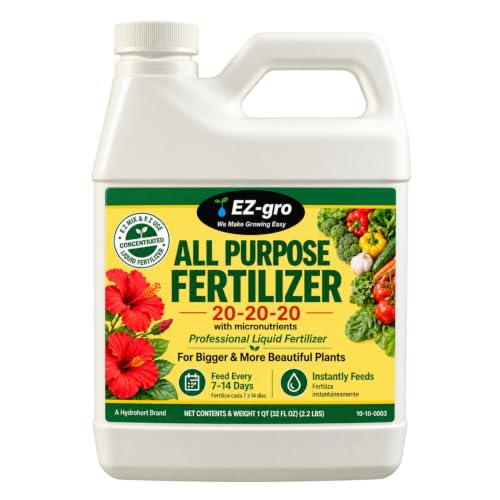
BALANCED 20-20-20 NPK FORMULA: Equal nitrogen, phosphate and potash, so one bottle covers leaf growth, root development and flowering instead of forcing you to buy three products. A 20-20-20 plant fertilizer and all purpose liquid plant food for anything you grow.

Tailored for Citrus – Specially formulated liquid fertilizer designed to support lush, upright growth and vibrant green leaves for all Sansevieria varieties.

🌿 Specially Formulated for ZZ Plants – Tailored liquid fertilizer designed to meet the nutritional needs of ZZ Plants, supporting balanced growth and deep green foliage.
What Happens to Weed‑and‑Feed Products Over Time (Shelf Life)?
Synthetic liquid fertilizers can linger for a decade, but the herbicide fraction in Weed‑and‑Feed blends starts to break down much sooner. You’ll see product potency decline after 1–4 years, depending on storage. The herbicide active ingredients oxidize and hydrolyze faster than the nutrient matrix, so the herbicide component drives the expiration labeling guidelines. Unopened containers retain efficacy longer, but once opened, moisture and temperature fluctuations accelerate degradation. Keep the product in its original, sealed packaging, store it cool and dry, and avoid direct sunlight. Rotate inventory, label each purchase date, and check the manufacturer’s expiration date before application. Discard any batch that has passed its labeled shelf life to avoid ineffective weed control. Timing and type of weed‑and‑feed are critical for seed safety. Scabiosa is a common lawn weed that can be managed with proper timing of the herbicide application. 2,4‑D is the primary active ingredient that targets broadleaf weeds such as dandelions.

Up to 2X more powerful dandelion and clover control (vs. previous formula)

KILLS TOUGH WEEDS: Apply our revolutionary 5-in-1 Weed and Feed formula to actively growing turf to target over 200 listed types of weeds, including hard-to-kill weeds like dandelions, clovers, and black medic

QUICK NITROGEN BOOST: Scotts Liquid Turf Builder with Plus 2 Weed Control is a weed killer and grass fertilizer for lawns that gives a quick boost of nitrogen while controlling weeds
How Do Heat, Humidity, and Light Reduce Fertilizer Shelf Life?
When heat, humidity, and light converge, they accelerate chemical breakdown and physical changes that slash a fertilizer’s usable life. Heat above 81 °F drives oxidation of ammonium nitrate and volatile nitrogen loss, while thermal cycles create condensation that raises moisture content. Humidity above 70 % forces hygroscopic salts to absorb water, prompting caking, clumping, and nutrient dilution; granular blends reach critical relative humidity faster, worsening flowability. UV exposure heats granules and decomposes nitrates into oxides, producing flammable gases and degrading trace elements. Together, these stresses shrink shelf life by altering chemical integrity and physical form. Effective caking mitigation hinges on strict storage conditions: cool, dry, dark environments with relative humidity 30‑40 % and temperatures below 81 °F. Particle size less than 1 mm also helps prevent caking. Applying a thin mulch of peat moss over newly seeded lawns can help retain moisture and protect seeds from temperature fluctuations, similar to how proper storage protects fertilizers. Moisture retention is a key benefit of this practice. A well‑prepared topsoil layer enhances seed‑to‑soil contact, promoting robust root development and a healthier lawn. Seed‑to‑soil contact is essential for successful germination.
What Are the Best Tips for Extending Fertilizer Shelf Life?
Keeping fertilizer indoor, dry, and properly contained is the single most effective way to preserve its potency. Choose a proper storage location that is non‑combustible, climate‑controlled, and elevated off the floor to avoid moisture ingress and mold. Use recommended storage containers such as airtight, waterproof buckets or sealed bags for opened granules; these prevent hygroscopic uptake and caking. Limit stacking height and keep bags away from eaves and beams to reduce water damage. Implement a first‑in, first‑out rotation system, buying only seasonal quantities to minimize long‑term exposure. Regularly inspect containers for seal integrity and maintain low humidity. These evidence‑based practices extend shelf life while preserving nutrient efficacy. seed viability is similarly affected by moisture and temperature, so storing seed in a cool, dry place with airtight containers helps maintain germination rates. Sharpening blades regularly improves cutting performance and reduces strain on the mower, just as blade sharpness enhances mower efficiency. Checking oil levels before each use helps ensure the mower runs smoothly and avoids engine wear.

Modular Design: Rubbermaid Storage Containers are compact and stackable, optimizing your kitchen storage space.

Contains (1) PrepSolutions Flour Keeper
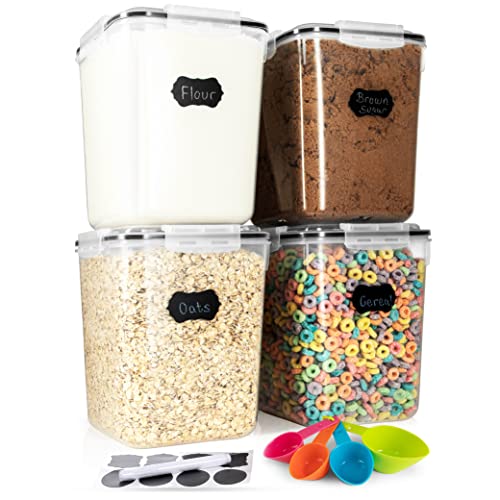
COMPLETE CONTAINER SET: This set comes with 4 premium large rice airtight containers (5.3L/179oz), a 4pc measuring scoop set, a chalkboard marker & 8 reusable labels. With this perfect bundle you will enjoy your organized pantry and perfect kitchen experience.
How Can You Tell If Fertilizer Shelf Life Is Over?
After storing fertilizer properly, you still need to verify whether it’s still viable before use. Inspect texture: granular material that clumps or hardens into a solid mass likely absorbed moisture; sedimented liquid that won’t remix after shaking signals chemical breakdown. Assess odor: any foul or off‑smell, especially in organic liquids, indicates decomposition or contamination. Examine color and surface: discoloration, mold, or visible pests reveal cross contamination concerns and biological decay. Check consistency: liquid that separates and remains uneven after vigorous agitation is expired. If any of these signs appear, discard the product. Proper fertilizer storage minimizes risk, but these observable changes are the definitive evidence that shelf life has ended. Battery aging can also reduce performance, so regularly checking voltage before use helps catch degradation early.
When Should You Replace Expired Fertilizer and What to Use Instead?
If you notice clumping granules, a foul odor, or separation in a liquid fertilizer, you should replace it immediately; the risk of uneven nutrient distribution, lawn burn, or diminished weed‑control efficacy outweighs any cost savings. Replace granular products when clumps persist after breaking them up, liquid fertilizers once opened, organic granules after 1‑5 years, weed‑and‑feed after 1‑4 years, and microbial inoculants after 6 months‑2 years. Use synthetic granular options such as Scotts Turf Builder, which retain potency indefinitely under proper storage techniques, or slow‑release granules for steady feeding. For liquids, choose unopened synthetic or organic emulsions that last 8‑10 years, and keep opened containers sealed and used within a year. Follow local disposal guidelines for expired material and rotate stock to minimize waste.

WHERE TO USE: Lawn fertilizer for grass can be used on any grass type
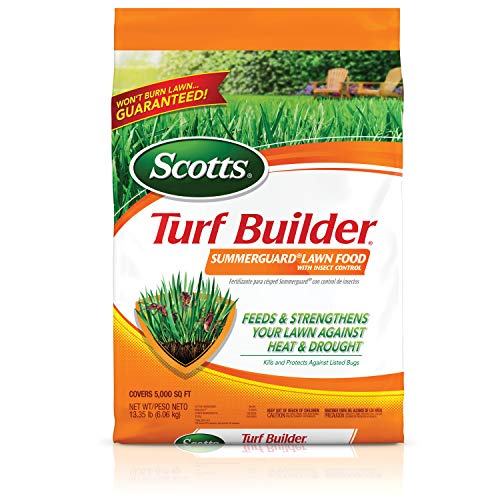
Feeds and strengthens your lawn against heat and drought

3-IN-1 FORMULA: Scotts Turf Builder Triple Action1 is a three-in-one lawn fertilizer and weed control formula that kills listed lawn weeds, prevents crabgrass, and feeds grass to build thick, green lawns