
You should start mowing when the grass reaches 3–4 inches and the soil temperature stays above 50 °F for cool‑season species or 65 °F for warm‑season types, and the ground feels firm under a foot‑press. Cut no more than one‑third of the blade, keeping the mower deck at 1.5–2 inches for cool‑season and 2–3 inches for warm‑season grasses. Make sure the soil is thawed and nighttime lows stay above freezing. Follow these steps and you’ll uncover detailed timing, height adjustments, and frequency tips for every region.
Identify Your Grass Type & Soil Temperature for Spring Mowing
A solid spring lawn routine starts with correctly identifying your grass type and checking soil temperature. You’ll examine the collar identification area, noting ligule form and auricle presence, then assess vernation patterns: folded in Kentucky bluegrass and perennial ryegrass, rolled in tall fescue and creeping bentgrass. For cool‑season grasses, look for a single prominent mid‑vein or multiple equal veins; warm‑season species display parallel veins and broader blades. Measure soil temperature 4 inches deep; cool‑season varieties resume growth at 50‑65 °F, while warm‑season types need 60‑65 °F sustained. Record these data before the first mow to match height recommendations to species and avoid stress. Perennial ryegrass germinates quickly, often within 3‑4 days. Proper seed selection, such as choosing a drought‑tolerant blend, can further enhance lawn resilience.
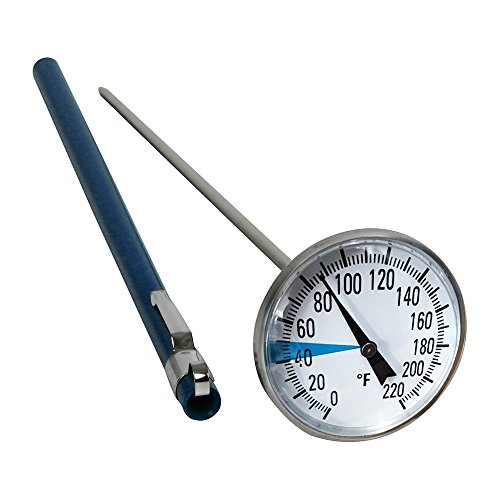
PRACTICAL SOLUTION - While other Soil Thermometers can’t tell the correct temperature, fogs up, and get broken easily, our soil thermometer has high precision performance, high-visibility, and is designed to last

【The Ideal 5-Inch Depth for Home Gardens & Compost Bins】Designed for All Passionate Gardeners! This probe is long enough to reach the active core of backyard compost piles and deep into soil for accurate readings, yet perfectly sized for raised beds and containers without the hassle of overly long professional stems.

ESSENTIAL SOIL THERMOMETER: A popular soil temperature probe thermometer which can be used in the garden or greenhouse prior to sowing and planting
Check Grass Height & Soil Conditions Before Spring Mowing
When you’re ready for the first spring mow, first verify that the grass has reached the 3‑to‑4‑inch range and that the soil feels firm and dry. Measure grass height with a ruler or tape; aim for at least 3 inches before cutting. Check soil firmness by pressing a foot or a probe; it should resist indentation. If the ground is soggy, delay mowing to avoid compaction and root damage. Consider soil temperature; warmer soil (above 55 °F) signals active root metabolism, supporting recovery after the cut. Assess lawn condition for signs of stress, weeds, or uneven growth, which may require targeted care before you trim. Remove no more than one‑third of the blade, keeping the first cut between 1.5 and 2 inches. Avoid mowing during extreme heat to protect the grass from stress. Proper aeration before seeding can also improve soil oxygen levels for healthier root development. Adding a layer of compost after aeration can further enhance soil fertility and promote robust grass growth.

Oregon Replacement Deck Leveling Gauge

Part Number:AM130907 490-900-0041 750-442 TY15272
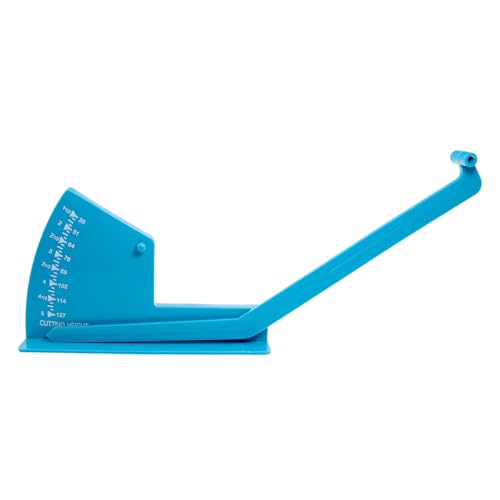
Practical material: High-quality blue plastic, resistant to seawater corrosion and outdoor environmental wear, suitable for long-term use in damp environments such as ships and docks, steady and long-lasting.
Pinpoint Regional First‑Mow Timing for Spring Mowing
After confirming grass height and soil firmness, pinpoint the exact week to start mowing by matching regional temperature thresholds to grass type. To determine ideal timing for first spring mow, check that cool‑season soils in northern states stay above 50 °F for several days and that warm‑season soils in southern states reach 65‑70 °F. Assess winter dormancy impact on mowing start by ensuring nighttime lows remain above freezing and that soil is fully thawed. In northern regions north of Colorado, aim for late April to early May when daytime temperatures hit the 60s and grass is about four inches tall. In southern states, begin late February to early March for warm‑season grasses, advancing to late March if soil consistently exceeds 65 °F. This precise alignment avoids cutting dormant grass and promotes vigorous growth. Wait until the soil is no longer soggy before mowing to reduce disease risk and sharp mower blade for clean cuts. Understanding the soil temperature range helps schedule mowing when grass is most resilient.

330105 Gold Blade Spring Set: Includes 6 sets of 330105 Adapted to mower blade springs for lawnmowers. The unique gold color not only prevents rust and corrosion but also enhances blade durability, easily handling various lawn types.

【Compatibility with】The 330105 mower blade spring is designed for seamless connection with Golden lawnmower power rake blades, ensuring alignment and secure installation without any modifications. The 330105 mower blade springs are easy to install, fit snugly, and ensure stable equipment operation.

[Compatibility]: Power rake replacement springs fully compatible with Maxpower 330105, compatible with Maxpower 16" dethatcher lawn mower blade, and also compatible with Arnold 490-100-0111 16 inch dethatching replacement mower blade
Follow the One‑Third Rule & Set Your Mower Deck for Spring Mowing
If you keep the mower deck set so the blade cuts no more than one‑third of the grass height, you’ll protect the lawn’s health while encouraging vigorous spring growth. Set the deck to 2–3 inches, allowing mowing to start when turf reaches 50 % above the target height. Sharpen blades before each season; dull mower blades tear foliage, increasing stress and yellowing. By cutting only one‑third, you minimize shock during mowing, preserving two‑thirds of blade tissue for photosynthesis and root development. Check blade sharpness after roughly 25 hours of use and resharpen twice yearly. If you must remove more than one‑third to regain height, lower the deck in small increments over several passes rather than a single deep cut. A sharp blade creates a clean cut that reduces disease risk and promotes faster recovery, especially when you follow the one‑third rule. Proper mowing frequency varies by grass type and season, so consult a growth‑rate chart to time your cuts for optimal turf density.

Multi-Function Convenience: Easily switch between mowing, trimming, and edging for three-in-one versatility with your string trimmer

3 tools in 1- easily converts 12" trimmer/edger to mower

Convertible Design: The removable wheeled deck allows quick transformation into a small lawn mower for versatile yard care
Adjust Mowing Frequency as Growth Accelerates in Late Spring
Because grass growth spikes in late spring, you’ll need to tighten your mowing schedule to every four to six days, adjusting the exact interval based on daily height measurements. Begin by measuring blade length each morning; when the cut exceeds one‑third of the desired height, note the date and plan the next cut. Maintain a log to monitor grass growth daily, then analyze trends: if heights increase by more than half an inch in two days, shift to a four‑day cycle; if growth steadies, a six‑day interval suffices. Account for weather—dry spells slow growth, allowing a brief extension, while warm, moist periods demand the shortest spacing. By aligning cuts with measured growth, you preserve turf density, prevent scalping, and keep the lawn resilient through the peak spring surge. Proper mowing height is crucial for root development and drought resistance, so aim for a cutting height that leaves at least one‑third of the blade intact. Understanding growth rate helps you fine‑tune the mowing frequency for optimal lawn health.

Efficient & Versatile Mowing - Our 21-inch lawn mower features 3-in-1 steel deck with mulching, side discharge and rear bagging and provides an extensive mowing path for efficiency. No choke, no primer design make it easy to start.

Easy Start Engine: The144cc 4-stroke OHV engine delivers a reliable balance of high performance and ease. Equipped with auto choke for easy start, and primer structure for better starting.

Keep Your Lawn Spotless: Unlike most lawn sweepers, our lawn sweeper has thickened and densified brushes to increase the overall sweeping force and prevent deformation. With a sweeping width of 21"/53.5 cm, it can pick up 80% of the debris in one pass.
Transition Your Mowing Height & Frequency for Summer (All Lawns)
Late‑spring’s rapid growth gives way to summer’s heat, so you’ll need to raise the cutting height for cool‑season grasses to 3‑4 inches while keeping warm‑season varieties at 1‑3 inches. Implement a cool season height increase to 4 inches for tall fescue and perennial ryegrass, and maintain fine fescue at 2‑3.5 inches. Apply a warm season height reduction, trimming Bermuda and Zoysia to 1‑2 inches. Observe the one‑third rule: never cut more than one‑third of blade length in a single pass, preventing stress and disease. Reduce mowing frequency to 2‑3 times per month, or every 5‑7 days for aggressive Bermuda. Schedule cuts early morning or late evening, sharpen blades before each session, and adjust timing for local heat and moisture conditions. Proper mowing height promotes deep root growth and enhances drought resilience. Applying a pre‑emergent at the right soil temperature can further protect the lawn from weeds. Seasonal moisture also influences how often you should mow, as cooler evenings can slow growth and allow longer intervals between cuts.