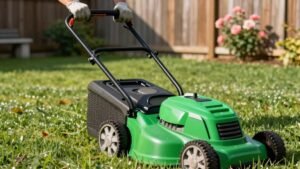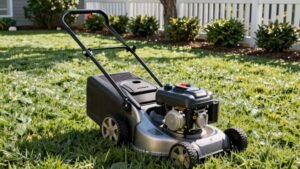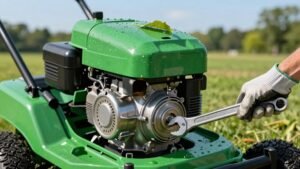

You’ll know it’s safe to mow early when soil temperatures stay steady at 50‑55 °F for cool‑season grass or 65‑70 °F for warm‑season varieties, the ground is dry and firm, and the blades have reached at least three inches. Check that the air is above 40 °F, avoid mowing after frost or when grass is damp, and cut no more than one‑third of the blade with a sharp mower. Following these cues guarantees healthy growth and prepares you for the next steps.
Early‑Spring Mowing Readiness Checklist: Signs Your Grass Is Ready
If the soil consistently sits at 50‑55 °F for cool‑season grasses—or 65‑70 °F for warm‑season types—your lawn has likely exited dormancy and is ready for its first mow. Verify active growth by feeling fresh green blades push through the brown base and noting a softer, less crispy texture underfoot. Perform a soil moisture assessment; the ground should be dry, not water‑saturated or squishy, and free of debris. Conduct a pre‑mowing fertilization if nutrient levels are low, applying a balanced starter fertilizer to stimulate root activity. Measure blade length: cool‑season grass should be about four inches, warm‑season about three inches, ensuring you’ll remove no more than one‑third of each blade. Confirm no frozen patches remain before you start. Friends and neighbors often notice the grass turning green while driving home, a sign that it’s the perfect time to begin lawn care. Proper timing also helps prevent soil compaction, which can weaken root development and reduce water infiltration. Avoid mowing when daytime temperatures exceed 90 °F for extended periods, as extreme heat can stress the grass and increase water loss.

FERTILIZER FOR NEW LAWNS: Scotts Turf Builder Starter Food for New Grass is a specially formulated starter fertilizer for grass seed that is designed to be used when planting new grass

Complete NPK Lawn Food: 16-4-8 is the perfect blend of key macronutrients. This lawn liquid food turf fertilizer also contains Seaweed & Fish.

10 MINUTE LAWN CARE: Get the job done fast, a 32 fl. oz. bottle of liquid grass fertilizer for lawns provides up to three separate 600 sq. ft. feedings in just 10 minutes
Early‑Spring Mowing Height Guidelines: Cool‑Season vs. Warm‑Season Lawns
When spring temperatures rise, you should set your mower to the species‑specific height range: cool‑season grasses thrive at 3–4 inches, starting around 3 inches and climbing to 3.5–4 inches by late spring, while warm‑season lawns perform best at 0.5–2 inches, often cut as low as 0.5 inch in early spring. Apply the one‑third rule to prevent stress: never remove more than a third of blade length. Tall heights promote deep roots, improve drought resistance, and shade soil, which mitigates soil moisture impacts and suppresses weeds. For cool‑season lawns, maintain 3 inches early, then increase to 3.5–4 inches; for warm‑season, start at 0.5 inch and raise to 1.5 inches as growth accelerates. Adjust height based on grass health considerations and current moisture levels to avoid scalping and disease. Sharp blades are essential to prevent fraying and yellow tint, reducing stress and disease risk. Keeping blades sharp also ensures a cleaner cut, which helps weed seed spread and promotes a healthier lawn. A sharp blade creates a clean cut that minimizes tissue damage and encourages faster recovery. Proper mowing timing enhances root development and supports overall lawn vigor.
Early‑Spring Mowing Weather & Temperature Triggers for Safe Cutting
Wondering when you can safely start mowing? Check soil temperature 2‑4 inches deep; cool‑season grasses need 45‑55 °F (target 50‑55 °F) and warm‑season grasses need 60‑70 °F (optimal 65‑70 °F). Require readings stay consistent for several days, not just a single warm afternoon, and guarantee air temperature stays above 40 °F. Once soil and air temperatures meet those thresholds, validate soil moisture requirements: the ground must be firm, fully thawed, and dry enough to support mower weight without ruts or compaction. Avoid mowing after frost, snowfall, or when grass is damp. These temperature and moisture triggers align with growth cycle management, confirming that roots are active and the lawn can tolerate cutting stress.
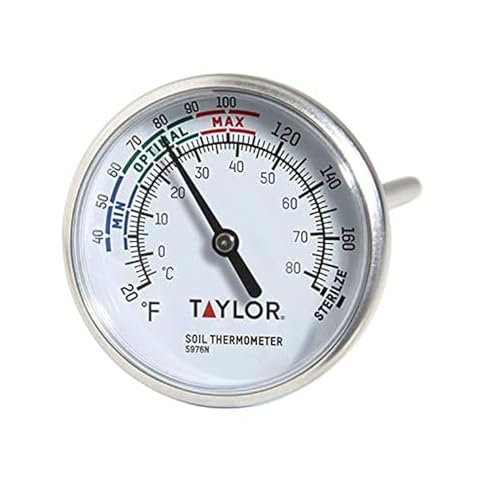
PRECISE SOIL TEMPERATURE READINGS: Measures soil temperatures from 20 degrees F to 180 degrees F (0 degrees C to 80 degrees C) with a large, easy-to-read analog dial face - no batteries or digital screens needed for reliable results every time

Easy-to-read green, yellow, and red tick marks for easy monitoring

Monitor soil temperature for healthy seeding, planting and gardening
Best Time of Day & Regional Calendar for Your First Mow
You’ll want to schedule your first mow for mid‑morning, roughly between 8 a.m. and 10 a.m., when the sun has risen enough to dry the dew and the temperature is stable, reducing stress on the grass. This window maximizes drying, mitigates dealing with wet conditions, and preserves turf integrity. In southern zones, target late March to early April; in intermediate zones, aim for mid‑late April; in northern zones, plan for late April to early May. Align the calendar with the 3‑inch grass height threshold and confirm firm soil before cutting. Mid‑morning light reduces mower clogs and blade wear, while stable temperatures aid optimizing equipment performance. Late‑afternoon (4‑6 p.m.) serves as a secondary slot if morning conditions deteriorate. Properly assessing grass growth rate ensures you cut at the optimal height. Avoid mowing when temperatures consistently exceed 90 °F to prevent turf damage. Even a brief rain shower can create wet grass that increases slippage and risks engine moisture damage.

[EFFORTLESS MOWING FOR SMALL TO MID-SIZED YARDS] Ditch the heavy gas engines and tangled cords. Powered by a robust 5.0Ah lithium-ion battery, this cordless lawn mower effortlessly tackles lawns up to 2,800 sq. ft. on a single charge. Its 14 inch cutting deck is specifically designed for quick, maneuverable yard maintenance, making weekend lawn care a breeze rather than a chore.
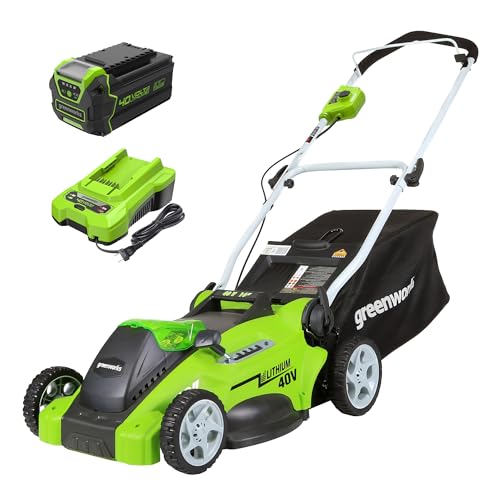
[16" LAWN MOWER] - This 40V lawn mower cuts up to 1/3 acre with fully charged 4.0Ah battery (varies based on grass condition and operator technique)

Multi-Function Convenience: Easily switch between mowing, trimming, and edging for three-in-one versatility with your string trimmer
Early‑Spring Mowing Mistakes, How to Fix Them, and Prevention Tips
Typically, early‑spring mowing errors stem from misreading soil moisture, cutting height, and equipment condition, which together can compromise turf health. You must verify proper soil moisture by walking lightly; if footprints linger, postpone raking and mowing. Cut no more than one‑third of the blade, keeping the mower set at 3‑4 inches for the first few passes, then lower gradually. Inspect blades before the first cut; dull edges tear grass, creating ragged tips that invite disease, so sharpen or replace them. Avoid mowing wet grass, as it compacts soil and spreads pathogens. Water deeply once daily in the morning, not shallowly or in the evening, to encourage deep roots. These healthy mowing habits prevent compaction, weed invasion, and fungal outbreaks. Balancing mower blades also reduces vibration, leading to a smoother cut and less wear on the engine. Mowing in the early season can also reduce fuel consumption by minimizing the number of passes needed. Always wear protective gear such as safety glasses and sturdy shoes to guard against debris and accidental cuts.
Post‑Early‑Spring Mowing Frequency: From Bi‑weekly to Weekly
After fixing early‑spring mowing mistakes, you’ll need to adjust how often you cut as growth accelerates. Move from a bi‑weekly to a weekly proper mowing schedule based on growth rate when daytime temperatures consistently exceed 50–60 °F and grass reaches the one‑third height threshold. Monitor factors influencing mowing frequency: temperature, rainfall, soil moisture, fertilization, and grass type. Cool‑season species may stay on a 7‑10‑day cycle until mid‑spring, then shift to every 4‑6 days; warm‑season varieties typically require weekly cuts at 1–2.5 inches during peak growth. Reduce frequency during dry spells, raise blade height to retain moisture, and resume weekly mowing once growth accelerates. This dynamic schedule guarantees dense, healthy turf while preventing scalping. Even‑day mowing helps avoid cutting wet grass that can cause stress and disease. Understanding soil temperature is essential because it directly influences root activity and grass growth rates. Applying fertilizer when soil temperatures exceed 85 °F can lead to nutrient burn and reduced uptake. Adjust mowing frequency according to regional climate zone variations to match local growth patterns.