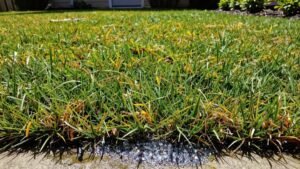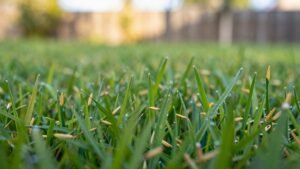

You’ll see nitrogen spikes chlorophyll, lifting leaf greenness by up to 30 % and driving rapid shoot growth. Phosphorus fuels root cell division, deepening the root zone and boosting water uptake, while potassium stabilizes cell membranes, reducing drought‑induced wilting. Together they replenish N‑P‑K, improve soil aeration, stimulate microbes, and increase water‑holding capacity. The result is a lush, uniform turf that resists stress, sequesters carbon, and can raise your home’s resale value. Keep going to uncover the exact application steps.
What Lawn Fertilizer Does for Soil and Grass
When you apply lawn fertilizer, it immediately supplies the macronutrients—nitrogen, phosphorus, and potassium—that drive chlorophyll synthesis, amino‑acid production, and stress tolerance, respectively. The nitrogen boost raises leaf chlorophyll content by up to 30 %, delivering greener, faster‑growing blades. Phosphorus fuels root cell division, deepening the root zone and enhancing water uptake, while potassium fortifies cell membranes, reducing drought‑induced wilting. Micronutrients such as iron, zinc, and nickel tighten enzymatic pathways, improving overall vigor. Simultaneously, the granular matrix creates micro‑pores that increase aeration, allowing oxygen to reach deeper soil layers. This environment stimulates earthworm activity, which further aerates the profile and accelerates organic matter breakdown, producing a more resilient, dense lawn. Applying fertilizer in the early spring maximizes nutrient uptake during the active growth phase. Proper timing during late spring supports sustained growth as temperatures rise. Understanding your lawn’s soil pH helps select the most effective fertilizer formulation.
How Lawn Fertilizer Improves Soil Nutrition and Structure
Applying fertilizer does more than boost leaf chlorophyll; it reshapes the soil’s nutrient pool and physical framework. When you add a balanced granular or organic blend, you replenish nitrogen, phosphorus, and potassium that soil otherwise loses, keeping the nutrient solution above the 20 mg kg⁻¹ threshold needed for ideal turf vigor. The added nutrients stimulate root proliferation, which in turn creates a denser network that binds mineral particles into stable aggregates, improving pore space and aeration. Simultaneously, organic matter preservation promotes microbial activity enhancement, supporting earthworm populations and nutrient‑cycling microbes. These organisms break down organic residues, releasing slow‑release nutrients and fostering a resilient structure that resists erosion and improves water retention. Proper timing of fertilizer application ensures nutrients are available during peak growth periods, maximizing lawn health and reducing waste. Observing yellowing grass can signal a nitrogen deficiency that a targeted fertilizer blend can correct. Selecting the appropriate application rate based on soil test results helps avoid over‑application and protects beneficial soil organisms.
How N‑P‑K Create Lush Green, Rapid‑Growing Grass
If you supply the right N‑P‑K blend, nitrogen spikes chlorophyll production, delivering the deep‑green hue you see in healthy turf, while phosphorus fuels the energy transfer needed for robust root and shoot development, and potassium stabilizes cell pressure to keep growth uniform and stress‑resilient. You’ll notice uniform color enhancement because nitrogen alone can increase leaf chlorophyll up to 50 % and boost shoot density. Phosphorus provides the ATP needed for cell division, preventing stunted growth and ensuring each blade expands at the same rate. Potassium regulates stomatal opening, which translates to consistent height and density across the lawn. By maintaining a targeted nutrient balance—such as a 3‑1‑2 ratio—you achieve rapid, even turf establishment, maximizing both visual appeal and biomass production. Applying fertilizer when soil temperature reaches 30 °F ensures optimal nutrient uptake. Avoid applying fertilizer when soil temperatures exceed 85 °F to prevent nutrient burn and stress.
How Lawn Fertilizer Builds Deep Roots and Boosts Drought Tolerance
Deep‑root fertilization drives nutrient delivery straight to the 12‑inch zone where most roots actively absorb, and the balanced 10‑8‑8 blend—rich in phosphorus for cell division and potassium for stress resilience—sparks root elongation by up to 30 % compared with surface applications. You apply it in spring or fall, injecting 8‑14 inches deep to hit the true root bottom and avoid excess top growth. Phosphorus fuels cell division, while potassium fortifies membranes against drought stress. Deeper roots tap subsoil moisture, store carbohydrates, and improve Roof zone health. The deeper profile also stimulates microbial activity stimulation, enhancing aeration and nutrient turnover. Resulting root systems access hidden water reserves, increasing drought tolerance by 20‑40 % and reducing irrigation needs. Proper aeration before seeding creates soil channels that further improve water infiltration and root establishment. Adding a light layer of compost on top can enhance soil structure and support beneficial microbes. Aeration also creates air pockets that promote deeper root growth and improve overall soil health.
How a Healthy Lawn Increases Home Value and Reduces Environmental Impact
A well‑kept lawn can lift your home’s resale price by roughly 15 %–20 % and cut the time it spends on the market, according to multiple studies. Data show that well‑maintained landscaping adds 5.5 %–12.7 % price advantage, and some economists estimate up to a 28 % boost in overall home appreciation. A lush front yard creates an immediate halo effect, leading buyers to infer interior quality and accelerating sale velocity. This perception spillover raises neighborhood property values, as adjacent homes benefit from the collective curb‑appeal uplift. Environmentally, dense vegetation sequesters carbon, reduces runoff, and provides shade that lowers cooling costs, extending the long‑term worth of both your property and the surrounding community. Moreover, a consistently mowed lawn can improve soil health by promoting root development and enhancing nutrient absorption. Aeration also relieves soil compaction by creating channels that allow water, air, and nutrients to reach deeper root zones. Spring aeration promotes enhanced root growth by increasing oxygen availability in the soil.