
Seed your grass as soon as the soil consistently hits 50 °F (10 °C) at a 2‑inch depth and the forecast shows no nighttime freezes for several days. Aim for sustained daytime highs of 60‑70 °F and keep the seedbed damp with light, frequent watering. Choose a cool‑season blend for 50‑65 °F soil or a warm‑season mix if soil stays 65‑70 °F and daytime highs reach 80 °F. Follow regional calendars, prepare the soil, and protect seedlings—continue for tips on fertilizing, mowing, and avoiding common mistakes.
Determine Ideal Soil Temperature for Spring Seeding
Wondering when your lawn’s soil is ready for spring seeding? You need soil at 50 °F or higher at a 2‑inch depth for cool‑season grass germination, with the ideal range of 50‑65 °F. Use a soil thermometer or an online tool like GreenCast to get precise readings for each zone of your yard, noting that shady spots stay cooler. Measure soil moisture concurrently; adequate moisture prevents the soil from overheating and improves seed‑soil contact. Keep a daily log of air temperatures; sustained daytime highs of 60‑70 °F usually indicate the soil is within the target band. Meanwhile, monitoring frost risk is critical—avoid seeding until the forecast shows no freezes below 32 °F for several nights, as light freezes can kill emerging seedlings. This data‑driven approach guarantees you seed at the exact moment the soil supports rapid germination. Soil acts as a strong insulator, taking time to warm up even after air temperatures rise. Applying a light layer of mulch after seeding can conserve moisture and suppress early weed competition. Optimal germination temperature is crucial for maximizing seed viability and establishing a healthy lawn.
Pick Cool‑Season or Warm‑Season Grass for Spring Seeding
Choosing the right grass type hinges on your climate zone and the temperature window you can guarantee for seed germination. If your region stays between 50–65 °F in early spring, a cool‑season blend (fescue, ryegrass, bluegrass) will germinate quickly and thrive in moderate air temperatures (60–75 °F). Assess nutrient requirements: cool‑season grasses need balanced nitrogen and phosphorus for rapid leaf development. In contrast, if soil consistently reaches 65–70 °F and daytime highs approach 80 °F, select a warm‑season species (Bermuda, Zoysia, Bahia). These C₄ grasses demand less nitrogen but benefit from higher potassium for drought tolerance. Consider local precipitation patterns: cool‑season lawns rely on steady spring rains, while warm‑season lawns exploit early summer showers to establish deep roots before peak heat. Avoid mixing types unless you plan overseeding in intermediary areas. Successful spring seeding also depends on soil pH to ensure optimal nutrient uptake. Proper seed‑to‑soil contact is essential for moisture retention and germination success. Apply a thin layer of peat moss at ¼ to ½ inch depth to protect seeds and retain moisture.

This pack of lawn seeds is ideal for new lawns, overseeding and lawn repair

APPLICATION: Apply this sun and shade grass seed in the spring or fall to grow a new lawn or overseed an existing lawn to thicken grass and help crowd out weeds

PERFECT FOR FALL SEEDING - Our cool-season grass seed mix is formulated for successful fall seeding projects. The grass seed varieties are bred to perform especially well when seeded during the fall planting season of mid-August through mid-October.
Follow Regional Planting Calendars for Spring Seeding
Tap into your local planting calendar and you’ll pinpoint the exact weeks when soil temperature, frost risk, and moisture align for successful spring seeding. In cool‑season zones, target mid‑March through early April; guarantee soil reaches 50‑65 °F and air hovers 60‑75 °F. In changeover zones, shift to the Labor‑Day window, and in warm‑season areas, aim for mid‑April to mid‑May (California) or late May to June (Arkansas). Use USDA zone data—Gaithersburg (7a) shows supreme spring weeks from mid‑March to late April. Continually monitor spring soil moisture and adjust irrigation to keep the seedbed consistently damp. Manage spring weather conditions by tracking forecasts, delaying seeding if a late frost is projected, and protecting germinating seedlings with row covers when temperature swings occur. This precise timing maximizes germination rates and reduces weed competition. Cool‑season grasses germinate best at soil temperatures of 50‑60 °F. Incorporate a soil test before planting to tailor fertilizer applications for optimal nutrient availability. Consider the regional rainfall pattern when planning irrigation to ensure adequate moisture without overwatering. A well‑drained soil texture promotes deeper root development and improves seed‑to‑soil contact.
Prepare Soil for Spring Seeding Success
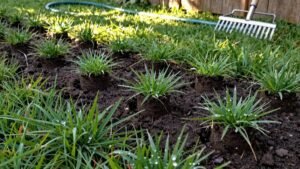
When you clear away winter debris, dead grass, and thatch, you expose a clean, even seedbed that lets new grass make direct contact with the soil, which is essential for rapid germination and strong root development. Next, aerify compacted soil by using a garden rake or rotary tiller to loosen the top 6 inches, creating 2‑3 inch deep grooves that improve oxygen flow. Core‑aerate severely compacted zones, then verticut to slice grooves that guarantee seed‑soil contact. Conduct a spring soil test, adjust pH to 6.0‑7.0 with lime or sulfur, and apply a starter fertilizer as recommended. Incorporate organic amendments—spread 1‑2 inches of compost or a thin topsoil layer, then blend 4‑6 inches deep with a rototiller. Avoid tilling when the ground is wet to prevent structure degradation. Soil temperature should be monitored because it drives seed germination more than calendar dates. Proper seeding rate calculations ensure you purchase the right amount of seed for uniform coverage. Using a seed‑to‑soil contact approach maximizes germination efficiency. A well‑calibrated spreader helps achieve even coverage and prevents seed clumping.
Water for Spring Seeding Germination
If you water the soil a few days before seeding, you’ll saturate the top 6‑8 inches, creating a moist medium that lets the seed’s screwdriver‑like root tip penetrate easily and distributes starter fertilizer nutrients uniformly. Use a fine‑mist irrigation equipment set to a low flow to avoid runoff and support water conservation. During germination, apply water 2‑4 times daily for 5‑10 minutes, or 2‑3 times daily for 10‑15 minutes, keeping the top 1‑1.5 inches consistently moist. Aim for ⅛‑¼ inch per day, totaling 3‑4 inches weekly. Water early in the morning, add a second evening session, and increase frequency on hot, windy days. Once seedlings emerge, reduce to once daily for a week, then shift to deeper, less frequent watering to promote robust root development. Ensure the soil remains consistently moist to prevent seed desiccation. Maintaining light, frequent watering during the first two weeks helps prevent the soil from drying out between applications. Proper watering after mowing also reduces disease risk by flushing away fungal spores that could otherwise colonize stressed grass. Adjust watering based on soil type to avoid over‑ or under‑watering.
Control Weeds During Spring Seeding
Keep weeds at bay during spring seeding by carefully timing and targeting herbicide use, because any pre‑emergent that contacts fresh seed will stop the grass from sprouting. Mark seeded zones with straw or light mulch, then apply a pre‑emergent only to surrounding areas. If you must protect the seedbed, use a corn‑gluten organic herbicide application that contacts foliage, not soil, and avoid soil contact. For post‑emergent weed control, treat broadleaf invaders after the new grass has been mowed twice, using a selective spray that spares the young turf. Spot‑seed by skipping pre‑emergent on marked zones, and consider Tenacity for limited pre‑emergent activity that won’t inhibit germination. Maintain a mower height of 3‑4 inches to promote dense growth that naturally suppresses weeds. Hand‑pulling is effective for small broadleaf infestations. Apply the herbicide when the soil temperature is 15 °C to maximize effectiveness. Always wear appropriate personal protective equipment to prevent exposure to herbicide residues.
Fertilize and Mow After Spring Seeding
Need to you your lawn thriving after spring seeding, start fertilizing and mowing at the right milestones. Apply a starter fertilizer application before sowing, using a broadcast spreader calibrated to the lawn’s square footage. Lightly rake the soil, seed, then water thoroughly to dissolve nutrients. Follow a post seeding maintenance schedule: at 30 days, deliver a second starter fertilizer to boost root density; at 4–6 weeks, switch to a high‑nitrogen turf feed to support early mowing. Begin mowing once the turf is 4–6 weeks old and forms a dense stand, cutting no more than one‑third of blade height. Continue mowing every 5–7 days, syncing each pass with watering and the next fertilizer interval. This regimen guarantees vigorous growth, weed suppression, and a resilient lawn. Balanced mix of nutrients ensures the young grass develops quickly and establishes a solid foundation. Proper soil testing before application helps you choose the optimal N‑P‑K ratio for your specific lawn conditions. Timing the fertilizer is crucial to align nutrient availability with the grass’s active growth phase. Applying fertilizer during the optimal seasonal window maximizes nutrient uptake and promotes a greener lawn.
Avoid Common Spring Seeding Mistakes
After fertilizing and mowing at the right milestones, the next step is to sidestep the pitfalls that can sabotage a spring‑seeded lawn. Choose a seed type matched to your climate and soil; tall fescue usually yields the best profile lawn health in spring. Test pH and nutrient levels, then amend the soil to avoid compaction impacts and remove thick thatch that blocks seed‑to‑soil contact. Apply the exact seeding rate—35‑70 g/m² for overseeding—using a calibrated spreader to prevent dense clumps or gaps. Seed when soil temperature consistently reaches 60 °F, and avoid pre‑emergent herbicides that kill germinating seed. Lightly rake to embed seeds at a depth no deeper than their length, and keep foot traffic off the area until seedlings are established. Choosing the right seed variety for your region maximizes germination success. Understanding soil texture helps you select the most compatible seed and amendment strategy.
Plan a Fall Overseeding Backup for Spring Seeding
A solid fall overseeding plan acts as an insurance policy for your spring lawn, ensuring you have a healthy seedbed ready if spring conditions turn unfavorable. Begin by setting your fallback overseeding timing around Labor Day, when air sits between 60‑75 °F and frost is still weeks away. Mow low within 24 hours, aerify, and apply a pre‑emergent to curb crabgrass. Choose a cool‑season mix—Kentucky bluegrass (2 lb/1000 ft²) or tall fescue (3‑4 lb/1000 ft²)—and spread it at a reduced rate. Water lightly three times daily for the first week, then taper. Identify overseeding benefits such as deeper roots, reduced weed pressure, and stronger summer endurance. Follow with starter fertilizer, monitor soil nutrients, and schedule broadleaf control for the growing season. Spring overseeding is the most stressful time of year for new grass seedling establishment.