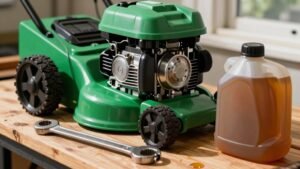

First, make sure the safety switches and blade deck are clear of debris and that all interlocks click into place; a stuck switch will cut power instantly. Next, check the fuel—if the tank’s less than a quarter full, contains dark or sour-smelling gasoline, or has floating particles, drain it and refill with fresh, high‑quality unleaded fuel plus a stabilizer. Pull the spark plug, inspect the tip for oil fouling or carbon, and verify the electrode gap with a feeler gauge; replace the plug if it’s cracked or worn. Clean the air filter by washing the foam pre‑filter and blowing out the paper element with compressed air. Finally, test the battery voltage with a multimeter, tighten any corroded terminals, and confirm the switches conduct continuity. If you follow these steps, you’ll pinpoint the culprit quickly and keep the mower humming; the next section shows how to unclog a carburetor in minutes.
Quick Diagnosis Checklist: Identify the Most Common Reasons a Mower Won’t Start
If the mower won’t fire up, start with a quick visual and tactile sweep of the most common culprits: fuel, spark plug, air filter, oil level, and carburetor. Check the fuel tank; guarantee it’s at least a quarter full and that the gasoline isn’t older than 30 days—stale fuel clogs the carburetor and fuel lines. Pull the spark plug, inspect its tip for oil or carbon, and test for a strong spark; replace if it’s dirty or worn. Examine the air filter, clean or replace it if it’s saturated with debris. Verify the engine lubrication state by pulling the dipstick and confirming oil sits between the markers; low or sludgy oil must be drained. Finally, assess the timing belt condition for cracks or excessive wear, as a compromised belt can prevent proper valve timing and stall the start‑up sequence. Also, make sure the fuel line is clear of any blockages that could restrict flow. Regularly clean the carburetor’s fuel passages to avoid buildup that hinders fuel delivery. A common source of oil leaks is a worn crankshaft seal that allows oil to seep onto the engine housing.
Verify Safety Switches & Blade Deck: Remove Debris and Engage Interlocks
Before you pull the starter cord, make sure the safety switches and blade deck are clear of debris and properly activated; a stray piece of grass or a misaligned interlock can break the circuit and keep the engine from turning over. Inspect the seat, brake/clutch, and PTO switches for foreign material; use a brush or compressed air to remove any clippings. Press each switch fully to verify operator presence and confirm that the interlocks click into place. With the key on, test continuity on a multimeter; if a switch reads open, isolate safety switch circuits by disconnecting the harness and jumper‑wire the terminals for a quick bypass test. Reinstall the wiring, re‑engage the blade deck, and guarantee all interlocks are seated before attempting another start. Blade switch terminals must show continuity when the button is pressed to ensure proper operation. Also, a spark plug that is fouled or worn can prevent the engine from firing, so checking it regularly is essential.
Check Fuel: Diagnose & Replace Stale or Contaminated Gas
When gasoline sits too long, it oxidizes and leaves varnish‑like residues that choke the carburetor, so you’ll need to diagnose and replace stale fuel before the mower will turn over. First, inspect the tank: darkened color, sour or nail‑polish odor, cloudy appearance, and floating gum particles signal degradation. Using a 10 mm socket, unscrew the carburetor float‑bowl bolt and siphon the fuel into a certified container; do this outdoors with proper ventilation. Dispose of the stale gasoline per local regulations. Reinstall the bolt with a fresh fibre washer, then refill with high‑quality unleaded fuel. Add fuel stabilization to the fresh mix and run the engine briefly to circulate—this is essential for seasonal storage preparations and prevents future varnish buildup. Fuel typically lasts only three to four weeks after pumping. Properly draining the fuel before storage also helps avoid carburetor damage during freezing temperatures. Remember to park on a level surface when performing any maintenance to ensure safety and prevent spills.

Fixes rough running and hard-to-start engines: Breaks down gum and varnish that cause rough running, hard starts, sputtering, and no-start issues in small engines, helping restore performance quickly
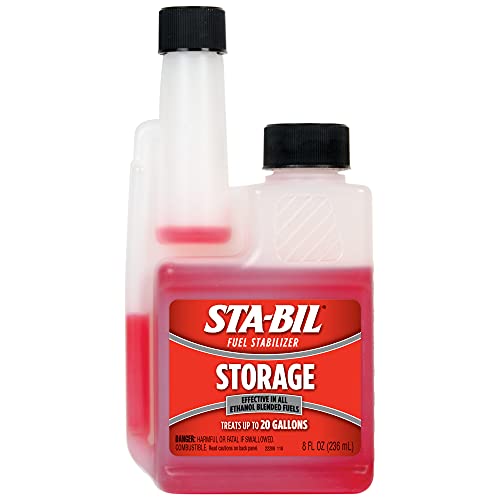
PRESERVES FUEL: This fuel stabilizer ensures keeps gasoline fresh for up to 24 months for storing vehicles that are not in use, boats, outdoor power equipment during winter months, or stocking up on fuel.

Great Product
Inspect Spark Plug: Spot Wet, Dirty, or Worn Plugs and Fix Ignition
After draining the stale fuel, turn your attention to the spark plug—its condition directly dictates whether the engine will fire. Disconnect the plug wire, then use a spark‑plug socket and ratchet to unscrew the plug. Inspect the tip for cracks, oil fouling, or carbon buildup; a wet or dirty plug signals combustion problems. Check the electrode gap with a feeler gauge and compare it to the mower’s spec; adjust if needed, or note that modern plugs arrive pre‑gapped. If you see worn electrodes or a cracked insulator, replace damaged plugs. Clean minor fouling with a brass brush and electrical contact cleaner, then reinstall, hand‑tighten and snug with the wrench. Finally, store spare plugs in a dry container for future swaps. Ensure proper clearance between the electrodes to maintain effective ignition. Remember to verify the plug’s gapping specifications before installation. Inspect spark plug regularly to catch early signs of wear. Check the primer bulb before pulling the starter cord to ensure fuel reaches the carburetor.


Replace for Champion RJ19LM J19LM; Brigg Stratt 796112 796112S 802592 5095K; NGK B2LM
Clean Air Filter: Restore Proper Airflow for Reliable Combustion
If the engine struggles to start, a clogged air filter is often the culprit, because restricted airflow starves the combustion chamber of oxygen. Locate the filter under the engine cover, remove the foam pre‑filter, and tap it lightly on a hard surface to dislodge dust. Submerge the foam in lukewarm,apy water, massage gently, then squeeze out excess water without wringing. Air‑dry it completely before reassembly. For paper filters, use compressed air from a safe distance; never apply chemicals. Combination filters require soap for the foam pre‑filter and compressed air for the paper main filter. Perform routine air filter cleaning every 25 hours of use, and follow proper air filter installation steps each time you reinstall to guarantee reliable combustion. Foam filters can be reused after cleaning, extending the life of the component. Regularly checking the filter’s condition helps prevent engine performance issues before they arise.

Compatible with B-S: Model # 491588S 491588 4915885 399959 push lawn mower air filter, part # 4101 5043 5043A 5043D 5043H 5043K. Fit 3.5-6.5 hp quantum engines, 625e 675ex 725ex 625-675 series element

Toro Recycler 22 Air Filter 20332 20333 20334 20339 20340

Generic Model Air Filter: Compatible with bs 4915885 399959 lawn mower, bs-4101 5043 5043a 5043d 5043h 5043k. Fit 3.5-6.75 hp quantum small engine, 625 675 725 625-675e/ex series element
Test Battery & Electrical: Secure Connections and Verify Power
A clean air filter lets the engine breathe, but without proper power the mower still won’t start, so check the battery next. Grab a digital multimeter, set it to 20 V DC, and attach the red lead to the positive terminal and the black lead to the negative. Verify the probes lock securely; a loose connection can cause a voltage drop diagnosis. Record the resting voltage after the battery has rested an hour—12.6‑12.8 V indicates full charge, 12.4 V is half, and 12.2 V or lower signals a dead cell. If you see a sudden drop when you crank the engine, perform a load test or check for internal resistance. Before any replacement, tighten all terminals, clean corrosion, and repeat the voltage drop diagnosis to rule out simple battery disconnection issues. Battery lifespan often exceeds the typical 2‑3 years, so a newer battery may still be failing despite its age. Proper storage temperature can significantly affect battery health over time. Conduct a visual inspection of the battery case for cracks or bulging before testing. Extreme temperatures can accelerate capacity loss and reduce overall performance.

√ Dimensions: Length 7.68 inches, Width 5.12 inches, Height 6.22 inches, Total Height 7.09 inches; Weight: 21.5 lbs, Terminal Type: Square Hole Nut and Bolt, NB, Nut and Bolt, J; The positive terminal is on the left side of the battery; Cold Cranking Amps: 200CCA; Terminal: Left : Positive (+)-Red, Right: Negative (-)-Black.
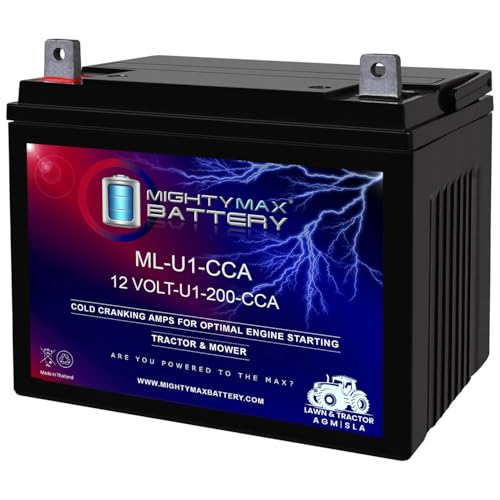
ML-U1 is a 12V 200 Cold Cranking Amps (CCA) Sealed Lead Acid (SLA) Battery

3-In-1 mower blade for mulching, bagging and side discharging
How to Unclog Your Carburetor in Minutes: Restore Fuel Flow
When the mower stalls, a clogged carburetor is often the culprit, so you’ll need to clean it quickly to restore fuel flow. First, turn off the mower, disconnect the spark plug wire, and drain the tank. Use a screwdriver to remove the air‑filter housing, then detach throttle and choke linkages. Pull the fuel line with needle‑nose pliers and unscrew the carburetor bolts using a socket wrench. Unscrew the bowl, note each part’s position, and extract the float, needle, and main jet. Spray carburetor cleaner into the bowl, then use a paper clip or small Allen wrench to unclog jet ports and remove enzyme buildup. Blow the passages with compressed air, dry, reassemble with fresh gaskets, reconnect the fuel line, reinstall the air filter, and reconnect the spark plug wire. Add fresh fuel and test the engine. Remove the clamp on the fuel line before pulling it with the pliers. Work in a well‑ventilated area to avoid inhaling gasoline fumes. Wear protective gloves to prevent cuts while handling sharp blade components. Properly re‑torque the carburetor bolts to manufacturer specifications to avoid leaks.

【Material】Engineered for performance and longevity, our carburetor cleaning kit utilizes high-grade stainless steel and tough nylon. The stainless steel components offer reliable strength and are designed to maintain their integrity, while the nylon brushes effectively scrub sensitive parts without causing damage. This thoughtful material selection provides a consistent and dependable cleaning experience through repeated use on various projects.

Complete 33-Piece Carb Cleaning Kit – Includes 13 stainless steel cleaning wires, 5 nylon brushes, 10 cleaning needles, 1 throttle wrench, 1 pointed tweezers, 3 double-ended brushes, and 4 hooks. Everything you need as a carb cleaning tool set in one box

Fast-acting immersion cleaner
Apply Preventive Maintenance: Weekly Habits to Keep Your Mower Starting Every Time
Ever wondered why a mower that’s been well‑maintained still refuses to start? Start each week by wiping the dipstick, checking oil level, and topping up any low fluids. Pull the spark plug, tip the mower, and scrape deck debris with a soft brush; spray the deck, then dry it and apply silicone spray to prevent rust. Use a torque wrench to loosen the blade bolt, inspect the blade for chips, and sharpen cutting blades if the cut is ragged. While the blade is off, rotate the spindle and feel for rough spots; inspect spindle bearings and grease them if they’re noisy. Finally, check tire pressure, clean the air filter, and verify the battery terminals are corrosion‑free. These habits keep the engine igniting reliably every time you pull the cord. Proper blade height ensures an even cut and reduces strain on the mower. Consider using a bench grinder for a quick, professional‑grade blade edge when you’re at home. Always wear protective gloves while handling the blade to avoid injuries.