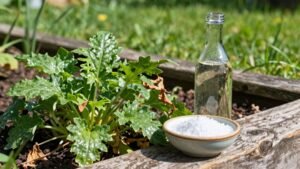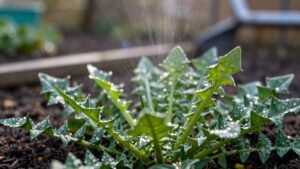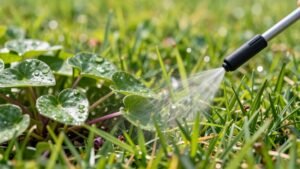

Yes—selective herbicides like 2,4‑D, dicamba, or iron‑EDTA sprays will kill clover while sparing most grasses. They’re absorbed through the foliage, move to the roots, and disrupt hormones or cause iron toxicity, killing the weed within 72 hours. Apply in late spring when temps stay below 85 °F, on a rain‑free day, and mow 48 hours later for best uptake. Proper nitrogen fertilization and a 2‑4‑inch mowing height keep grass dense, further limiting clover. Keep reading to uncover the best product choices and timing tricks.
How Herbicides Kill Clover – The Core Answer
When you apply a selective herbicide, its active ingredients—such as 2,4‑D, dicamba, or MCPP—are absorbed through the clover’s foliage and translocated to the roots, disrupting the plant’s hormonal balance and halting growth while leaving the surrounding grass largely untouched. The herbicide interferes with auxin pathways, causing uncontrolled cell elongation and eventual tissue necrosis. You can also use iron‑based options like FeHEDTA, which generate iron toxicity that kills clover within 72 hours without harming turf. For broader control, combine 2,4‑D with quinclorac or triclopyr, applying in late spring or early fall when temperatures stay below 85 °F. Spot‑treat patches, keep the lawn damp, and avoid mowing for 48 hours to maximize uptake. This approach fits organic lawn care goals while effectively controlling clover spread. Clover’s deep taproot enables it to survive drought better than grass. Understanding the herbicide absorption rate helps time applications for optimal effectiveness. Systemic herbicides often require several days to fully eradicate established clover due to their mode of action. Proper soil mulching can suppress weed seed germination and reduce the need for repeated herbicide applications.
How to Pick the Best Selective Herbicide for Your Lawn
Understanding how herbicides kill clover sets the stage for choosing the right product for your lawn. First, match the herbicide class to your turf type: 2,4‑D works well on cool‑season grasses, while FeHEDTA excels in cooler weather and offers about 60 % reduction after one spray. If you need legume safety, pick 2,4‑DB instead of 2,4‑D. Look for active ingredients like dicamba, clopyralid, or quinclorac for targeted clover control; combine them with iron‑based products when you want a broader spectrum. Evaluate overseeding effectiveness—some formulations, such as Triad Select™, preserve seed germination while suppressing weeds. Finally, consider combination treatment options, like a dual 2,4‑DB + clethodim spray, to maximize control without harming desirable grass. Glyphosate should be applied a week before planting to kill all vegetation.
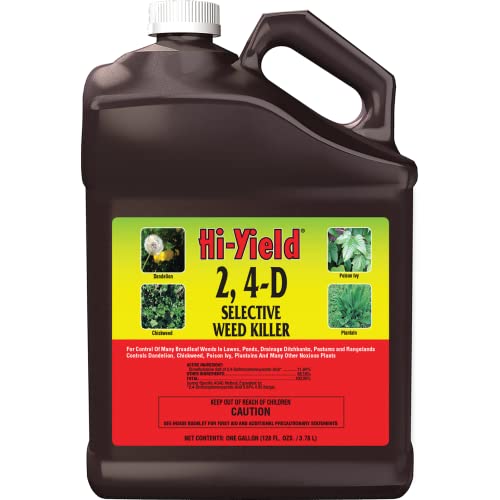
This selective weed killer kills or controls many Broadleaf Weeds and plants susceptible to 2, 4-D.
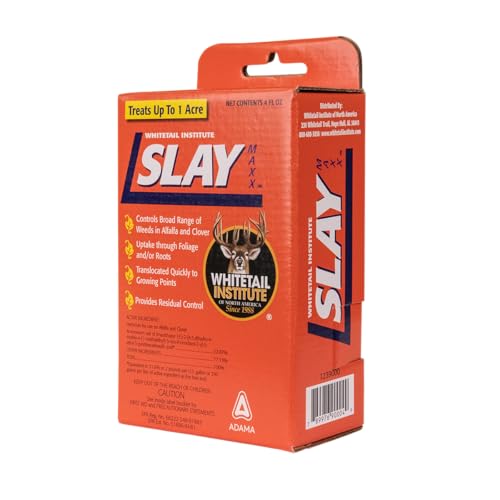
Specifically developed for food plots

PREMIUM SELECTIVE HERBICIDE: Excellent control of more than 200 broadleaf weeds including dandelion, plantain, oxalis, chickweed, thistles and other hard-to-control species
When to Apply for Maximum Clover Control?
If you want the most effective clover control, time your spray for late spring—just as the weed first emerges—while temperatures stay below 85 °F. Proper application timing leverages the period when clover is young and herbicide absorption peaks. Aim for days with a forecast of at least two rain‑free days; a lightly damp lawn improves adhesion, but avoid saturated soil. Apply when daytime highs are in the 70s‑80s, because effectiveness rises as weather warms but drops sharply above 85 °F. Schedule the spray at least 48 hours before your next mowing, and guarantee the lawn has been mowed at least twice previously so foliage is exposed. This approach maximizes contact, limits washout, and delivers the best clover control under ideal weather conditions. Red Clover is the most widely grown of all the true clovers. Proper mowing height helps prevent clover from shading out and reduces competition with desired turf. Understanding herbicide modes of action can further improve timing decisions. Broadleaf herbicide formulations are specifically designed to target weeds like clover without harming grass.

Kill chickweed, clover, dandelions, ground ivy and other tough weeds with Chickweed Clover & Oxalis Killer Concentrate from Bonide
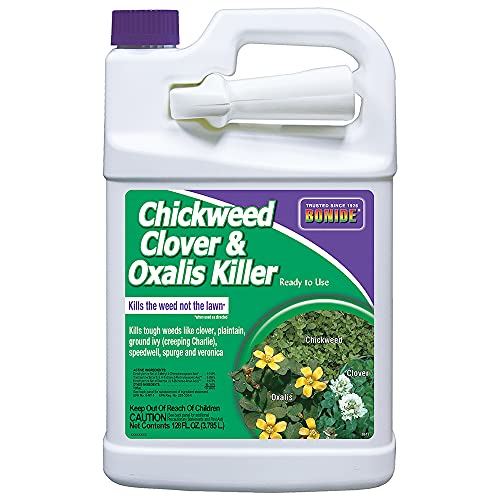
Kill chickweed, clover, dandelions, ground ivy and other tough weeds with Chickweed Clover & Oxalis Killer Ready-to-Use Spray from Bonide
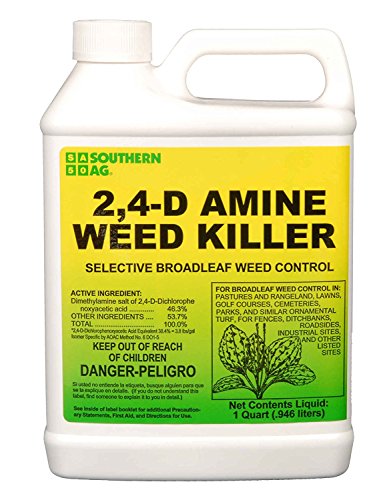
Low, economical use rate of 1 to 4 pints per acre
How to Protect Grass While Killing Clover
While you’re targeting clover, choose a selective herbicide—such as a FeHEDTA‑based spray or a product like Weed & Green—so the active ingredient attacks the broadleaf weed but leaves your grass unharmed. Apply evenly to clover‑infested zones, following label dosage and timing; avoid overspray on hard surfaces. Spot‑treat small patches first, then use a second application of FeHEDTA or a commercial option like Triad Select for mature stands. Choose cost effective treatments such as Scotts Weed B Gon MAX for larger areas, and consider organic alternatives like chelated iron sprays that create iron toxicity in clover while sparing turf. Wear PPE, mow clover before spraying, and fertilize nitrogen‑depleted soil to keep grass vigorous and prevent regrowth. Timing is highly effective on clover in centipede lawns. Low‑toxicity herbicides reduce environmental impact while still controlling weeds. Comparative analysis shows that selective herbicides generally outperform non‑selective options for preserving turf health.
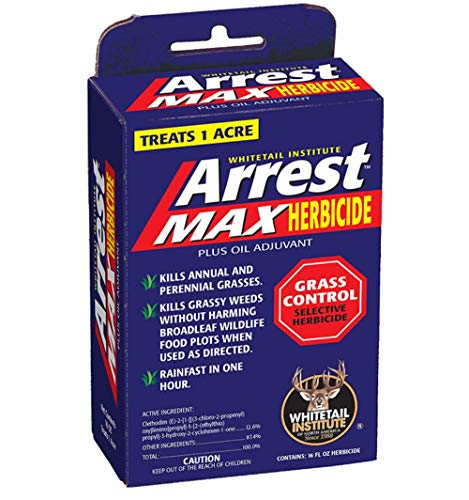
SPECIFICALLY developed for food plots

WEED KILLER FOR LAWNS: Ortho WeedClear Lawn Weed Killer Concentrate weed killer spray kills crabgrass, dandelions, clover, and other listed common weeds in your lawn

LAWN FRIENDLY FORMULA: Our lawn friendly weed killer spray formula contains three proven ingredients that specifically target common lawn weeds, so it won't harm your grass (when used as directed)
Boosting Lawn Density for Better Clover Control
A thicker, healthier lawn is your most reliable defense against clover, because dense grass shades the soil and outcompetes the weed for nutrients, light, and water. To boost density, first assess any thin spots and overseed damaged turf in early fall or spring, using a seed‑grass‑grass mix and applying 3 lb N per 1,000 ft² annually for ideal growth. Adjusting mowing heights to 2–4 inches—preferably around 3 inches—creates shade that suppresses clover germination and prevents seed set. Pair overseeding with balanced fertilizer that supplies nitrogen, phosphorus, and potassium, and water deeply but infrequently to encourage deep root systems. Consistent mowing and proper fertilization will keep your turf thick, limiting clover’s ability to establish and spread. Increasing nitrogen fertilization to 3 lb N per 1,000 ft² per year can reduce clover by 75 % over six years, according to MSU research. Applying fertilizer on a seasonal schedule maximizes nutrient uptake and minimizes runoff. Follow the early‑spring timing to apply a slow‑release nitrogen source for optimal early growth.
Spot‑Treat vs. Whole‑Lawn Clover Control
A dense lawn already gives you a strong edge against clover, but when isolated patches appear you can choose between spot‑treating those areas or applying a whole‑lawn program. Spot‑treating lets you use targeted granular treatments or organic clover remedies like vinegar sprays, iron powders, or smothering covers, minimizing grass exposure. Apply vinegar when soil stays damp, pull clover at the base, then reseed with compatible turf. Iron products dry and darken clover leaves without harming grass, and cardboard or tarp blocks sunlight for 2‑3 weeks. Whole‑lawn applications spread post‑emergent herbicides across the yard, which can stunt clover but may also stress grass if over‑applied. Choose spot‑treating for precise control and lower chemical load; reserve whole‑lawn programs for extensive infestations. Low nitrogen in the soil often encourages clover growth. Proper timing of fertilizer applications, such as applying a balanced nitrogen source in early spring when soil temperatures reach 60 °F, helps maintain a dense turf that suppresses clover. Using a 30% vinegar solution can quickly burn small clover patches without harming surrounding grass when applied correctly. For best results, apply the vinegar during warm, sunny conditions to accelerate leaf desiccation.
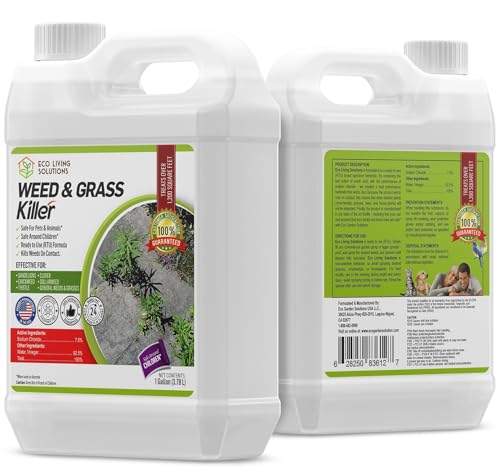
✔️ PET & KID SAFE HERBICIDE - Eco Garden Pro Weed Killer is designed with you and your family in mind! All of our ingredients are carefully selected to be SAFE FOR: PETS, CHILDREN, BEES, FISH, AND ANY LIVESTOCK!

✔️ PET & KID SAFE HERBICIDE - Eco Garden Pro Weed Killer is designed with you and your family in mind! All of our ingredients are carefully selected to be SAFE FOR: PETS, CHILDREN, BEES, FISH, AND ANY LIVESTOCK!

✔️ PET & KID SAFE HERBICIDE - Eco Garden Pro Weed Killer is designed with you and your family in mind! All of our ingredients are carefully selected to be SAFE FOR: PETS, CHILDREN, BEES, FISH, AND ANY LIVESTOCK!
Top Clover‑Killing Products Compared
Three top‑selling clover‑killing products dominate the market: Speedzone, a fast‑acting post‑emergent that kills within 48 hours; a quinclorac‑plus‑triclopyr blend, which offers broad‑spectrum control when mixed with a surfactant; and the clopyralid‑based formulation, prized for its selectivity on clover without harming most turfgrasses. When you choose a product, consider combining herbicides for tougher infestations—mixing quinclorac and triclopyr with a high‑quality surfactant boosts uptake and speeds eradication. Speedzone delivers the quickest knock‑down, but temperature must be within the recommended range. The clopyralid blend works well on white, red, and burr clover while sparing St. Augustine, centipede, and bahia grasses. For broad‑spectrum control, add fluroxypyr or dicamba as needed, always verifying surfactant selection to prevent turf injury. Arrest Max is selectively controls most grasses without harming clover, alfalfa, or perennial food plots. Proper application timing ensures the herbicide reaches the weed’s growth stage, maximizing weed kill effectiveness. Applying herbicides during the early vegetative stage can improve selectivity and reduce damage to nearby desirable plants.

Use with most pesticides to improve results
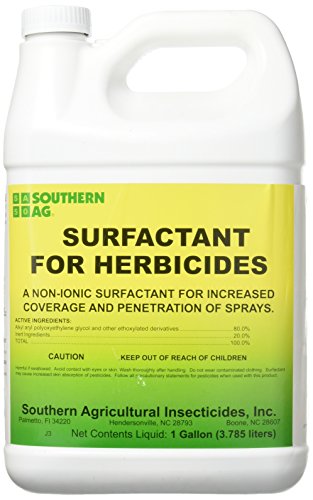
A wetting agent that increase coverage & penetration of any herbicide
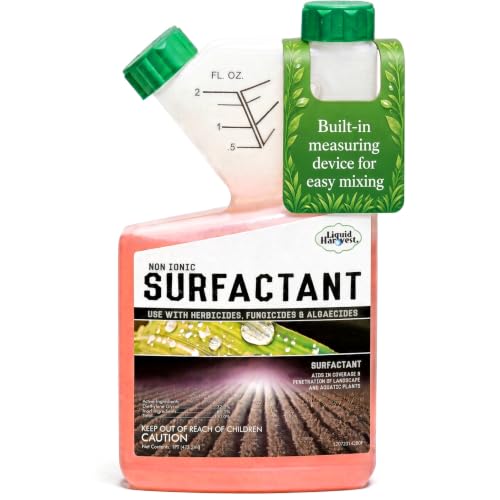
INCREASE PRODUCT EFFECTIVENESS: Surfactants help herbicides to penetrate and spread evenly across the plant surface, increasing their effectiveness.
What to Do When Your Herbicide Misbehaves?
When a herbicide doesn’t behave as expected—whether it’s too weak, causes unexpected clover stress, or damages surrounding turf—you need to diagnose the cause quickly and act methodically. First, check the label and application rate; under‑dosing 2,4‑D or picloram often yields only mild clover toxicity, while over‑dosing can trigger herbicide resistance in surviving shoots. If clover shows yellow speckles, suspect low‑dose glyphosate stress, which usually recovers if you water heavily and avoid repeat sprays. For resistant patches, rotate to a different mode of action, such as fluroxypyr plus triclopyr, which recent trials showed comparable ground cover to untreated plots. After correcting the mix, re‑seed clover in the fall when temperatures are lower, and monitor for any lingering clover toxicity before the next application. The oats, which served as a nurse crop, have now completed their growth cycle and should be removed to allow the perennial clover to dominate. Understanding herbicide selectivity helps prevent unintended damage to desirable plants. The waiting period after application can vary based on herbicide type, weather, and plant species. Proper soil aeration can also reduce weed pressure and improve herbicide efficacy.