
You can kill Creeping Charlie with herbicides, but you must choose the right product and apply it correctly. For cool‑season lawns, use fluroxypyr or triclopyr; for warm‑season or mixed turf, a dicamba or 2,4‑D‑MCPP‑dicamba blend works best. Apply in early fall when the weed is actively growing, add a surfactant, and avoid mowing for two days after treatment. Spot‑spray small patches, solarize larger areas, and combine with proper mowing, watering, and overseeding to prevent re‑infestation, and the guide will show you how.
Identify Creeping Charlie Before You Treat It
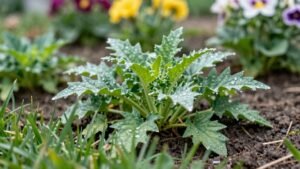
Because accurate identification prevents wasted effort, start by examining leaf shape, stem cross‑section, and scent. You’ll notice bright‑green, rounded leaves with scalloped edges, 1‑5 cm across, arranged opposite each other. The stems are square, four‑sided, a hallmark of the mint family, and emit a strong mint‑like odor when crushed. For plant identification, verify palmated veins radiating from a common point at the leaf base. Observe growth characteristics: low‑growing mats, stems 2‑12 in tall that bend back to root, and stolons extending up to 7 ft, rooting at each node. This horizontal spreading creates dense, evergreen mats 1‑3 ft wide. Distinguish from henbit and speedwell by confirming the creeping, rooting habit, which is absent in those species. Its purple tubular flowers appear in spring, adding another key identifier. The seed’s small, oval shape and light‑to‑dark brown color make it easy to spot in close‑up photos, especially when compared to the grain‑like texture of other lawn seeds. You can also locate grass seeds by checking the soil surface where they often accumulate after natural dispersal. Proper mowing height can also suppress its growth, as dense turf shades the soil and limits light for the weed.
Manual Removal of Creeping Charlie: Step‑by‑Step Hand‑Weeding Tips
A garden trowel in hand, you’ll start by moistening the soil around each Creeping Charlie patch to loosen the rhizomes before you pull. Wear gloves, then wet the ground after a rain or deep watering to soften roots. Grasp the stem at the base and pull steadily, using the trowel or a dethatching rake to extract the entire root network. Dig until all rhizomes are removed, checking for tiny fragments that could regrow. Dispose of debris away from the lawn to prevent re‑rooting. Reseed bare spots promptly and monitor for resurgence. Repeat this chemical‑free removal each season, focusing on small sections at a time, to achieve gradual eradication through consistent, methodical hand‑weeding. Solarization can also weaken the weed’s root system when applied during hot summer months. T‑zone herbicide contains triclopyr, which is effective against ivy‑family weeds. Incorporating soil pH adjustments can further suppress weed growth by creating an environment less favorable to Creeping Charlie. Follow the step‑by‑step method for blade removal to ensure your mower stays safe and functional.

GARDENING ESSENTIAL: Garden weeder ideal for a variety of gardening tasks like removing invasive weeds, maintaining your herb garden, uprooting dandelions and thistles, and more to encourage overall plant health and appearance

5-IN-1 Garden Weeding Trowel: This garden hand weeding tool is specially designed with a fork head. At the front end, can be used for pulling out weeds and deep digging. Serrated and scraping blade edges on both sides make weeding out grass and weeds easy. The depth mark ruler is easy to plant and transplant. The cutting notch may also be used to open bottles and cut lines, twine, and plant ties

5-IN-1 Garden Weeding Trowel: Features a forked head for weeding and deep digging. Serrated and scraping edges easily remove stubborn weeds, while the depth ruler helps with planting and transplanting. The cutting notch may also be used to open bottles and cut lines, twine, and plant ties
Smothering or Herbicide? Which Method Wins for Different Patch Sizes?
After hand‑weeding the tiny Creeping Charlie colonies, you’ll need a strategy that scales with the size of the remaining infestation. For small patches, the effectiveness of smothering is limited; dense turf and groundcovers already suppress growth, and a thin layer of cardboard or mulch may damage neighboring plants. Instead, apply a spot‑spray of triclopyr or Ortho WeedClear; the efficacy of systemic herbicides penetrates roots and prevents regrowth within hours. systemic herbicides act quickly because they travel through the plant’s vascular system, delivering rapid control.
Moderate patches benefit from smothering: cover the area with black plastic or a tarp for 4–12 weeks, monitoring and raking dead material after exposure. If you prefer chemical control, a post‑emergence mix of 2,4‑D, MCPP, and dicamba offers high efficacy, especially when applied in fall.
Large infestations require a non‑selective approach. Black‑plastic solarization or a high‑dose glyphosate spray delivers broad coverage; repeated applications may be necessary. Systemic herbicides at higher concentrations can also work, but they risk collateral damage to surrounding vegetation. Proper timing of application maximizes herbicide absorption and reduces crop injury.
Understanding soil pH helps determine which herbicide will be most effective and minimizes unintended damage.

REVIVE FORESTS AND PASTURES: Triclopyr 4 Herbicide targets & controls woody plants, broadleaf weeds, & brush, making it ideal for restoring pastures and managing unwanted vegetation in forests, rangelands, and industrial sites without harming grasses

POWERFUL BRUSH & WEED CONTROL: Specifically formulated with the active ingredient Triclopyr to stop encroaching brush and tackle tough broadleaf weeds all year round. Ideal for reclaiming large tracts of overgrown land or selectively enhancing sensitive sites.
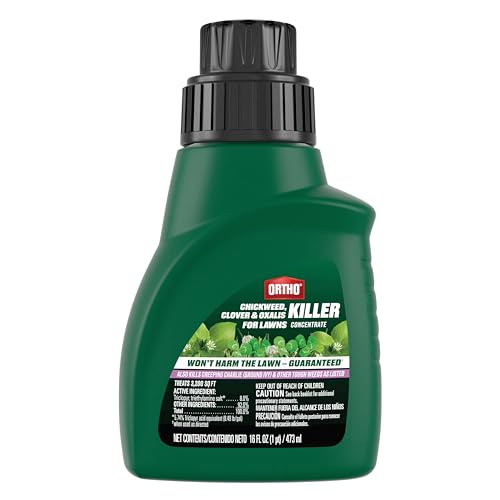
FOR LAWN USE: This lawn weed killer spray won't harm the lawn (when used as directed) and is for use on Buffalograss, Fescues, Kentucky Bluegrass, Ryegrass, and Zoysiagrass
How to Pick the Right Herbicide and When to Apply It for Creeping Charlie
Choosing the right herbicide for Creeping Charlie hinges on matching the active ingredient to your lawn’s grass type, infestation size, and timing of growth. If you have cool‑season grass, prioritize fluroxypyr or triclopyr; for warm‑season or mixed stands, dicamba or a 2,4‑D‑MCPP‑dicamba blend works. Apply in early fall when weeds are actively growing but before the first frost; late‑fall or early‑spring applications maximize root translocation. Follow label rates, add a surfactant (e.g., Nanotek 1 fl oz/gal), and avoid mowing for at least two days post‑treatment. Integrate targeted lawn mowing schedules to keep the canopy open, and maintain soil nutrient balancing to reduce stress on desirable grass, enhancing herbicide uptake and preventing rebound. Sequential applications may be necessary for dense infestations. Early detection of broadleaf weeds allows for more effective control before they spread. Proper mulching can suppress new weed seedlings and reduce the need for repeat herbicide applications. Selecting a product with low environmental toxicity helps protect beneficial soil organisms while still delivering effective control.

WEED KILLER FOR LAWNS: Ortho WeedClear Lawn Weed Killer Concentrate weed killer spray kills crabgrass, dandelions, clover, and other listed common weeds in your lawn

KILLS WEEDS, NOT THE LAWN: Controls listed weeds – including crabgrass – not the lawn (when used as directed).

KILLS 460+ WEEDS AS LISTED: Kills all types of listed broadleaf weeds including dandelion, chickweed, clover and yellow nutsedge.
Preventing Creeping Charlie Re‑Infestation With Targeted Turf‑Care Practices
One effective way to keep Creeping Charlie from returning is to combine consistent mowing, proper soil management, and targeted irrigation into a unified turf‑care program. Maintain grass height under 8 cm, cutting no more than one‑third of the blade each pass, and avoid mowing treated zones for two days after control. Conduct detailed soil testing to identify compaction, pH, and nutrient deficiencies; then aerate, amend, and apply a balanced fertilizer to foster a dense sward. Choose competitive grass seed selection that tolerates local climate and shade, overseeding bare spots promptly. Water deeply but infrequently, allowing the soil to dry between applications, and prune shading vegetation to increase sunlight exposure. Regularly scout borders, remove any seedlings, and repeat these practices annually to suppress re‑infestation. Aeration improves soil structure and enhances water infiltration. Proper aeration also reduces soil compaction and promotes healthier root growth. Aerating in the fall can increase root depth and improve nutrient uptake before winter.