
You’ll find that straw outshines hay for new lawn seed because its lightweight, breathable stalks lock in moisture, regulate temperature, and keep weeds out without suffocating germination. Hay’s dense, seed‑laden bundles decompose fast, inviting unwanted grasses and herbicide residues, and it often requires frequent re‑application. Straw’s airy mat creates a balanced micro‑climate while staying herbicide‑free, making it the more sustainable, effective cover. Keep reading to ascertain how to apply it without stifling growth.
Should You Use Straw, Hay, or Mulch?
When you’re deciding between straw, hay, or mulch for a new lawn, start by weighing their core properties: straw’s lightweight, seed‑free stalks keep moisture in without introducing weeds, while hay’s denser, seed‑laden bundles can invite unwanted grasses and even herbicide residues. Straw availability is high at co‑ops and big‑box stores, and its fluffier bales break apart easily, allowing a thin 6‑8‑inch layer that protects seed beds while preserving aeration. Hay, though heavier, often carries weed seeds and brambles, compounding seed establishment challenges and demanding meticulous weed removal. Alternative mulches—compost, peat moss, paper—offer nutrient or erosion benefits but lack straw’s simplicity and low‑cost moisture retention. Choose the material that aligns with your lawn’s ecological goals and logistical constraints. Using clean straw ensures no seed contamination. Mulch also provides soil temperature regulation, helping seedlings develop stronger root systems.
Straw Benefits for New Lawn Seed
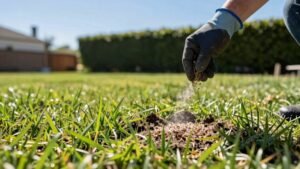
Straw’s lightweight, breathable mat creates an ideal micro‑environment for new lawn seed, simultaneously locking in moisture, moderating temperature, and shielding seedlings from wind, rain, and pests. You’ll notice immediate MoistureRetention as the straw slows evaporation, forming a natural barrier that keeps soil hydrated without oversaturation. This steady water supply supports consistent sprouting, even in hot or dry spells. TemperatureRegulation follows naturally: the mat traps heat on cool mornings, accelerating germination, while its reflective surface cools the soil under scorching sun, preventing seed stress. Additionally, the straw’s porous structure lets air circulate, avoiding suffocation and promoting healthy root development. By applying a thin, even layer of clean, dry straw, you protect seeds from birds, rodents, and wind, while maintaining a balanced micro‑climate that encourages vigorous, uniform lawn establishment. Using bird‑deterrent netting alongside straw can further reduce seed loss from feathered visitors. Proper seed coverage also helps prevent soil erosion during early growth stages.

Packaging May Vary: Same great Seeding Mulch with updated packaging!

Protects and Holds Seed in Place - Grass Seed Starting Mulch for lawn and garden covers grass seed, protecting it and keeping it in place and in contact with the ground, helping promote germination

Packaging May Vary: You will receive 2 bales of straw.
Hay Drawbacks: Weed Seeds and Rapid Decomposition
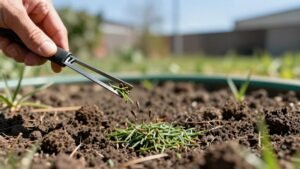
While straw offers a breathable, moisture‑retaining mat, hay brings a different set of challenges. Hay often carries weed seeds—Johnsongrass, Bermuda, bindweed—without guarantee of absence, and those seeds can survive animal digestion and manure spreads, introducing invasive species to your lawn. Their presence forces you to adopt robust weed control strategies, because a single bale can seed a future outbreak. Additionally, hay’s seed decomposition rates outpace straw’s, breaking down quickly into a sticky, heavy mass that demands frequent reapplication and complicates direct‑seeding. Thick layers may temporarily suppress germination, but accumulated seeds from repeated use linger, and post‑season tillage only delays seeding. Managing these risks requires pre‑planned interventions and backup plans to protect lawn health. Squirrels are known to eat grass seed, so using wildlife‑deterrent covers can help protect the seed from being consumed. Rabbits also browse on grass seed, making rabbit‑proof fencing a useful addition for vulnerable lawns. Proper mowing height can also help suppress goathead emergence by limiting sunlight reaching the soil surface.
Weed‑Free Mulch Alternatives to Straw and Hay
If you need a weed‑free mulch that rivals straw and hay without their drawbacks, consider the readily available, low‑cost alternatives below. Grass clippings form a dense, 1‑inch mat that blocks seedlings while adding nitrogen; their fine texture enhances grass clipping aesthetics and decomposes quickly, feeding microbes. Wood chips, sourced from local mills, provide moderate weed suppression, excellent airflow, and support worm activity; wood chip decomposition enriches soil structure over months. Pine needles act as an acidic barrier for acid‑loving plants and spread easily, though they’re less uniform. Shredded leaves layer densely to smother weeds and release nutrients as they break down, offering a free, seasonal solution. Choose the material that aligns with your garden’s visual and ecological goals. Municipal green waste is often available for free, and it is heat‑treated to kill weed seeds and pathogens. Proper disposal of old lawn mower parts can be arranged through local metal scrap programs. For a quick, natural weed control option, try a DIY weed killer made from vinegar and salt that targets unwanted plants without harming your lawn. The effectiveness of vinegar as a weed killer can be seen within 30 minutes under sunny conditions.
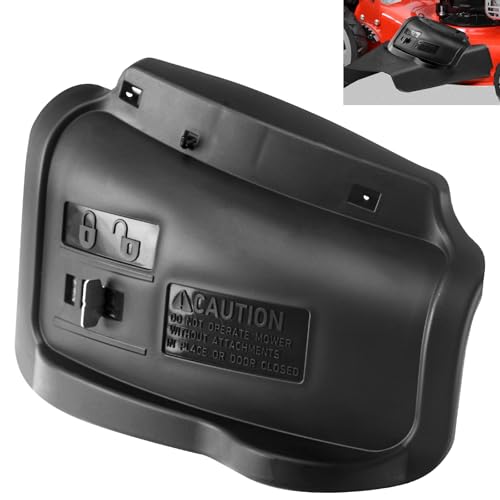
Replace Part Number: 532419927 532423357, 594942002, 532432642, 583482601, 583432601, 583405501, 594942001

Replacement part number: 532423357, 594942002, 532432642, 583482601, 583432601, 594942001, 583405501
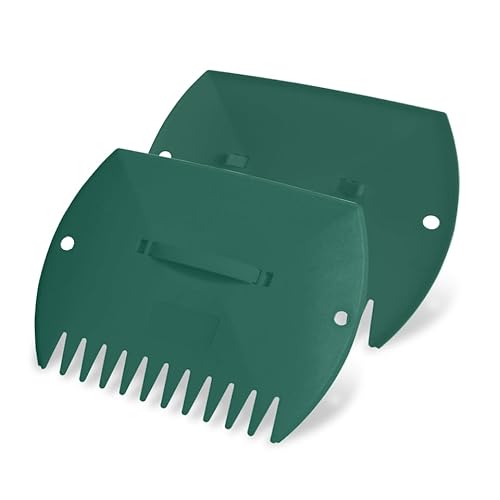
Large leaf claws for faster cleanup: The oversized 15 x 12 in design helps grab large piles of leaves, grass clippings, mulch and yard debris, making these leaf grabbers for yard work ideal for quick seasonal cleanup.
Moisture Retention: Straw vs. Seed‑Accelerator Mulch
Choosing a mulch that balances water efficiency with seed health narrows the gap between the low‑cost, breathable straw you’ve just explored and the high‑capacity, biodegradable seed‑accelerator pellets. Straw creates a light, airy blanket that slows evaporation, allowing rain impact to condense and drip back into the soil. Its water retention properties keep the seed zone damp for 7‑21 days, supporting early root development. Seed‑accelerator mulch, however, holds up to three times its weight in water, dramatically improving soil moisture management and reducing irrigation frequency. As the pellets break down, they release organic matter that further enhances retention. Both options cut water loss compared with bare soil, but pellets deliver a higher moisture reserve per volume, making them ideal for dry climates. Organic straw is certified as grown without the use of herbicides. Using high‑acidity vinegar can also help control weeds that may compete with your grass seedlings. The acetic acid in vinegar damages plant tissue, making it an effective natural herbicide for unwanted weeds. Acidic solutions can rapidly desiccate shallow-rooted weeds, providing a quick, non‑chemical cleanup option.
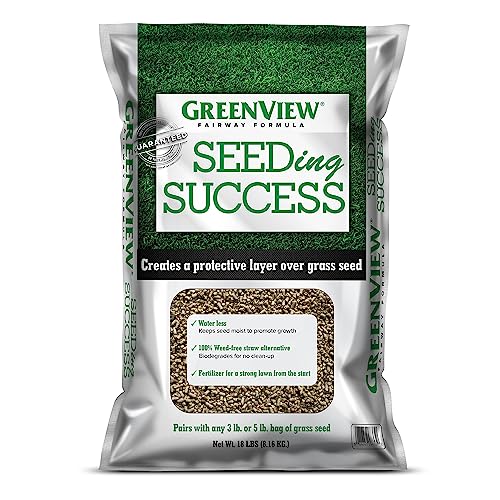
Biodegradeable seeding mulch combined with starter fertilizer

Protects and Holds Seed in Place - Grass Seed Starting Mulch for lawn and garden covers grass seed, protecting it and keeping it in place and in contact with the ground, helping promote germination

Seed starter: Before absorbing water and swelling, the thickness of the peat soil pellet is only 12MM, easy to store and carry. The seedling block is wrapped with a degradable mesh non-woven material, which is convenient for transportation and transplanting. When the seedlings are transplanted, they can be directly planted into the soil to improve the efficiency and success rate of transplanting.
Common Drawbacks of Straw: Mold, Rot, Light Blockage
Because straw forms a dense, breathable blanket, it can inadvertently create the perfect environment for mold, rot, and light blockage—issues that jeopardize seed germination and lawn health. When you lay a thick layer, moisture traps beneath, fostering anaerobic decomposition conditions that accelerate fungal growth. Gray or white patches appear, signaling mold that can choke early seedling suffocation. Excessive straw also blocks sunlight, limiting photosynthesis and creating uneven light distribution; seedlings beneath the shade remain dormant while others sprout. Rot develops where water pools, impeding oxygen flow and nutrient exchange, further suffocating nascent roots. Managing thickness and timing mitigates these risks, preserving a sustainable, healthy lawn. Wheat straw also adds organic matter quickly to soil, enhancing nutrient availability for developing grass. Applying a thin layer of straw can still provide moisture retention while reducing the risk of soil compaction and mold growth. Dethatching in the spring helps maintain optimal that structure for straw applications.
How to Apply Straw or Mulch Without Stifling Germination?
Mold and rot thrive under dense straw, so the key is to maintain the cover light enough for air and light while still holding moisture. First, rake the soil to a smooth 1‑2‑inch depth, then broadcast seed and lightly tamp for firm seed‑to‑soil contact. Sprinkle a thin straw layer at a rate of one bale per 1,000 sq ft, scattering loosely so seeds remain visible. Follow with a ¼‑inch compost spread to protect and retain moisture without blocking light. Water immediately to bind the straw and keep the seed zone moist; continue daily watering until seedlings reach 2–3 inches. For finer control, use Starting Mulch pellets covering about one‑fourth of the area, allowing water to activate them while preserving aeration. This balanced straw application rate guarantees germination thrives without suffocation. Proper soil preparation, such as loosening the topsoil, enhances seed‑to‑soil contact and promotes faster germination. Seed‑to‑soil contact is critical for moisture absorption and root development. A lawn roller can also be used after seeding to evenly distribute weight and improve seed‑to‑soil contact. Adding a light layer of organic mulch can further improve moisture retention and soil health.

All-Natural & Clean Mulch —Sustainably sourced 100% non-GMO wheat straw is naturally filtered to remove dust, dirt, and as many seeds as possible for a clean, pure mulch.

Packaging may vary - You will receive 2 bales of straw.

100% Natural Wheat Straw,that has been dried to ensure it is free of weed seeds and will not germinate during use.
Choosing Cover for Sloped or Humid Areas
When you’re dealing with a slope that’s also humid, a lightweight, breathable straw blanket outperforms hay because it stays in place, lets air circulate, and prevents excess moisture from fostering mold. Straw’s hollow stalks settle evenly, acting as a tackifier when wet, so it locks into the soil and delivers superior soil erosion control on inclines. Its low moisture content supports humidity management, allowing evaporation without waterlogging while still insulating roots. Opt for certified seed‑free, processed straw bales or ground‑up straw with tackifier; spread 6‑8 inches thick for uniform coverage. This approach minimizes washout, curtails mold, and avoids invasive weed seeds, delivering a sustainable, aesthetically clean solution for sloped, humid lawn areas. Properly capping sprinkler heads reduces runoff and helps maintain the moisture balance achieved by the straw blanket, conserving water efficiently. Consider timer zoning to further optimize irrigation and prevent over‑watering on slopes. Before starting any removal, be sure to depressurize the system to avoid unexpected pressure release.
Decision Checklist: Straw, Hay, or Alternative Mulch
After reviewing the benefits of straw on humid slopes, you can now weigh straw, hay, and other mulches for any lawn area. First, assess seed viability: choose clean, seed‑free straw to avoid unwanted sprouts, or opt for alfalfa/clover hay that lacks grass seeds yet offers higher nitrogen for nutrient replenishment. Second, consider structural integrity—straw’s fluffy, golden stalks spread easily but shift in wind, while hay forms a dense mat that stays put. Third, evaluate ecological impact: hay, especially legume‑rich varieties, promotes biodiversity enhancement and faster organic breakdown, whereas wood chips excel at water retention. Finally, verify that no persistent herbicides were applied and match mulch thickness (6‑8 inches) to your lawn’s moisture and temperature needs. Hay typically contains a variety of plant parts, which can affect nutrient release as it decomposes.

Packaging may vary: You will receive 4 bales of straw.

PREMIUM ORGANIC GARDEN STRAW: High-quality organic straw harvested for superior coverage and durability—ideal mulch for gardening, raised garden beds, flower beds, composting, and lawn care projects.

100% Natural & Soil-Safe Straw: Made from sun-dried wheat straw with no chemicals or weed seeds. It can safely break down into the soil, improve soil structure, and support organic gardening while keeping plants healthy and protected