
A brushless lawn mower is a battery‑powered mower that replaces the traditional carbon‑brush motor with a digitally‑controlled, permanent‑magnet motor. The ESC converts the Li‑ion battery voltage into three‑phase power, using Hall‑sensor feedback to time phase signals and regulate torque in real time. This design eliminates brush wear, boosts efficiency to 85‑90 %, cuts noise to around 70 dB, and reduces vibration. You’ll also find that the mower’s runtime, power, and maintenance needs vary with the battery’s voltage and amp‑hour rating, and the next sections will show you how to pick the right model for your yard.
What Is a Brushless Lawn Mower? Definition & Core Parts
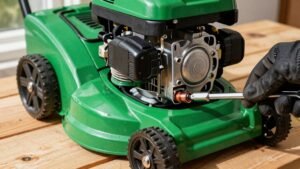
At its core, a brushless lawn mower is an electric mower that replaces the traditional brushed motor with a digitally‑controlled, brush‑free motor, delivering lower power consumption and greater durability. You’ll find a stator wound with copper coils that creates a rotating electromagnetic field, while permanent‑magnet rotors spin without friction. This contactless design eliminates carbon brushes, so the motor lifespan extends dramatically compared to brushed equivalents. Sensors monitor rotor position and feed data to the controller, ensuring consistent power delivery across variable loads like thick grass. A compact housing encloses the assembly, and a lithium‑ion battery supplies the required voltage. The result is a lighter, more efficient drivetrain that converts electrical energy into mechanical torque with minimal heat and wear. Brushless motors are more efficient because they generate less heat and friction. Hydraulic pressure provides smooth and consistent cutting force, enhancing performance on varied terrain. Choosing a brushless mower can also reduce overall environmental impact compared to gasoline alternatives. Most electric lawn mowers operate on batteries ranging from 12 V to 40 V, with higher voltage models delivering more power and longer run times.
Electronic Speed Controller (ESC) That Powers Your Brushless Lawn Mower
The electronic speed controller (ESC) is the heart of a brushless lawn mower’s drivetrain, translating battery voltage into precise three‑phase power for the motor while interpreting throttle commands from the remote. You’ll wire two leads to the pack (red, black) and three to the motor, with a BEC feeding 5 V to the receiver. The ESC reads throttle configuration options via PWM, Oneshot, Multishot, or DShot, then generates timed phase signals synchronized to Hall‑sensor feedback for smooth acceleration and direction reversal by swapping any two motor wires. Firmware governs voltage and current limits, balancing speed targets against power efficiency capabilities. This regulated delivery guarantees consistent torque, low heat, and reliable performance across varied mowing conditions. Regular maintenance of the mower’s cutting deck helps prevent uneven cutting and blade dullness. Cleaning after each use reduces grass buildup and extends deck life. Properly remove grass clippings after each session ensures the deck stays clear and the mower runs efficiently.

Note: Only compatible with Hobby Fans specific programming card. If the esc led light keeps flashing and beeping when the connection completed, please: 1) Rebinding the controller and its receiver; 2) Readjust the neutral position of the controller throttle
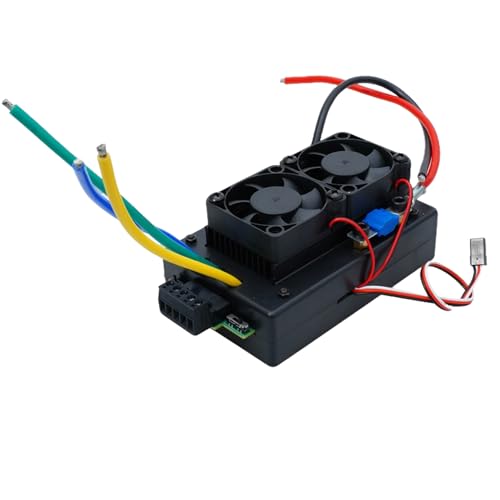
Attention: This ESC is not waterproof,Automatic braking at throttle neutral position

1.Size:Diameter 16mm(without shaft Length 27 mm),(with shaft Length 35.5 mm)
Battery Compatibility & Expected Runtime for Brushless Mowers
Your brushless mower’s performance hinges on matching the ESC’s voltage range with a battery platform that delivers the required amp‑hours and chemistry. When you choose a Worx Power‑Share system, you get 40 V dual 20 V 4.0 Ah packs that cover up to 5,500 ft², while the EGO 56 V line offers 6.0 Ah, 7.5 Ah, and 10 Ah options for similar acreage. DeWalt, Makita, and Milwaukee’s 18‑20 V interchangeable battery systems let you swap hand‑tool cells for mower use, simplifying inventory. PowerSmart’s modular packs adapt to yard size, and Craftsman’s dual 9 Ah packs enable large cut zones without self‑propel. Battery life comparisons show 12 Ah Milwaukee cells retaining capacity for three years, whereas dual‑port chargers refill Worx 4.0 Ah packs in about an hour. Align voltage, amp‑hour, and chemistry to meet your runtime expectations. Mid‑range models typically provide a balance of cost and performance for average lawns. For high‑traffic yards, a powerful engine can significantly improve cutting efficiency. Proper maintenance schedule extends battery lifespan by preventing sulfation and ensuring optimal charge cycles. The high seed genetics involved in breeding premium lawn varieties also contribute to overall cost.
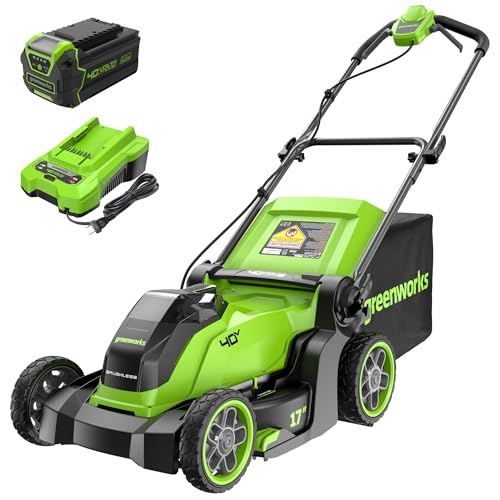
Powerful 40V Cordless Performance – Up to 35 minutes runtime on a single charge (4.0Ah battery included)—no cords, no gas, just instant push-button start!

PUSH LAWN MOWER KIT - Includes the cordless mower, PWR CORE 40 6.0Ah battery, Auto PWR JUMP charger, mulch plug, and grass bag
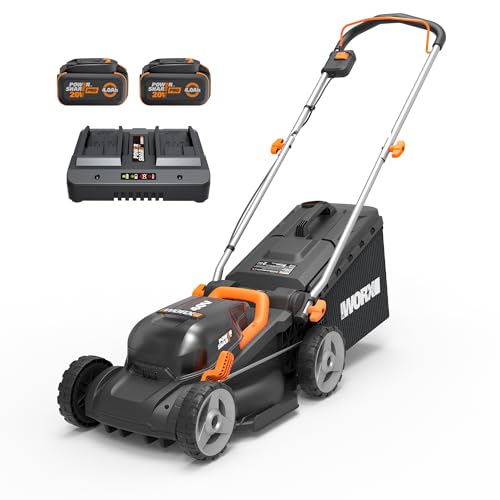
2-IN-1: The electric lawn mower with 2-in-1 functionality for easily switching between bagging and mulching.
Real‑World Performance: Torque, Efficiency, and Noise Levels
One key advantage of brushless mowers is their ability to modulate torque in real time, boosting power when dense grass resists the blades while keeping blade speed steady. You’ll notice that torque spikes only when resistance exceeds a threshold, preventing unnecessary draw on battery performance and keeping operating temperature within ideal limits. The motor’s efficiency translates to lower current draw, extending runtime and reducing heat buildup. Noise stays in the 55‑75 dB band because the controller avoids full‑power runs and eliminates brush‑induced friction. Compared with gas units that hit 85‑95 dB, the quieter profile also means less vibration and longer blade life. Overall, you gain consistent cutting, energy savings, and a substantially quieter mowing experience. A typical lawn mower operates at 70 dB during normal use, which is comparable to a busy street. Always wear protective gear such as safety glasses and sturdy shoes to prevent injuries from debris.
Top Advantages of Brushless vs. Brushed Mowers
Real‑world torque control shows how brushless mowers keep power steady while adapting to dense grass, and that same electronic precision underpins every other advantage over brushed designs. You’ll notice Brushless motor operation relies on MOSFET‑driven controllers and permanent‑magnet rotors, eliminating friction‑induced heat and arcing. Efficiency climbs to 85‑90 % versus 75‑80 % for brushed units, so a single battery charge lasts 30‑50 % longer—directly improving Brushless mower economics. Durability spikes because there are no brushes to wear; maintenance drops to occasional firmware checks, and vibration‑induced noise falls dramatically, making residential use quieter. Although upfront cost is higher, the extended lifespan and lower energy draw offset the price, delivering lower lifetime ownership cost compared with brushed counterparts. The ability to pivot each wheel independently provides a tight turning radius that dramatically reduces mowing time in complex landscapes. Selecting a mower based on lawn size ensures optimal efficiency and cost‑effectiveness. Brushless technology also offers consistent power output across varying terrain, further reducing user fatigue on larger or uneven lawns.

POWER TO TACKLE SMALL TO MIDSIZE YARDS: Equipped with two 20V 4.0Ah batteries, the WORX 17" 40V electric mower cuts yard up to 1/4 acre in one charge.

Powerful Electric Lawn Mowers - Experience the freedom of cordless mowing with this 60V battery powered lawn mower, delivering up to 40 minutes of runtime on a fully charged 4.0Ah battery. Recharge quickly with a full charge time of just 90 minutes.

POWERFUL PERFORMANCE: Tackle your yard with 3,600 RPM of power and no gas or oil to maintain
Pick the Right Brushless Mower for Your Yard Size and Terrain
Where does your yard fall on the size‑and‑terrain spectrum? If it’s under ¼ acre, a 17‑inch battery push mower gives you a modest cutting radius and lightweight terrain versatility for tight spaces. For ¼‑to‑½ acre lawns, a 21‑inch self‑propelled brushless mower offers a larger cutting radius, 60‑volt lithium‑ion power, and consistent torque on level ground. When you exceed half an acre, consider a zero‑turn model with 42‑ to 60‑inch decks; its lap‑bar steering maximizes cutting radius while brushless motors sustain torque on hills and uneven terrain. Hilly or bumpy yards benefit from compact wheelbases and front‑rear traction, ensuring terrain versatility without sacrificing speed. Two‑wheel‑steer mowers are a good fit for properties up to 3 acres, providing reliable performance on modest slopes. Match deck size, battery capacity, and motor output to your yard’s dimensions and topography for ideal efficiency. Understanding engine power helps you balance performance with energy consumption across different mower categories. John Deere’s reputation for durability makes it a strong choice for larger, demanding lawns. Toro’s advanced brushless technology often delivers higher torque and longer battery life compared to many competitors.

Battery-Powered Lawn Mower - Conquer large yards effortlessly with the 60V brushless motor and two 4.0Ah battery—delivering gas-like power for up to 3/4 acre per charge (performance varies by terrain/technique).

[Compatible Greenworks 80V Mowers] : 2550702, 2550402, 2501202, 2500402, 1356602, 1356702, 1356402, 1356502, 2533902, 2541302, 2533402, 2533602, 2502202, 2506902, 2515902, 2534102, 2502402NV, 2533302, 2541202

[80V 21” SELF-PROPELLED LAWN MOWER] - Get more done, faster, with Greenworks electric lawn mowers. This 80V lawn mower cuts up to 1/2 acre with a fully charged 4.0Ah battery (varies based on grass condition and operator technique)
Maintenance Tips: What to Service and What to Ignore on Brushless Mowers
Choosing the right brushless mower for your yard’s size and terrain is only half the battle; keeping it running smoothly demands disciplined maintenance. First, clean the deck and underside after each use: blow off clippings, scrape fresh grass before it hardens, and wipe the chassis with a damp cloth. Avoid high‑pressure hoses that could damage electrical components. Sharpen the blade annually or every 100 hours, remove rust with oil or WD‑40, and balance it to curb vibration. For battery care, charge fully with the supplied charger, store it cool and dry, and keep contacts clean. Clear vents and motor housing with a soft brush or compressed air; dust buildup can shorten motor life. Skip oil changes, spark plugs, and fuel‑system checks—those are irrelevant to brushless units. Proper lawn clippings disposal and routine cleaning prevent premature wear and guarantee reliable performance. Regularly inspect the oil level to ensure the engine remains lubricated. Check the oil before each season to catch low levels early. Using the wrong type of oil can cause excessive wear because automotive oils often have different viscosity and additive formulations than those intended for small engines.
FAQ: Brushless Lawn Mower Buying & Use
What factors should you weigh before buying a brushless lawn mower? Size the lawn, then match cutting width: under 200 m² needs 30–34 cm, 200–350 m² calls for 34–40 cm, and over 350 m² benefits from 40 cm+. Larger widths cut passes and time. Check battery voltage and amp‑hour rating; higher voltage boosts power, higher Ah extends runtime, and brushless motors improve efficiency. Guarantee the pack can run the full area—up to 90 minutes on a full charge. Evaluate motor drive: brushless units run cooler, last longer, and self‑pelled models with rear‑ or all‑wheel drive handle slopes. Look for adjustable speed settings, travel mode, and mulching options, including interchangeable blades and turbo mode for thick grass. Verify height‑adjustment mechanisms and torque (up to 11.1 ft‑lbs) to meet performance specs.

[LIGHTWEIGHT, ERGONOMIC & COMPACT STORAGE] Designed with user comfort in mind, the adjustable handle ensures a healthy posture, making this lightweight grass cutter machine incredibly easy to maneuver for women and seniors. When you're done, the quick-fold design shrinks the walk-behind mower to a compact size, fitting perfectly into tight garages or small garden sheds.

1. Best-Fit Yard and User: For small-to-medium lawns with open grass and landscaping; ideal for users comfortable pushing who want fewer passes.

For Bagging and Mulching (Universal Blade)