

First locate your mower’s engine model number and look up the exact spark‑plug spec—check thread size, reach, and gap. Gather a rubber‑isolated spark‑plug socket, ratchet, gloves, safety glasses, and hearing protection. Disconnect the negative battery cable, then the positive, and apply dielectric grease to the terminals. Use penetrating oil and a wire brush to loosen and clean the old plug, then remove it with the socket. Inspect the threads, measure the gap with a feeler gauge, and hand‑thread the new plug before tightening to torque. Reattach the spark‑plug lead, reconnect the battery, and test the mower; the next steps will show you how to fine‑tune performance and keep the plug in top shape.
Identify the Correct Spark Plug for Your Mower
When you locate the engine model number—usually on a sticker or plate near the spark plug or on the engine block—you can instantly narrow down the exact plug you need. First, identify manufacturer’s spark plug recommendations by consulting the owner’s manual or the brand’s online lookup tool; note the model, date code, and any special suffixes. Match those specs to common brands: for Briggs & Stratton Flatheads, use 796112S or 802592S with a 0.030‑inch gap; for Quantum engines post‑110630x, select Champion RJ19LMC (591868) at 0.020 inches. Verify thread size, reach, and gap to guarantee spark plug compatibility with mower engine, and avoid mismatched plugs that can cause misfires or damage. Remove the boot before extracting the plug to prevent damage to the thick cable. Check spark gap before installation to ensure optimal ignition performance. A quick visual inspection can also reveal carbon buildup that indicates the plug may need cleaning or replacement. Properly tighten the plug to the manufacturer’s torque specification to avoid over‑ or under‑tightening.


Gather Tools and Safety Gear for Mower Spark Plug Replacement
First, gather the essential hand tools— a rubber‑isolated spark plug socket (5/8‑inch or 11/16‑inch), a matching ratchet, any needed extensions, a wire brush, and a sturdy scraper—to remove and clean the plug safely. Choose a socket that fits the plug snugly; proper spark plug socket usage prevents glass breakage and keeps the plug from dropping. Attach the ratchet and extensions to reach tight spots without forcing the tool. Keep a wire brush and scraper handy to clear carbon and stubborn deposits before reinstalling. Slip on protective safety precautions: gloves to shield your hands, safety glasses for eye protection, and sturdy shoes to guard against dropped tools. Verify the work area is clear of debris to avoid contaminating the combustion chamber. Check the spark plug depth to ensure it matches the engine’s specifications. Remember to secure the blade before starting any maintenance to prevent accidental injury. Properly leveling the mower deck ensures even cutting and optimal performance. Always wear protective hearing gear when operating the mower to reduce noise‑induced hearing loss.

360° SWIVEL SPARK PLUG SOCKET: Spark plug socket features a 360° rotating joint, which enhances the spark plug socket’s flexibility, allowing you to easily access hard-to-reach areas for superior flexibility and efficient, especially in tight engine bays. This design significantly improves work efficiency, making spark plug removal and installation much easier and more convenient, particularly in confined spaces. Built-in rubber protective cover to protect the ceramic body

Swivel design provides better access to hard to reach spark plugs
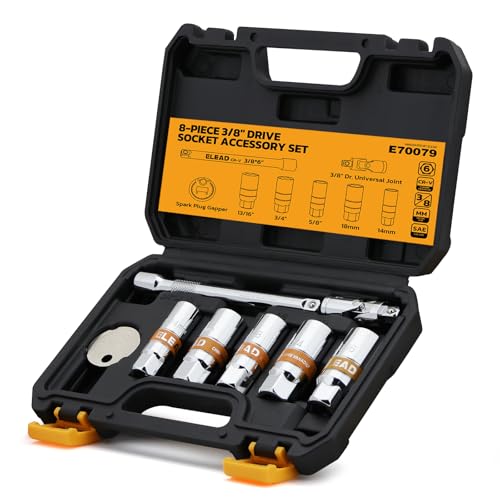
PREMIUM CR-V - Built from heat-treated chrome vanadium steel, this spark plug socket set offers exceptional durability and corrosion resistance. The mirror polish finish ensures easy cleanup and a professional appearance.
Disconnect the Mower Battery and Locate the Spark Plug
Even if the mower’s engine is cool, you still need to disconnect the battery before you touch the spark plug. First, confirm mower is powered off, remove the ignition key, and engage the parking brake. Locate the battery, remove any hold‑down rod or strap, and note its orientation. Start with the black negative cable, loosen the 7/16” or 10 mm nut, and pull it away, making sure the positive cap is slid off if present. Then disconnect the red positive cable. Tighten both nuts to keep hardware together, then store battery safely away from metal parts. Next, raise the seat or hood, find the spark‑plug wire, trace it to the cylinder head, and identify the plug’s position. Wear gloves and goggles throughout. Apply dielectric grease to the battery terminals to prevent corrosion before reassembly. Always wear protective gloves when handling the battery to avoid accidental short circuits. Before starting the mower, check the fuel level to ensure there is enough gasoline for proper operation. Avoid exposing the battery to extreme temperatures, as high temperature can accelerate capacity loss.
Remove the Old Mower Spark Plug Safely
How do you extract the old spark plug without damaging the engine? First, clean the area around the plug with a small brush or old toothbrush, wiping away grime to keep dirt out of the cylinder. Then, select the correct spark‑plug socket—check the owner’s manual for size and guarantee the rubber insert protects the ceramic body. If the plug feels stuck, spray penetrating oil on the base, let it soak, and optionally warm the engine briefly to expand the metal. Gently tap the plug top with a hammer or dowel to loosen rust or carbon deposits. Finally, attach the socket wrench, turn slowly and steadily, and remove the plug with precision. Consider spark plug history and evaluate spark plug longevity before proceeding. Inspect the recoil spring to ensure it is intact and functional before reassembling the mower. Regularly checking the fuel filter can prevent clogs that affect spark plug performance.
Inspect, Clean, and Check the Gap on the Old Plug
After you’ve pulled the plug out, give it a close look, clean off any carbon, and check the gap before deciding whether to reuse it. Start with deposit removal: use a wire brush to scrape light carbon from the electrode and threads, then spray a plug cleaner and let it sit a few minutes. For stubborn buildup, a sturdy knife or a small pick can clear the firing end without damaging the porcelain. Next, perform thread inspection on both the plug and the engine cylinder head; any stripped or cross‑threaded areas require replacement. Measure the gap with a feeler gauge, compare it to the mower’s spec, and adjust with a gap tool if needed. Only reinstall if the gap is correct and no cracks, pitting, or corrosion are visible. Check the spark plug for dirt before cleaning. Consistent filing angle helps maintain blade balance during sharpening. Properly tightened blade mounting bolts ensure the mower cuts evenly after the spark plug is serviced.

Wide range of professional automotive specialy tools

Has a pocket-clip

Accurate and easy to read: the scale range of this spark plug space gauge tool includes 0.040, 0.044, 0.045, 0.050, 0.060, 0.080 inch, and the metric sizes are engraved on the back for clear reading, easy to read
Install the New Mower Spark Plug Correctly
When the mower’s engine has cooled for at least 30 minutes and you’ve gathered the socket, wrench, and protective gear, you can install the new spark plug. First, verify spark plug gap with a feeler gauge; most small mowers need a 0.030‑inch gap. Adjust the electrode gently if needed, then inspect the porcelain for cracks. Next, hand thread new plug into the cylinder head clockwise until it feels finger‑tight. Make sure the threads catch cleanly to avoid cross‑threading. Use the 1/2‑inch spark plug socket and a drive wrench to snug the plug—no more than a quarter turn past finger‑tight, keeping torque below 15 ft‑lb. Finally, reattach the spark plug lead, listening for a solid click. For optimal performance, ensure the blade is balanced after sharpening. Regularly sharpening the mower blades helps maintain a clean cut and reduces strain on the engine, which is especially important when the grass is dense. A sharp blade also promotes healthier grass by preventing tearing, which can lead to weed seed spread.

Deep marking for easy identification

Off-corner loading design reduces fastener rounding

Nickel chrome plated for long lasting protection
Reconnect Power, Test the Mower, and Maintain the Plug
Once the spark plug is securely in place, push the ignition wire boot onto the plug until you hear a firm click, then double‑check that the boot sits straight and tight. Pull the starter cord or press the electric start button and verify engine startup; the mower should turn over smoothly without hesitation. Listen for a clean, consistent run and watch for any misfires. After the test, inspect the boot and lead again to confirm they remain straight and tight. Maintain the plug by cleaning light deposits with a wire brush and checking for cracks or carbon buildup each season. Analyze maintenance frequency and plan to replace the plug every 100 hours or at least once per season to keep performance reliable. A clogged air filter can also cause the engine to stall during startup. A fuel filter blockage can similarly prevent proper fuel flow, leading to stalling. A weak battery may cause the mower to crank slowly and fail to start.
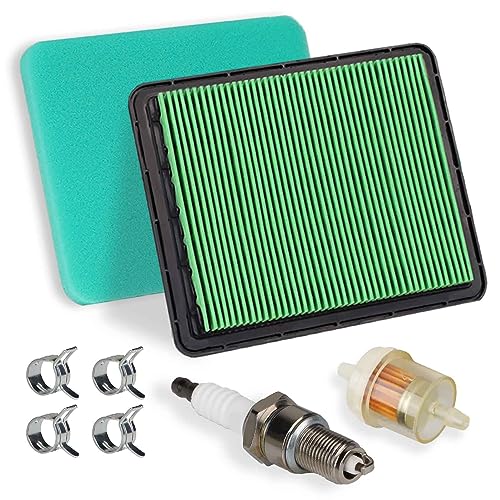
Premium Filter: Exactly for Honda 17211-ZL8-023 17211-ZL8-003 17211-Z8B-901 air filter, fits Honda engine GC190 GCV190 GCV190A GCV190LA GC160 GCV160 GCV160A GCV160LA GC135 GCV135 GX100 air filter, replace parts # 5580402 6718159.

【Honda Lawn Mower Tune Up Kit】Air Filter Replace # Honda 17211-Z8B-901. Fuel Filter Replace # Honda 16952-Z8B-000. Spark Plug Replace # NGK BPR6ES F6RTC

Ignition Coil and Spark Plug kit for Briggs & Stratton 594626 595038 595304 592841 795315 799650 Engine