
Pick a tool that matches your yard’s size and terrain: a string trimmer for small flat lawns, a scythe for tall overgrown grass, a sickle for tight corners, or a hedge trimmer for precise edging. Use a straight‑shaft trimmer with a perpendicular edge position for uniform cuts, swing a scythe with a staggered stance and low blade angle to glide ¼‑½ in above ground, and keep the sickle’s curved blade parallel to the soil for clean slices. Follow safety gear guidelines and maintain sharp edges for efficiency. Continue and and you’ll uncover detailed step‑by‑step techniques.
Pick the Right Mower‑Free Tool for Your Lawn Size, Terrain, and Grass Height
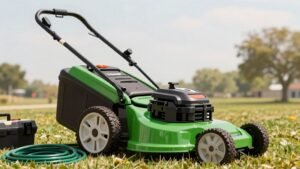
When you assess your lawn’s size, terrain, and grass height, you can match each condition to a mower‑free tool that maximizes efficiency and minimizes effort. For a small, flat lot under ¼ acre, a manual reel mower offers lightweight precision, low maintenance, and zero emissions, making its advantages clear for low‑height cuts. However, if you need faster throughput, a battery electric mower can struggle with limited runtime and reduced torque on thicker grass, highlighting its limitations. On medium lawns (¼‑½ acre) with modest slopes, a self‑propelled electric mower balances power and maneuverability, while a high‑capacity leaf blower (450‑600 CFM) handles debris without a mower. For uneven terrain, consider a hover mower or a 4WD remote model that can adjust cutting height between 1.3‑4.6 inches, ensuring consistent results across slopes. Choosing the appropriate tool also depends on the mower’s power source, as electric motor efficiency can significantly affect performance on hilly terrain. Applying a thin layer of peat moss before seeding can help retain moisture and protect seedlings.
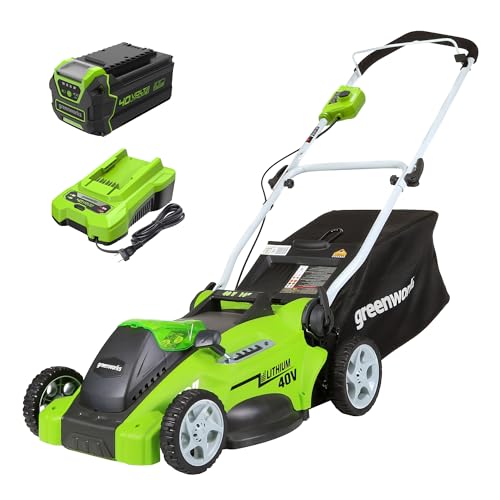
[16" LAWN MOWER] - This 40V lawn mower cuts up to 1/3 acre with fully charged 4.0Ah battery (varies based on grass condition and operator technique)

EXTENDED RUNTIME FOR LARGER LAWNS Powered by an upgraded 40V 8.0Ah battery, this cordless lawn mower offers twice the capacity of a standard 4.0Ah battery. Enjoy up to 45 minutes of uninterrupted mowing, ideal for maintaining lawns up to 1/2 acre on a single charge.

21" Deck Size - Durable steel that plows through the tallest grass Push Button Start - Press and mow, no more cord yanking Intelligent Brushless Motor Technology - 2x more torque, more power, longer runtimes, quiet operation, and extended motor life
How to Use a String Trimmer – A Mower‑Free Tool for Quick, Even Cuts
A well‑chosen string trimmer can tackle edge‑to‑edge grass with speed and uniformity, and you’ll find that selecting the right power source, shaft style, and line diameter is the first step toward consistent results. Choose a battery powered operation if you need cordless freedom and up to 45 minutes of runtime; a straight shaft design lets you reach under obstacles and maintain a uniform line path. Before you start, wear safety glasses, long pants, and hearing protection, then inspect the guard and clear debris. Fill a gas tank or fully charge the battery, prime the engine if needed, and pull the starter cord smoothly. Hold both grips, keep full throttle, and advance the line by tapping the head on the ground. Use a perpendicular edge position for clean perimeters and an angled taper for subtle height gradients. Clean the head after each pass and replace worn line promptly to preserve cutting efficiency. Modern trimmers often feature an adjustable cutting width to accommodate different lawn sizes. Remember to regularly check the line tension to ensure smooth operation and prevent line breakage. Understanding the spinning line mechanism helps you maintain optimal cutting performance.

2-in-1 Trimmer & Edger: Easily switch between trimming and edging with one versatile cordless tool. Create clean, defined edges along driveways, sidewalks, flower beds, fences, and landscape borders while keeping grass and weeds under control

2 IN 1 TRIMMER & EDGER : Easily converts from a string trimmer to an edger lawn tool in just seconds.

6200 RPM: The POWERDRIVE Transmission delivers more power from the motor to the cutting string so you can get the job done faster
Step‑By‑Step Guide to Cutting Tall or Overgrown Grass With a Scythe
If you need to tame tall or overgrown grass without a mower, start by setting up the scythe so the lower handle rests at hip‑bone height, the elbow rests comfortably on it, and the top handle aligns with your fingertips when the snath is extended. Adjust the blade angle by pivoting on your knee until the tip sits about 5 cm below a reference point, then insert a wooden wedge to raise the edge for thicker thatch. Adopt a staggered stance, left leg forward, and swing from the hips, allowing the blade to glide ¼–½ inch above ground. Use short, loose‑grip strokes, letting foot pressure dictate swath width. Incorporate seasonal mowing considerations—cut lower in wet spring, higher in dry summer—to protect soil structure. Apply ergonomic accessory recommendations such as padded grips and adjustable straps to reduce fatigue during extended sessions. Blade must be kept close to the ground at all times.
Master the Sickle for Tight Corners, Rough Patches, and Neglected Beds
Even the tightest corners and roughest patches become manageable once you grasp the sickle’s geometry and motion. Adopt a precision grip, positioning the handle so your wrist remains neutral while the blade’s curved arc follows the ground. Choose a blade configuration that matches the task: a 6‑inch, sharply curved weeding sickle for tight beds, or a 10‑inch, slightly curved grass sickle for broader, rougher areas. Execute a controlled side‑to‑side swing, keeping the blade parallel to the soil and applying slight downward pressure to slice through dense vegetation. For thicker stems, switch to a pulling motion, aligning the blade with the plant’s axis. Maintain the edge with a scythe stone after each session to preserve cutting efficiency and reduce fatigue. Always wear protective gear to safeguard against accidental cuts and debris.

Precise Harvesting: The Zenport K202 Lavender Harvest Sickle, with its 6.5-inch curved, serrated blade, is your ultimate ally for precise and clean cuts; perfect for lavender, berries, and vegetable crops, this gardening sickle ensures minimal damage to surrounding plants, optimizing harvest efficiency and quality, making it indispensable for both professional growers and home gardeners.

Application:It adopts ergonomic design and the wooden handle is more comfortable. It can be used for weeding, loosening, growing plants, etc. If you are a gardener , then it must be indispensable.

Durable 13.5-Inch Carbon Steel Blade - Forged from high-quality carbon steel, this sickle features a durable, rust-resistant blade that stays sharp for years. The tempered steel ensures strength and longevity for tough tasks.
Edge‑Finishing Tips With a Hedge Trimmer – Mower‑Free Edge Solution
Trim the hedge trimmer along the pre‑marked line, keeping the blade vertical and sweeping it up‑and‑down to carve a clean, mower‑free edge. First, verify the string guide stays taut; a loose line skews the angle adjustment and produces uneven cuts. Hold the trimmer at a 10‑degree tilt from horizontal on chest‑high hedges, then execute a controlled arcing motion from the furthest point toward the edge. Use a light final pass to smooth the line, then rake the surface to expose missed spots. Perform blade maintenance after each session: clean debris, inspect for dullness, and sharpen if needed. Consistent blade maintenance preserves cutting precision and reduces fatigue, ensuring a professional finish every time. The client prefers to mow the lawn themselves, so leave some leaves for them to collect later. Maintain a steady rhythm to avoid uneven edge formation while edging. Consider using a dual‑line head for smoother cuts and longer line life. Selecting the appropriate power source can significantly affect both noise level and operational efficiency.

Smooth Cutting Action: The 17-inch dual-action hardened steel blade reduces vibration for comfortable trimming with power hedge trimmers

[HYPER CUT CAPACITY]: 5/8-inch cutting capacity gets through all your bushes and hedges with greater performance. 22.4-inch dual action steel blade brings you an extraordinary hedge trimming experience, offering you a smooth cutting with less vibration.

2-in-1 Trimming with Quick Blade Change: Switch between the 9.06" hedge blade and 5.12" grass blade in seconds with the tool-free quick blade change system. This cordless grass shears and hedge trimmer helps trim hedges, shape shrubs, cut grass edges, and maintain flower beds with one versatile garden trimmer.
Choose Battery‑Assist Shears for Low‑Mobility or Tiny‑Area Cutting
When you need to cut in tight spaces or work with limited upper‑body mobility, battery‑assist shears give you the power and precision of a motorized tool while remaining lightweight and easy to control. Insert two AA alkaline cells, lock the scissors into the fabric‑strap base, and connect the capability switch. The FAULHABER DC‑micromotor delivers continuous torque up to 25.4 V, enabling fine‑detail cutting of paper, fabric, or grass‑like strands without fatigue. Battery‑powered portability lets you work up to 1.77 in. diameters, perfect for miniature lawn patches or intricate edging. The base stabilizes the tool for users with limited mobility, yet you can detach the shears for unrestricted use when your upper‑extremity strength permits. This combination of lightweight design, adaptive mounting, and precise blade geometry maximizes efficiency in confined or accessibility‑focused cutting tasks. The shears are ergonomic and weigh only 16 oz, reducing wrist strain during prolonged use. Self‑propelled mowers also provide reduced physical effort on uneven terrain, complementing the ease of use of battery‑assist shears. For larger lawns, a self‑propelled mower can cut more area with less fatigue.
Safety Checklist and Maintenance for All Hand‑Powered Cutting Tools
How can you guarantee every hand‑powered cutting task remains safe and reliable? Follow a strict checklist: before each use, inspect blades, guards, and handles for cracks, dents, or splinters; replace any faulty parts. Verify cords are undamaged and that electrical tools meet power tool safety standards. Wear anti‑vibration gloves, dust masks, and secure loose clothing; restrain long hair. Keep a 50‑foot safety perimeter, and never start a blade in contact with the ground. Use GFCI protection in damp areas and avoid ungrounded adapters. Apply noise reduction techniques such as insulated handles and low‑vibration designs. After work, clean grease, tighten screws, and sharpen blades. Review OSHA and ANSI guidelines and complete the required safety training. Remember to maintain proper posture while lifting any cutting tool to prevent back strain. Always wear protective eye gear when operating hand‑powered cutting tools. Follow the spark plug torque recommendations when reinstalling any engine components.
Troubleshooting Common Problems When Mowing Without a Traditional Mower
After checking blades, guards, and power connections, you’ll likely encounter performance issues that stem from the hand‑powered tools themselves. Unevenly worn blades cause chatter and streaks; sharpen or replace them before each session. If the mower’s height setting is too low, you’ll see scalping spots, so calibrate the cutter deck to a consistent level. Inconsistent mowing technique—overlapping passes at varying speeds—produces patchy lawns; adopt a steady stride and maintain uniform overlap. Power loss often derives from a partially charged lithium‑ion battery; verify voltage, clean terminals, and replace aging cells. Excessive vibration signals bent blades or loose hardware; tighten screws, balance the head, and remove debris. Finally, line‑feeding jams arise from tangled spool or worn line; clear the feed chamber and use fresh, appropriately‑gauge filament. Adjusting the bed knife bolts can improve the reel‑and‑bedknife contact and restore proper cutting performance. Always wear protective gloves when handling sharp blades to prevent accidental cuts. Regularly inspecting blade sharpness is essential because dull blades can tear grass, leading to a uneven lawn and increased disease risk.