
You’ll find that systemic herbicides—like 2,4‑D, dicamba, mecoprop, or triclopyr—kill poison ivy by being absorbed through fresh leaves or cut stems, then traveling down the phloem to the roots where they disrupt growth hormones and amino‑acid synthesis. Apply when the vine is actively expanding in spring‑summer for best uptake, and use a low‑pressure spray or cut‑stem paint to limit drift. Proper timing, full foliage coverage, and protective gear give you near‑complete control, and the next section shows how to fine‑tune the process.
How Herbicides Kill Poison Ivy: The Science Behind the Process
Herbicides eliminate poison ivy by hijacking the plant’s own transport system: after you apply a systemic agent such as 2,4‑D amine, dicamba, mecoprop, or triclopyr, the chemical is absorbed through the foliage or a fresh cut and then moves via the phloem from leaves and stems down to the roots. You’ll notice that active growth drives translocation, so timing applications during rapid spring‑summer expansion maximizes uptake. Persistence factors such as herbicide half‑life and leaf surface retention influence how long the toxin remains effective, especially when you use cut‑stem paint versus foliar spray. Choose application methods that match the vine’s size: cut vines 2‑3 ft above soil and paint fresh stumps, or apply a high‑volume foliar spray on fully expanded leaves, shielding nearby desirable plants. Repeat treatments address regrowth and guarantee complete root necrosis. Leaves typically have three leaflets. Proper timing of applications with the plant’s peak growth phase enhances systemic movement and control efficacy. The speed of weed control also depends on whether the product is systemic or contact, with systemic herbicides often showing visible results within 24‑48 hours. Understanding herbicide selectivity helps prevent damage to neighboring grass species.
Glyphosate for Poison Ivy: How It Works and When to Apply
After reviewing how systemic agents like 2,4‑D move through the plant’s phloem, you’ll find that glyphosate works a bit differently: it’s absorbed through the foliage, travels to the roots, and blocks the enzyme that synthesizes essential amino acids, causing the vine to die from the inside out. You should spray a 2‑3 % foliar solution on fully expanded poison‑ivy leaves during the early‑summer fruit stage, preferably on warm, sunny days with no rain for at least an hour. For mature vines, raise the concentration to 5 % and add a penetrant if leaves are waxy. In shady area application, guarantee thorough coverage because lower light slows uptake. Glyphosate breaks down quickly, so soil persistence concerns are minimal, but avoid repeated use near sensitive seedlings. Repeat if necessary, monitoring for regrowth over several weeks. Triclopyr is selective and can be used when preserving grasses is a priority. Low‑toxicity alternatives such as vinegar‑based sprays can also manage weeds but may require multiple applications. Vinegar can cause visible wilting within 30 minutes under optimal conditions. The degradation rate of glyphosate is influenced by soil microbial activity.
Triclopyr vs. 2,4‑D: Choosing the Right Selective Herbicide for Vines
Choosing between triclopyr and 2,4‑D hinges on the vine’s growth stage and your need for long‑term suppression. Triclopyr targets broadleaf vines, sparing grasses, and offers strong residual activity characteristics that linger weeks to months, keeping regrowth at bay. Apply it after leaves fully expand, using undiluted paint on cut stems for woody vines like poison ivy. 2,4‑D works best in late spring or early summer when growth is rapid; it delivers 95 % control at 0.5 lb/acre on two‑year‑old vines but drops to 80 % after four months, so expect some resurgence unless you mix it with dicamba or triclopyr. Both chemicals require active foliage for translocation to roots, and you must wear protective equipment to avoid skin contact and inhalation. The toxin urushiol can remain active for up to five years after being emitted from the plant. Proper timing can minimize non‑target damage and protect nearby desirable plants. Shelf life of herbicides can be reduced by exposure to extreme temperatures. Selecting the appropriate herbicide also depends on the soil pH to maximize absorption.
Application Steps: Prepare, Spray, and Prevent Drift
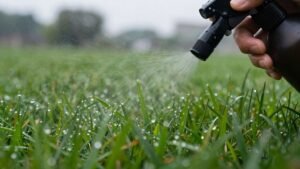
When you’re ready to tackle poison ivy, start by gearing up with long‑sleeved clothing, sturdy pants, and disposable gloves secured with rubber bands, then prune the vines just enough to expose fresh growth without removing the entire plant. Wearing protective gear, you select a triclopyr‑based or glyphosate concentrate, ensuring the day is warm, sunny, and plants are actively growing—key seasonal timing considerations. Spray the foliage until fully wetted, using a low‑pressure nozzle to limit overspray. For vines on structures, cut 2‑3 ft above soil and paint the cut with undiluted triclopyr within 48 hours. Apply only on calm days, targeting poison ivy exclusively, and avoid drift toward desirable vegetation. This precise, timing‑aware approach maximizes root kill while protecting surrounding flora. Leaves turn reddish in spring, green in summer, and yellow/red in fall. Heat from a controlled burn can also damage plant tissues and accelerate weed eradication. Moss can be effectively controlled using a targeted herbicide approach that minimizes collateral impact.
Spot‑Treating Poison Ivy vs. Whole‑Area Herbicide Application
If you need to decide between spot‑treating poison ivy and applying herbicide over a whole area, weigh the trade‑offs in selectivity, dosage, and environmental risk. Localized applications let you concentrate triclopyr or a cut‑stump mix directly on vines, delivering higher rates up to label limits while sparing nearby shrubs and turf. Efficient spot treatments cut herbicide volume, reduce drift, and lower cost, especially for infestations under 10,000 sq ft. Whole‑area broadcasts, by contrast, require lower per‑acre rates of non‑selective agents like glyphosate, increasing drift potential and harming desirable broadleaf plants. Broadcast use also demands longer rain‑free windows and careful wind control. Choose spot‑treating when precision matters; reserve broadcast for uniform lawns with tolerant grasses or isolated fence rows. Fine hairs help the vine cling to bark, making spot‑treatment especially effective. Mulch can also act as a physical barrier, suppressing weed growth by limiting light and space. Boiling water provides a chemical‑free alternative for small, isolated vines. For a systematic approach, consult a grass seed guide to identify optimal biome conditions for seed collection.
Result Timeline: From Visible Wilting to Full Root Death
Within 24 hours of a proper herbicide spray, you’ll see the poison‑ivy leaves begin to wilt and curl, marking the first visible sign that the systemic chemical is moving into the plant’s vascular system. By day 3‑4 the foliage turns yellow‑brown as the herbicide translocates to shoots, giving you clear visible results that the treatment is progressing. Around two weeks you’ll observe a total loss of above‑ground tissue; the plant appears dead, but roots may still linger. Continue monitoring for another two to three weeks; systemic agents like glyphosate or triclopyr gradually accumulate in the root zone. When new shoots fail to emerge after this period, you have root death confirmation, indicating complete eradication. The plant typically thrives in the edge effect of yards, where it can be especially difficult to eradicate without thorough treatment. Applying a thick layer of organic mulch can suppress future weed emergence and protect soil health. For best results, apply the herbicide when the soil temperature is above 50 °F to ensure optimal absorption. Apply the treatment during the early growing season for maximum effectiveness.
Common Mistakes and Quick Fixes for Better Effectiveness
Even seasoned applicators can sabotage their own efforts, so double‑checking each step is vital for reliable poison‑ivy control. You often skip proper herbicide dilution, mixing glyphosate to a 2 % solution or triclopyr to label‑specified ratios, which leaves the active ingredient under‑concentrated and ineffective. Applying on cool, cloudy, or windy days reduces uptake and creates drift, damaging adjacent broadleaf flora. Target only fully expanded leaves; spray the underside and guarantee complete coverage to avoid repeat treatments. When you cut vines, paint the fresh stump immediately with a triclopyr‑based mix, and repeat the cut‑stump application after two weeks. Finally, follow applicator safety precautions: wear long sleeves, gloves, and boots, and clean tools promptly to prevent urushiol transfer. Urushiol is present in all parts of the plant year‑round. Vinegar’s acetic acid can also be used as a supplemental control method for small, young poison‑ivy shoots, vinegar concentration being a key factor for effectiveness. Higher acetic acid levels can cause more rapid desiccation of leaf tissue, improving control of early‑stage growth. Applying herbicide on dry, calm weather maximizes absorption and minimizes runoff.
Poison Ivy Herbicide Safety: Handling, Pets, and Environmental Precautions
When you handle poison‑ivy herbicides, start with full protective gear—long sleeves, pants, socks, boots, and chemical‑resistant gloves—to keep urushiol and active ingredients off your skin. Apply on calm, warm days using a fan‑or‑cone spray to coat leaves without runoff, and always work low wind speeds to achieve avoiding herbicide drift. Keep pets and people out of the treated zone until the spray dries—usually a few hours for glyphosate and triclopyr. Follow label re‑entry intervals, and never let animals touch sprayed foliage. For environmental safety, target only the vine, avoid overspray near trees or turf, and use cut‑stump painting to limit spread. These steps minimize non‑target impacts while ensuring effective control. Use the Comfort Wand for one‑touch precision to reduce bending and improve application accuracy.
What to Do When Herbicides Don’t Work: Simple Follow‑Up Options?
If your herbicide applications haven’t knocked out the poison ivy, start by confirming that the active ingredient reached the plant’s vascular system; often the waxy leaf cuticle or insufficient coverage prevents absorption. Next, try a mechanical cut‑stump method: trim vines at the base, then paint the cut surface with undiluted triclopyr using a hair‑color applicator to drive the toxin into the roots while avoiding drift onto nearby trees. If systemic chemicals fail, switch to organic detergent mixes—combine full‑strength vinegar, table salt, and a few drops of dish soap, then stream‑spray the solution directly onto foliage, keeping mist away from desirable plants. For stubborn patches, apply a vinegar based defoliant repeatedly, waiting two weeks between treatments to assess leaf drop and root death before considering a second round. Flame weeders can also be used as a non‑chemical option to scorch vines and reduce leaf viability.