
You’ll shave mowing time almost in half with a zero‑turn, which cruises 5‑8 mph and pivots 180° to eliminate dead space, while a riding mower lags at 3‑5 mph and needs extra back‑and‑forth passes. Zero‑turns handle gently rolling lawns efficiently, but their higher RPMs demand more drivetrain checks; riding mowers stay steadier on steep or uneven terrain and support heavier attachments like dethatchers and sprayers. If you want to compare steering, terrain, and attachment limits in depth, the next section will guide you further.
Zero‑Turn vs. Riding: Which Saves You Time?
Anyone who’s tackled a large lawn knows that speed matters. Zero‑turn mowers cruise at 5‑8 mph, often hitting 7 mph, while riding mowers linger at 3‑5 mph. On flat, open yards the higher ground speed and zero‑degree turning radius let zero‑turns finish a 0.5‑acre job 60‑75 % faster, cutting the number of passes required. Their 42‑72‑inch decks cover more ground per sweep, and the precise 180‑degree pivots eliminate dead‑space between rows, preserving mowing quality with uniform, clean cuts. Ergonomic advantages—suspended high‑back seats and vibration dampening—reduce fatigue, letting you operate longer without strain. Consequently, you gain both time efficiency and a superior final lawn appearance. Zero‑turn mowers also feature hydrostatic transmission that provides smooth acceleration and precise speed control. The independent wheel pivot system gives a zero‑degree turning radius that enables tight maneuvering around obstacles. The lightweight design of stand‑on mowers makes them easier to store and transport, which is why they are often chosen for smaller, obstacle‑dense yards.

Cleaner, more even cuts than gas with constant 17K ft/min blade speed
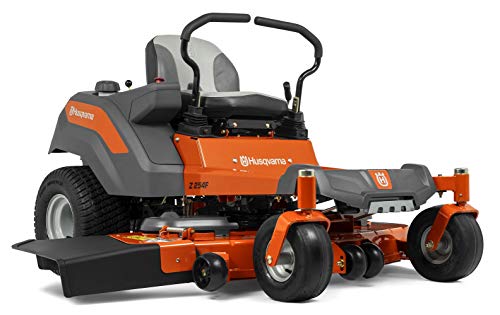
23 HP Kawasaki engine provides reliable startups and a max speed of 6.5 MPH

| Universal Fit Zero-Turn Mower Cover | - Measures 79" x 46" x 55" (L x W x H), Zettum lawn mower covers are designed to fit most brands' zero turn mowers up to 60" decks, including: Greenworks, Honda, Husqvarna, Cub Cadet, Toro, John Deere, Ryobi, Sun Joe, EGO, PowerSmart, Craftsman, LawnMaster, Snapper and more. For special zero turn mower models, please check the size carefully.
Steering & Maneuverability Around Trees & Beds
When you approach a tree or flower bed, the independent rear‑wheel control of a zero‑turn mower lets you pivot on the spot, eliminating the need for extra passes. This zero turn control achieves 360° rotation by varying lever positions; one wheel moves forward while the other reverses, producing a tight turning radius that fits within the mower’s own footprint. You can execute 90° pivots at row ends, then reverse slightly to align with the next pass, maintaining consistent cut lines without turf tearing. The obstacle avoidance capability lets you skim around bushes, slides, and intricate landscaping features, reducing the requirement for separate trimming tools. Compared with a steering‑wheel mower, you avoid multiple back‑and‑forth maneuvers, saving time and preserving lawn integrity. Always perform a quick safety check of the spark plug and oil level before starting, as a well‑maintained engine ensures reliable zero‑turn performance. Remember to inspect the mower before each use to catch any worn parts or loose bolts. Proper blade maintenance, such as regularly tightening blade bolts to the manufacturer’s torque specification, helps prevent vibration and uneven cuts.
Speed Showdown: 8 MPH Zero‑Turn vs. 4 MPH Riding
Traversing tight tree circles, you’ll notice the real time‑saver is the mower’s speed. An 8 MPH zero‑turn reaches the top of its 7‑8 MPH range, cutting mowing time roughly in half compared with a 4 MPH riding mower. The higher velocity, combined with 48‑54‑inch deck width options, reduces the number of passes required on a two‑acre plot, delivering straight‑line efficiency while preserving cut quality. Hydrostatic transmissions sustain these speeds without sacrificing torque, so fuel consumption and engine wear stay low. Maintenance considerations shift: zero‑turns demand more frequent drivetrain inspections due to higher RPMs, whereas riding mowers benefit from simpler belt‑drive upkeep. Choose the platform that aligns with your operational tempo and service schedule. Apply a thin layer of ¼‑½ inch peat moss over seeded areas to protect seed and retain moisture. Follow the step‑by‑step guide to ensure proper start‑up and safety procedures. Selecting the right mower also depends on lawn size to match the deck width and power.

SIZE & LOAD SPECIFICATIONS: Tires Size: 20/10-8. Tread Depth: 0.295in / 7.493. Rim Width: 8in. SW: 9.29''/236mm. OD: 19.49''/495mm. Max Load (lbs): 1190lbs@22PSI. Type: Tubeless. Material: Rubber
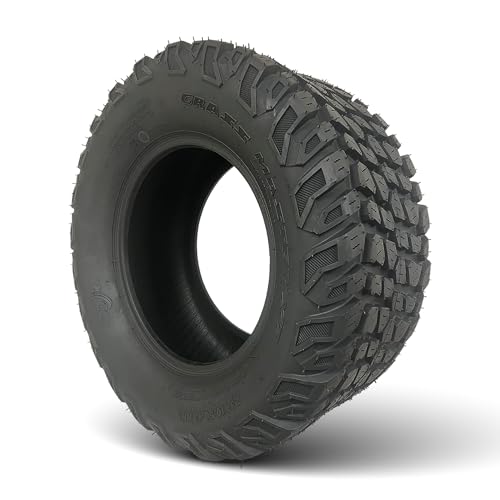
The GRASS MASTER XT tire features a turf-friendly design that blends an aggressive tread pattern with improved traction on slopes to help maximize productivity for zero-turn, riding and stand-on mowers.

Set of 2 Tire and Wheel Assemblies
Terrain Suitability for Zero‑Turn vs. Riding Mowers
Zero‑turn mowers excel on gently rolling lawns, but their stability drops sharply once slopes exceed 12 degrees, where traction loss and side‑hill drift become common; you must respect slope safety thresholds to avoid accidents. On mild grades (10–12°) a dry surface lets you drive up‑and‑down safely, but beyond 15° you need a model rated for steep terrain, such as a steering‑wheel zero‑turn with hydrostatic transmission and large rear tires that act as traction enhancement features. Riding mowers, by contrast, maintain balance on uneven ground because their four‑wheel coordination and lower center of gravity reduce side‑hill drift. For slopes over 20°, a commercial‑grade zero‑turn with dual wheels or a lawn tractor with robust suspension is advisable, ensuring consistent grip despite dew‑wet grass. When choosing a mower, consider the cutting width to match your lawn’s size and terrain for optimal efficiency. Front‑wheel‑drive mowers often provide tighter turning radii on irregular terrain.

【NOTE】Ensure sufficient clearance between the front bar and wheel. Insufficient space may cause interference! If you have any unsatisfied experience, please feel free to contact us, our team is available 24/7 via email.
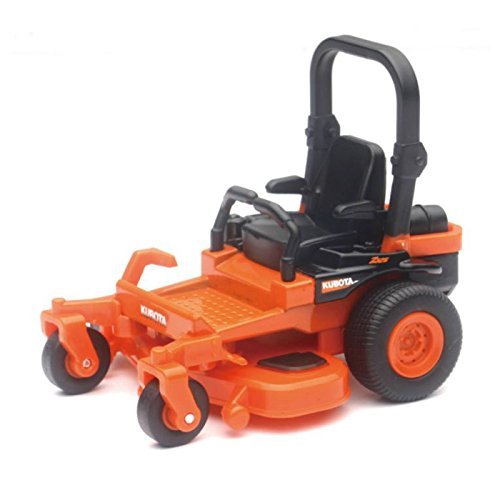
1/64 Kubota Z700 Zero Turn Lawn Mower, Pull Back Action is made by New Ray.

Superior Slope Climbing and Heavy-Duty Track All-Terrain Design: Equipped with a rubber track system, this machine easily conquers steep slopes up to 40-45 while adapting to complex terrains like orchards, farms, hillsides, embankments, wetlands, and dense brush. It can effortlessly traverse ditches, soft soil, and thick vegetation areas that ordinary small mowers cannot handle, solving multiple all-terrain challenges with a single machine
Attachment Limits: Dethatching, Spraying, Towing
If you need a mower that can handle dethatching, spraying, and towing without sacrificing performance, riding mowers are the more versatile choice. Their chassis supports front‑mounted dethatchers that break up thatch while minimizing soil compaction, and they accommodate rear sprayers that deliver precise herbicide or fertilizer doses. Battery capacity on electric riding models remains sufficient for extended attachment use because the powertrain distributes load evenly across the drive system. In contrast, zero‑turn hydrostatic transmissions limit heavy attachment points, reducing pulling power and forcing caution when towing carts or trailers. Riding designs also feature reinforced hitch brackets that sustain higher torque, allowing you to haul debris or equipment without compromising stability or mower efficiency. Proper pre‑run checks ensure safe operation and prevent damage to the mower’s drivetrain. Regularly inspect the spark plug to maintain optimal engine performance.

Multiple Parts: This package includes a lawn mower/ lawn tractor deck washing kit, including plastic wash hoses, 2 x quick connector adapters (green and black finish, 5.1 x 3.3 x 3.3 cm), 1 x silver spray nozzle made of steel (4.9 x 2.3 x 2.3 cm), 1 x silver stainless steel blade and 1 silver stainless steel nut. The quick connector adapter will make it faster and more convenient to wash the deck and improve your deck washing efficiency.

VERSATILE COMPATIBILITY: This quick-connect lawn mower deck wash port hose adapter is crafted to be compatible with Husqvarna, Craftsman, MTD, Cub Cadet, Troy-Bilt, Toro, AYP, and John Deere. Its universal fit allows you to keep your mower deck clean regardless of which mower you use. Additionally, this accessory replaces multiple part numbers, providing a comprehensive solution for your mowing maintenance and simplifying the overall process.

490-900-M061 Deck Wash Kit Replaces Cub Cadet MTD Troy Bilt 490-900-M061, 490-900-0025. This Kit Includes 1x921-04041 Lawn Mower Deck Wash Adapter Nozzle+1x737-04003D Deck Wash Nozzle(Stainless Steel)+1x736-0225 Washer-Intern L 5/8+1x712-0641 Hex Nut+1x731-07487 Deck Wash Nozzle (Plastic)+1x738-04278 Shoulder Screw.
Cost‑Benefit: Up‑Front Price vs. Time Savings
Having examined how attachment capabilities differ, the next factor to weigh is the cost‑benefit balance between upfront price and time savings. A standard riding mower costs $1,500–$4,000, offers modest fuel efficiency, and requires minimal maintenance, which translates into measurable maintenance savings over its lifespan. Zero‑turns start at $2,500 and can exceed $10,000, but their 7–8 mph top speeds and 42–72‑inch decks cut mowing time by roughly 50 % on lawns larger than 2 acres. The reduced machine hours improve fuel efficiency and lower fuel spend, while fewer passes decrease wear on blades and drivetrain. For small, simple lawns, the lower purchase price and maintenance savings make riding mowers the better value; for large, frequently mowed properties, the time saved and fuel efficiency of a zero‑turn justify its higher upfront cost. Hydraulic systems provide smooth cutting pressure that can further reduce blade wear and improve cut quality. Selecting a mower with a reliable warranty can also protect long‑term ownership costs. Understanding ground clearance differences helps ensure the mower can handle varied terrain without damage.
Lawn‑Health Risks: Divots, Tearing, Prevention Tips
When uneven terrain forces mower wheels to dig into the soil, divots appear, especially at high speeds (8‑20 mph) where the deck tilts and the rear wheels lose traction. You should monitor blade angle and soil moisture; a sharp blade maintenance schedule prevents the blade from dragging soil and creating gouges. On slopes above 10°, limit speed, use three‑point turns, and avoid sideways travel to reduce tear‑induced divots. Zero‑turn pivots generate opposing wheel forces that rip turf at the pivot point; maintaining sharp blades and engaging traction control lessen this effect. Implement risk mitigation strategies such as pre‑mowing debris removal, low‑speed operation on wet ground, and regular deck inspection to preserve lawn integrity. Always wear protective gear and perform a pre‑use equipment inspection to ensure safe operation. Regularly checking blade sharpness according to the recommended sharpening angle helps maintain a clean cut and prevents turf damage. A clean cut also promotes healthy root growth by reducing leaf tearing.
Skill Curve: Learning to Control a Zero‑Turn
Divots and turf tears often stem from improper steering, so mastering zero‑turn control is the next logical step. You begin by fastening the seatbelt, setting the throttle to mid‑high, and releasing the parking brake while the engine warms for 30‑60 seconds. Neutral lever positions spread outward to stop; pulling one lever forward and the other back creates a zero‑radius pivot. Pedal response sensitivity dictates how quickly the deck reacts, so practice gradual turns before attempting sharp pivots. Terrain navigation challenges appear on slopes, wet grass, and near obstacles; reduce speed and avoid full throttle until you trust the levers. After 1–2 hours you’ll nail straight lines, 3–5 hours will solidify turns, and beyond 10 hours you’ll fine‑tune muscle memory for professional‑grade mowing. Equal pressure on both levers is the key to moving straight forward or backward. Using a tow dolly can simplify transporting the mower when you need to move it without a trailer.
5 Questions to Pick the Right Mower
If you’re deciding between a riding mower and a zero‑turn, start by asking yourself a series of concrete questions that map your terrain, yard size, budget, fuel concerns, and maintenance preferences to the distinct capabilities of each machine. First, evaluate Terrain variations: Is your lawn flat, gently sloped, or does it exceed 15 degrees? Zero‑turns excel on flat or moderate slopes, while riding mowers provide stability on steeper hills. Next, quantify yard size and Mowing frequency: Larger properties (>½ acre) with frequent mowing benefit from a zero‑turn’s 42‑inch+ deck and faster 5‑8 mph speed; medium lawns (½‑2 acres) may be more cost‑effective with a riding mower’s 30‑54‑inch deck. Finally, weigh budget, fuel efficiency, and maintenance: Zero‑turns have higher upfront and repair costs but save time and fuel per acre; riding mowers cost less initially and demand simpler DIY upkeep. Reel mowers cut grass with a scissor‑like action, offering a clean, precise cut that is environmentally friendly.
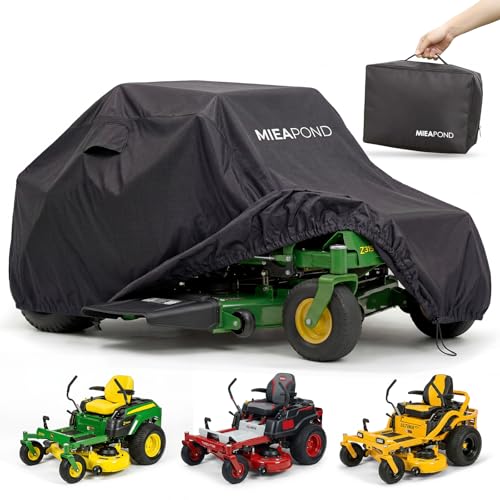
【ZERO TURN MOWER COVER】Universal fit for most zero turn lawn mowers. Our heavy duty waterproof zero turn mower cover provides complete protection for your equipment from sun, rain, dust, and snow. Compatible with John Deere, Toro, Cub Cadet, Husqvarna, Bad Boy, Kubota, Ariens, Craftsman, Troy-Bilt, Ferris and more

【Heavy-Duty Lawn Mower Cover】Crafted from 600D marine-grade tear-proof fabric, our cover is designed to withstand the toughest conditions, it's a testament to Himal Outdoors's commitment to quality

【All-Weather Ultimate Protection】Crafted from the 600D Oxford fabric with double-layer PU coating and sealed seams, the Kipiea zero-turn lawn mower cover keeps your lawn mower completely dry even under heavy rain, snow, or morning dew—no more soggy mower worries
Ideal Use Cases: Residential vs. Commercial Lawns
Most homeowners and property managers can quickly determine the best mower by matching lawn size, terrain, and usage frequency to the machine’s design. For residential properties under five acres with flat terrain, a zero‑turn mower optimizes mowing pattern layout, cutting up to 40 % faster and delivering precise edges that reduce secondary trimming. If your yard slopes over ten degrees or contains scattered obstacles, a riding mower offers simpler controls and better traction, easing crew training considerations for occasional use. Commercial sites benefit from zero‑turns’ 5–8 mph speed, durability, and tight‑space maneuverability, supporting daily crews and consistent pattern layout across large, complex lawns. Riding mowers suit hilly commercial terrain where stability and lower fuel consumption matter, though slower 3–5 mph speeds extend job time and demand more extensive crew training.