
Apple cider vinegar can kill weeds, but its effectiveness depends on the concentration and the weed’s maturity. A 5 % acetic‑acid solution only kills young seedlings, while 10 % reaches 85‑100 % mortality on slightly older plants. For mature grasses and perennials, you need 20‑30 % formulations, which achieve 80‑100 % control within a few hours; adding a surfactant like dish soap improves wetting and penetration. You’ll also want to know the best timing, safety tips, and cost comparisons.
Can Apple Cider Vinegar Kill Weeds? Quick Answer
If you’re wondering whether apple cider vinegar can actually kill weeds, the answer is yes—provided you use the right concentration and application method. You’ll achieve 5 % acetic acid for seedlings, but 20–30 % formulations are needed for mature grassy weeds. Studies show 5–10 % kills weeds in the first two weeks, while 20 % reaches an 80–100 % kill rate on older foliage when you fully coat leaves and growing points. Apply on hot, sunny days and add a surfactant such as dish soap to improve wetting; this maximizes effectiveness on grassy weeds. Because the acid leaves no residual activity, you must re‑apply for long‑term weed control, especially after rain or new germination. The added salt in the solution helps to enhance plant dehydration. For faster visible wilting, expect the first signs within 30 minutes to several hours after application. The high acidity of vinegar disrupts cellular membranes, causing rapid plant tissue damage. Acetic acid works by denaturing proteins in plant cells, leading to irreversible cellular damage.
Which Weed Species Are Most Susceptible to Apple Cider Vinegar?
Typically, the most susceptible weeds to apple cider vinegar are young annuals and the perennial Canada thistle. You’ll find that Canada thistle shows a 100 % kill rate at 5 % vinegar, with 20 % achieving mortality in about two hours, confirming high organic herbicide efficacy. Young annuals such as lamb’s‑quarters, smooth pigweed, giant foxtail, and velvetleaf succumb within two weeks when exposed to 5‑10 % solutions, as demonstrated by USDA ARS greenhouse data. Vinegar concentration comparisons reveal that broadleaf species like Queen Anne’s lace burn quickly, yet many broadleaf perennials need stronger formulations for lasting control. Grasses exhibit mixed responses; giant foxtail is vulnerable early, while other grasses show limited damage. These patterns guide precise, data‑driven application.
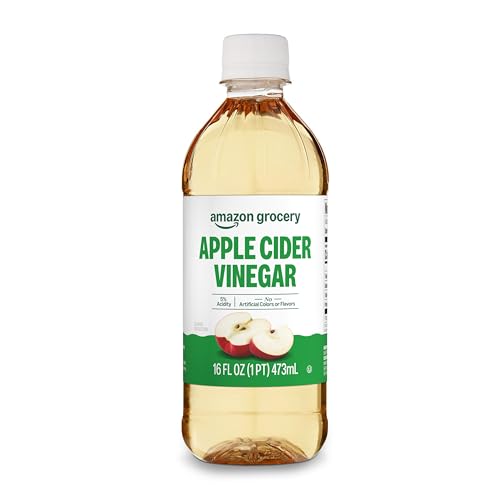
One 16 fluid ounce bottle of Apple Cider Vinegar

One 16 fl oz bottle of Heinz All Natural Apple Cider Vinegar with 5% Acidity

✓ RAW, UNFILTERED APPLE CIDER VINEGAR WITH THE MOTHER: Each serving delivers pure, undiluted ACV pressed from organically grown apples – complete with the naturally occurring “mother” of vinegar containing proteins, enzymes, and beneficial bacteria in convenient liquid drop form
Do You Need More Than 5% Vinegar? Real Difference Between 5% and Stronger Formulations
Most growers quickly find that the 5 % household vinegar that works on the youngest seedlings falls short once weeds mature, prompting a shift toward higher‑strength formulations. Data show 5 % kills only emergent seedlings, sparing roots and allowing regrowth; 10 % extends efficacy to slightly older plants, achieving 85‑100 % kill at higher growth stages, while 20 % reaches 80‑100 % control in spot‑sprayed cornfields and 100 % top‑growth kill on Canada thistle within two hours. For tenacious vines, 30‑45 % is recommended; 45 % browns tissue in two hours. Usage considerations include timing and coverage, but toxicity concerns rise sharply above 5 %: concentrations ≥11 % cause skin burns, eye injury, and mucous‑membrane irritation, necessitating protective gear and compliance with pesticide‑grade labeling. Applying the solution on a sunny, calm day enhances absorption. The acetic acid in vinegar damages plant tissue by breaking down cell membranes, which is why it works effectively as a natural herbicide. For optimal results, apply the solution when ambient temperatures exceed 30 °C to accelerate the herbicidal action. The herbicide action timeframe can vary widely depending on environmental conditions and weed species.

MAXIMUM STRENGTH CLEANING POWER: Unleash the power of Simply Vinegar 49%—an industrial-grade vinegar concentrate engineered for demanding cleaning jobs. Ideal for home, garden, and outdoor use, it cuts through grime, grease, and buildup with professional-grade results.

Concentrated vinegar used in place of environmentally harmful chemicals.

UNMATCHED PURITY AND CONSISTENCY: Experience Calyptus 50% vinegar concentrate solution, crafted with Pure Technical Grade Vinegar and DI Type II H20. Our concentrated solution consistently delivers the same smell, color, and results.
How to Apply Apple Cider Vinegar for Maximum Effectiveness – Timing, Coverage, and Safety
You’ll get the best weed‑killing results when you spray the apple‑cider‑vinegar solution on a hot, sunny day—ideally when temperatures are in the 90 °F range and the sun is high. Apply the mixture early, before noon, on a calm, rain‑free morning; avoid windy conditions to reduce inhalation risk. Prepare a solution of equal parts vinegar, salt, and dish soap, adding hot water to dissolve salts and a teaspoon of grapefruit seed extract for penetration. Use a spray bottle for targeted spray application, aiming directly at leaf surfaces. Guarantee uniform coverage distribution by coating each weed thoroughly, allowing the surfactant to break waxy cuticles. Keep children and pets away, and wait 24 hours before evaluating efficacy. Applying herbicide to damp foliage can dilute the product and reduce its effectiveness. Higher concentrations of acetic acid in undiluted white vinegar can grass control more rapidly.

Cost, Environmental Safety, and Practical Limits of Using Apple Cider Vinegar
Apple cider vinegar (ACV) can be a cost‑effective option for spot‑treating weeds, but its price advantage diminishes when you compare it to commercial alternatives and consider the quantities needed for larger areas. A 5‑10 % household solution costs $20‑$35 for roughly 300‑400 sq ft, whereas 20‑30 % horticultural vinegar runs $35‑$55 for the same coverage; Weedrot, a synthetic herbicide, costs $67.50 per gallon for comparable efficacy. You’ll need 44‑88 oz of 20 % solution per 1,000 sq ft, and dense infestations may require up to 2.75 qt. Environmental safety is high: residues degrade quickly, the product is approved as an organic biopesticide, and it is non‑toxic. However, ACV acts only on contact, showing negligible soil penetration, so repeated application frequency is essential for perennials, and overspray can damage desirable plants. Salt’s osmotic effect can also be leveraged to desiccate weeds, but it requires careful application to avoid harming surrounding grass. Vinegar’s acidity helps break down waxy plant cuticles, enhancing its herbicidal action. Diffusion LLMs enable faster, parallel processing of herbicide efficacy data, improving decision‑making for lawn care.