
You should wait 24–72 hours before re‑entering a treated area after granular weed‑killer application, and 24–72 hours (often 48 hours for mowing) after liquid sprays; glyphosate‑based products generally require 7–14 days for ornamental or woody plants and up to 30 days for conifers before replanting, while reseeding or overseeding typically needs a minimum of 3 days and preferably 7‑30 days depending on the formulation. Soil texture, pH, microbial activity, and temperature all modulate persistence, so the next sections will show how to fine‑tune these intervals.
What Is the Waiting Period for Granular Weed Killers?
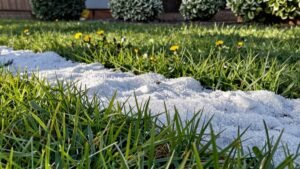
Typically, you’ll need to wait 24–72 hours after applying granular pre‑emergents before re‑entering the treated area, especially if you plan to water in the product. This interval guarantees granular barrier preservation, allowing granules to infiltrate the rhizosphere and bind with soil colloids. During the 24‑hour window, microbial activity initiates the gradual breakdown timeline, converting active ingredients into stable complexes that persist for 2–6 months depending on climatic flux and product chemistry (e.g., prodiamine 5–6 months, dimension 3–4 months). Immediate post‑application irrigation accelerates dissolution without compromising efficacy, while foot traffic avoidance prevents mechanical displacement. Split‑dose regimens (half‑rate, 6–8‑week intervals) extend residual control to approximately 5 months, aligning with label‑specified germination suppression thresholds. Forsythia bloom can be used as an indicator that soil temperature is approaching the optimal range for pre‑emergent activation. Understanding active ingredient mechanisms helps ensure proper application and weed control. Applying pre‑emergent at the soil temperature threshold maximizes uptake and longevity. Proper soil moisture management after application further reduces the risk of drift onto non‑target plants.

Designed to prevent weeds; will not aid in eliminating existing weeds. Prevents grassy and broadleaf weeds, including crabgrass, poa annua, goosegrass, henbit, and more.
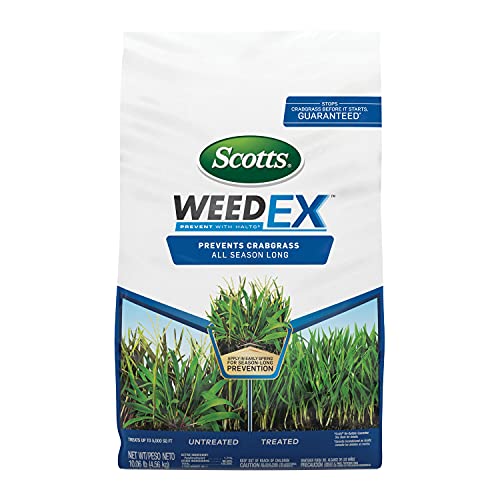
WEED PREVENTION: Scotts WeedEx Prevent with Halts is a weed control product that prevents the germination of listed lawn weeds so you can enjoy your lawn

WEED PREVENTION: Scotts Halts Crabgrass & Grassy Weed Preventer prevents the germination of listed lawn weeds so you can enjoy your lawn
What Is the Waiting Period for Liquid Weed Killers?
When you spray a liquid herbicide, the label‑specified waiting period before re‑entry or mowing usually ranges from 24 hours to 72 hours, depending on the active ingredient, formulation, and environmental conditions. Herbicide absorption time dictates that you must delay mowing at least 24 hours to permit translocation into the rhizosphere, while systemic products such as Bow & Arrow demand a 3‑4‑day pre‑ and post‑mowing buffer. Your weed treatment regimen should incorporate environmental watering (1‑2 inches weekly) after the initial 24‑hour dry period to accelerate phytotoxic response to 3‑5 days, especially under full‑sun exposure. Avoid irrigation within the first four hours for leaf‑absorbed systems, and honor label‑specific re‑entry intervals for pets and children. Monitoring yellowing and wilting between days 5‑7 confirms efficacy before subsequent applications. Longer waiting period improves overall weed control. Applying herbicide to damp foliage can dilute product efficacy and increase runoff risk. For best results, apply during the optimal growth stage of the target weed.
Roundup Herbicide Waiting Period: When Can I Replant?
After discussing the post‑spray drying window, the next concern is how long you must wait before planting after using Roundup herbicides. Glyphosate residual activity dictates replanting intervals; most formulations require a 7‑day minimum, extending to 14 days for sensitive vegetables or annuals. Product application timing varies: Roundup Weed & Grass Killer 4 permits ornamental flowers after 1 day, lawn grasses after 3 days, non‑conifer trees/shrubs after 14 days, and conifers after 30 days. Concentrate follows a similar matrix, while Dual Action 365 imposes a 12‑month wait for any ornamentals or woody plants. Higher concentrations (≈41 %) or heavy clay soils can push the interval to 2–3 weeks. Always consult the label, adjust for temperature‑driven degradation, and account for tank‑mix partners that may add a 7‑day rain‑flush requirement. The waiting period can also be influenced by soil moisture levels, which affect glyphosate breakdown. For optimal results, apply the herbicide when the lawn is dry and calm to minimize drift and maximize absorption.


Save $$$ On A 2 Pack! 41% Active Glphosate Herbicide

VISIBLE RESULTS IN 1 HOUR - Our fast-acting weed killer begins working in less than one hour. Simply spray weeds until thoroughly wet and watch them start to wilt quickly. Ideal for driveways, sidewalks, patios, landscape beds, rock beds, fence lines and other areas where unwanted weeds grow.
How Long to Wait Before Reseeding or Overseeding After Herbicide Use?
A 3‑day interval is the shortest documented wait for reseeding after applying a glyphosate‑based herbicide, but most manufacturers recommend 7 days for lawn grasses and up to 30 days for sensitive species. 2,4‑D and three‑way formulations, however, demand a minimum of 3–4 weeks before any seed can germinate, with label‑specified periods of 30 days for products such as Jonathan Green Lawn Weed Control and Veri‑Green Weed & Feed. You must factor in herbicide residual activity, which hinges on soil pH, organic matter, microbial load, and temperature. Evaluating herbicide breakdown with bioassay tests—planting sentinel seeds in treated substrate—offers empirical confirmation of potency loss. When bioassay germination matches control, you can safely overseed; otherwise, extend the waiting period to avoid phytotoxicity and patchy establishment. Pre‑emergent products can inhibit seed germination, so choosing a post‑emergent formula after the grass is established is advisable. Proper disposal of any unused herbicide is essential to prevent environmental contamination. Proper storage in a cool, dry place can further extend a product’s shelf life.

LAWN WEED KILLER: Use Ortho WeedClear Weed Killer for Lawns Concentrate weed killer spray to kill over 250 listed weeds including dandelion and clover down to the root, without harming your lawn (when used as directed)
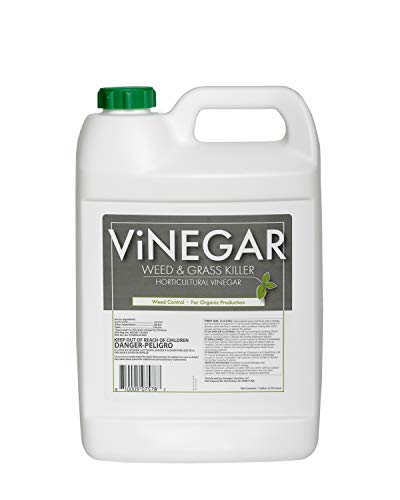
Vinegar Weed & Grass Killer is a quick-acting, non-selective contact herbicide. Use on crabgrass, clover, dandelions, and ground ivy.

✅ All Natural and Safe Product- Safe for your family, safe for your pets.
Herbicide Persistence: Key Factors & Soil‑Readiness Testing Methods
While the reseeding interval hinges on herbicide residual activity, understanding persistence demands a closer look at soil texture, organic matter, pH, microbial biomass, and temperature—each modulating binding, degradation, and leaching rates. Sand‑dominant soils accelerate dissipation, whereas high clay and organic matter increase adsorption, elevating residue carryover risk. pH below 6.0 hastens triazine hydrolysis; above 7.0 retards breakdown. Microbial biomass, driven by moisture and temperature, governs primary degradation; drought spikes persistence, wet mild winters lower it. Temperature amplifies chemical and microbial decay, while rainfall leaches soluble compounds. For readiness, deploy bioassays on sensitive seedlings, monitor germination anomalies, and sample compost or manure for picloram/aminopyralid activity. Integrate these metrics to calibrate persistence based on replanting timing with data‑driven precision. The half‑life of glyphosate can extend up to 30 days in cool, low‑microbe soils. Blade angle consistency is crucial for maintaining uniform cutting performance after sharpening. Different herbicide classes vary in systemic speed, with contact herbicides often requiring several days to fully eradicate foliage.