
You’ll cut effort by up to 30 % on slopes with a self‑propelled mower, because its rear‑wheel drive keeps traction while the engine powers the wheels. Push mowers stay lighter, cheaper, and turn tighter, making them ideal for flat, small yards. Fuel‑wise, self‑propelled gas models burn 10‑25 % more, while push gas mowers use less fuel and electric push units often outpace their self‑propelled counterparts. Costs start around $130 for push versus $330 for self‑propelled, and maintenance is simpler on push models. Keep reading to determine which lawn types and features suit each option.
Self‑Propelled vs. Push: Quick Decision Guide
When you weigh a self‑propelled mower against a push model, the key is matching your lawn’s size, terrain, and budget to each machine’s strengths. For large, uneven yards, a self‑propelled unit just higher upfront cost but delivers superior cutting quality on slopes, thanks to rear‑wheel drive stability. Its engine power, however, reduces fuel efficiency and raises annual maintenance, impacting long‑term cost. Push mowers stay affordable, require minimal upkeep, and concentrate 100 % of engine power on the blade, preserving cutting quality on flat lawns. Their lighter weight enhances operator comfort during transport and tight‑space maneuvering, though you’ll expend more physical effort. Choose based on terrain, budget, and the balance between comfort and maintenance. Selecting the right mower also depends on the cutting width that matches your lawn’s size for optimal efficiency. Self‑propelled mowers also provide reduced physical strain on hilly or uneven terrain. The hydraulic system ensures consistent cutting pressure, improving performance on thick grass.

Efficient & Versatile Mowing Solution This 21-inch self-propelled lawn mower features a durable 3-in-1 steel deck with mulching, side discharge, and rear bagging options. The wide cutting path maximizes efficiency, while the no-choke, no-primer design ensures hassle-free starting—no manual adjustments needed.

SCISSOR-LIKE CUT: No ripping or tearing of grass blades for a better and healthier lawn

Battery-Powered Lawn Mower - Conquer large yards effortlessly with the 60V brushless motor and two 4.0Ah battery—delivering gas-like power for up to 3/4 acre per charge (performance varies by terrain/technique).
Physical Effort: Self‑Propelled vs. Push
If you prioritize minimizing strain, a self‑propelled mower cuts effort dramatically because its drive system powers the wheels, letting you guide rather than push the mass. Operator ergonomics improve as the mower’s rear‑wheel drive maintains traction on inclines, reducing the force you must apply on hills. Push models demand continuous manual force, causing fatigue on uneven or sloped terrain and limiting speed as you tire. Self‑propelled units handle bumpy ground with consistent pace, while push mowers excel only on flat, short lawns where effort stays manageable. Heavy self‑propelled frames are offset by the drive, so you move the mass instead of bearing it, whereas push mowers transfer the full weight to your body, affecting endurance and terrain adaptability. Zero‑turn mowers offer superior maneuverability thanks to their independently pivoting wheels, allowing tighter turning radii in complex landscapes. For larger properties, a zero‑turn design can significantly reduce mowing time due to its ability to cut wider swaths and execute rapid turns.
Fuel Use & Power Output: Self‑Propelled vs. Push
What’s the real cost difference between self‑propelled and push mowers? You’ll find self‑propelled gas units consume 10‑25 % more fuel, their larger engines (140‑344 cc) fuel propulsion. Push gas mowers, typically 125‑170 cc, waste less fuel because the engine only spins the blade. Battery‑powered push mowers often out‑run self‑propelled equivalents, drawing 0.3‑1.5 kWh per charge versus 0.7‑1.2 kWh per hour for corded models. Electrics eliminate direct emissions, cutting the emissions impact and shrinking the environmental footprint, though battery production adds its own footprint. Reel push mowers use zero fuel and emit nothing, achieving the lowest environmental impact. Disengaging drive on a self‑propelled mower can save power on flat terrain, but overall push models remain more fuel‑efficient and environmentally gentler. Noise levels are typically lower for electric push mowers, making them quieter for residential neighborhoods. Reel mowers provide a completely emission‑free mowing experience, great for eco‑conscious homeowners. Brushless motors increase efficiency by eliminating brushes, further reducing energy consumption.

GAS-LIKE POWER WITHOUT THE HASSLE – 50% more torque than 40V mowers & 3200 RPM blade speed (matches 150cc gas mowers)—zero fumes, noise, or maintenance!**
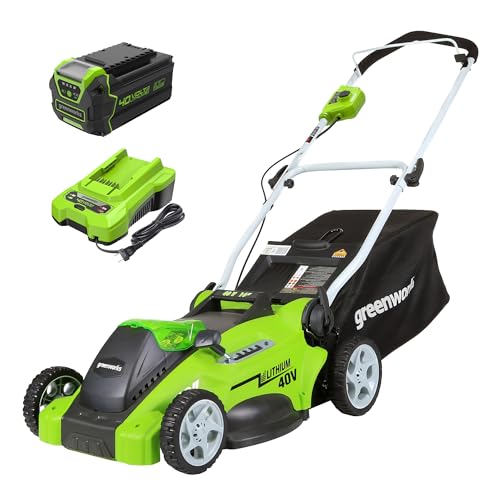
[16" LAWN MOWER] - This 40V lawn mower cuts up to 1/3 acre with fully charged 4.0Ah battery (varies based on grass condition and operator technique)
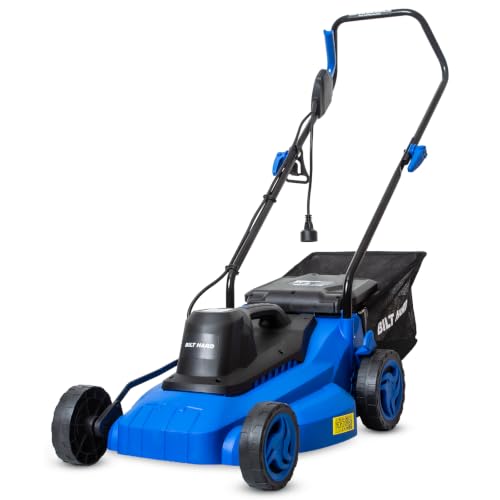
POWERFUL 11A MOTOR & 3300 RPM PERFORMANCE: Experience consistent, high-torque cutting power with our 11A motor reaching 3300r/min. Designed for efficient lawn maintenance, it delivers a clean, professional cut for small to medium yards without the hassle, fumes, or maintenance of gas-powered equipment.
Weight, Maneuverability & Storage: Self‑Propelled vs. Push
Ever wondered how weight and maneuverability shape your mower choice? Self‑propelled units range from 45‑160 lb, with gas models clustering around 66‑100 lb, while push mowers sit at 20‑65 lb. The extra mass of a self‑propelled mower adds stability on slopes but hampers tight‑turn agility; you must disengage the drive before traversing corners. Push mowers turn effortlessly, back up quickly, and excel in small yards with curbs. Storage space also differs: push models fold compactly, slipping into garages or sheds with minimal clearance, whereas self‑propelled machines occupy bulkier footprints due to gearboxes and drive shafts. Both types generate comparable noise levels, but the heavier self‑propelled may feel more cumbersome when moving from storage to lawn. Choose based on how much weight you can lift, how often you’ll steer around obstacles, and the space you have for storage. Always wear protective gear and inspect the mower before each use to prevent accidents. Proper blade height adjustment improves cut quality and reduces strain on the engine.

【Universal Fit】The Porch Shield electric lawn mower cover measures 25" (L) x 19" (W) x 41" (H) and is compatible with most cordless lawn mower brands, including Ego, Greenworks, Litheli, and Lawn Master.

The size of the outdoor lawn mower cover is 25 "L × 19" W × 40 "H, suitable for 20/21 inch foldable electric lawn mowers and self-propelled lawn mowers.

[EFFORTLESS MOWING FOR SMALL TO MID-SIZED YARDS] Ditch the heavy gas engines and tangled cords. Powered by a robust 5.0Ah lithium-ion battery, this cordless lawn mower effortlessly tackles lawns up to 2,800 sq. ft. on a single charge. Its 14 inch cutting deck is specifically designed for quick, maneuverable yard maintenance, making weekend lawn care a breeze rather than a chore.
Cost, Maintenance & Longevity: Self‑Propelled vs. Push
Weight and maneuverability set the stage, but the real decision hinges on cost, maintenance, and longevity. Self‑propelled units start at $330 and can exceed $2,200, while push models range from $130 to $800, with manual reels as low as $60. The higher purchase price reflects powerful engines, stronger frames, and drive systems that boost cutting area coverage but increase fuel or electricity use by 10‑25 %. Maintenance on self‑propelled mowers demands regular belt, cable, and transmission care, raising repair bills and noise considerations. Push mowers, with fewer components, incur lower service costs and fewer noise considerations, yet large‑area wear may shorten replacement cycles. Both types last 8‑10 years if serviced, but the simpler push design generally offers more reliable, cost‑effective longevity. Sharpening mower blades once a season helps maintain cutting performance and reduces strain on the mower. A sharp blade creates a clean cut that promotes healthy grass growth.

[80V 21” SELF-PROPELLED LAWN MOWER] - Get more done, faster, with Greenworks electric lawn mowers. This 80V lawn mower cuts up to 1/2 acre with a fully charged 4.0Ah battery (varies based on grass condition and operator technique)
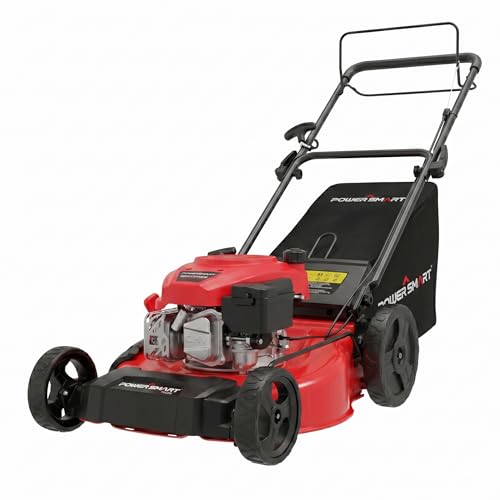
POWERED BY A RELIABLE OHV ENGINE: Equipped with a powerful 170cc OHV engine, known for its smooth start-up, consistent performance, and long-term durability—ideal for tough mowing jobs.

Delivers up to 6.0 ft-lbs of cutting torque for performance that exceeds gas powered lawn mowers
Best Lawn Types for Each Mower
When you match lawn size and terrain to the mower’s drive system, you can maximize efficiency and cut quality. Small flat lawns (0.25‑0.5 acre) favor walk‑behind push mowers; their lightweight frames and front‑wheel drive self‑propelled options meet minimal lawn preparation requirements and allow easy use of basic accessories like mulching plugs. Medium lawns (0.5‑1 acre) benefit from self‑propelled models with 28‑42‑inch decks; battery‑powered units such as Toro 60V Max Super Recycler or Ego provide consistent torque, support height‑adjustment accessories, and handle varied grass heights. Large lawns (up to 1 acre) require wider decks and stronger drive systems; rear‑wheel‑drive self‑propelled mowers deliver traction on slopes, while gas versions handle thicker grass. For hilly terrain, rear‑wheel‑drive self‑propelled units offer superior stability, whereas push mowers struggle with the necessary lawn preparation requirements and accessory compatibility. Selecting the right mower also depends on engine power to ensure it can handle dense or tall grass without stalling.
Must‑Have Features & Add‑Ons for Self‑Propelled & Push Mowers
If you want a mower that adapts to terrain and workload, focus on propulsion, deck, speed‑control, and safety features. Choose a drive system that matches your lawn: rear‑wheel drive for slopes, front‑wheel for flat yards, or all‑wheel for the most traction. Opt for a deck size that balances coverage and maneuverability; larger decks cut faster but may struggle around tight obstacles. Look for a shallow deck with co‑centric blades to extend runtime and improve mulch quality. Variable speed controls let you slow for corners and accelerate on straight paths, while hydrostatic drives deliver seamless adjustments. Safety add‑ons such as a bail lever, blade brake, and locking caster pins protect you and simplify operation. Finally, prioritize noise reduction technologies—insulated engines and mufflers—to keep the mower quiet for neighbors. Consider the cutting width when comparing stand‑on and zero‑turn mowers to ensure optimal efficiency for your lawn size. Toro’s advanced mulching technology often delivers finer clippings that decompose faster, enhancing soil health.

AERODECK TECHNOLOGY: Vented design boosts air volume in the cutting deck to prevent clogs and clumping, enhance cut quality, and optimize efficiency for less repetitive mowing. This tech also maximizes bag collection.

EXCEEDS POWER OF GAS - This EGO self-propelled lawn mower delivers up to 11.1 ft-lbs of cutting torque and blade speeds up to 3,350 RPM for power and performance that exceeds gas-powered mowers

Peak Power technology combines the power of two EGO 56V ARC Lithium batteries (available separately) to deliver up to 13.2 foot-pounds of cutting torque for performance that exceeds 200cc gas-powered mowers without the noise, mess, or fumes