
When the blades engage, deck resistance spikes, forcing the engine to work harder; any restriction in airflow, fuel, or spark—like a dirty air filter, clogged fuel filter, weak ignition coil, or faulty safety switch—will cause a noticeable power drop. A carburetor solenoid that sticks or a blocked vent can also starve the engine under load, while excessive spindle bearing friction further saps torque. Adjusting the cutting height and clearing these blockages restores performance, and the next sections show exactly how.
Why a Lawn Mower Engine Loses Power When the Blades Engage
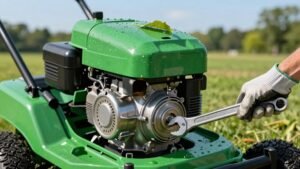
When the mower’s blades engage, the engine suddenly faces a load that can expose any weakness in its air, fuel, ignition, or safety systems. You’ll notice a rapid bog down if the air filter is dirty; the restricted airflow creates a rich mixture that stalls the engine under load. A clogged fuel filter or sticking carburetor solenoid similarly starves the engine when the rotating component wear increases demand. Faulty safety switches may ground the spark plug, cutting power the moment the clutch engages. Insufficient engine cooling amplifies these issues, as heat buildup weakens ignition and reduces torque. Clean or replace the air and fuel filters, verify switch continuity, and guarantee proper cooling to maintain power when the blades spin. A Weak ignition coil can also cause a loss of power under load. A faulty spark plug can prevent ignition when the engine is under the added load of the blades. Stale fuel can cause poor combustion and make the engine sputter when the blades are engaged. A clogged air filter can create a rich fuel mixture that stalls the engine under load.

Professional Element: Replace for Honda air filter OEM # 17211-Z8B-901, fit Honda GCV160A0 GCV160LA0 GCV160LA1 GC190LA GCV190LA GCV200LA engine lawn mower air filter.

Compatible with B-S: Model # 491588S 491588 4915885 399959 push lawn mower air filter, part # 4101 5043 5043A 5043D 5043H 5043K. Fit 3.5-6.5 hp quantum engines, 625e 675ex 725ex 625-675 series element
How to Adjust Cutting Height and Reduce Deck Resistance
If you set the deck height correctly, you’ll keep the mower running smoothly and minimize resistance. Adjust the lift lever or dial to the desired slot, then verify that all four wheels share the same height using a level. Measure the distance from ground to the blade‑protection covering with the engine off; typical ranges are 1–4 inches for riding mowers and 1.5–4 inches for gas models. Aim for 2–2.5 inches in cool weather, 3–3.5 inches in hot months to achieve even mowing patterns. Tighten wheel levers and lock the crossbar button after each tweak. Consistent height reduces blade drag, prevents turf lay‑over, and maintains ideal cut depth without overloading the engine. Never remove more than 1/3 of the total grass blade length at a time. Always consult the owner’s manual to locate the height‑adjustment lever and count the preset notch positions before making changes.
How Fuel‑System Issues Drain a Lawn Mower Engine Power Under Load
A clogged fuel filter, restricted line, faulty carburetor, blocked vent, or stale fuel can each starve the engine of the fuel it needs when the blades engage, causing a noticeable drop in power. You should inspect the filter first; a blockage limits flow, especially under load, and replacement restores pressure. Next, examine the fuel line for kinks or debris that throttle delivery when the engine demands more fuel for blade rotation. A malfunctioning carburetor—sticking solenoid valve or dirty jets—creates an improper fuel‑air mixture, leading to cut‑outs. Check the tank vent; a sealed cap creates vacuum, preventing fuel ingress. Finally, replace old fuel and verify that fuel injection failure or throttle cable problems aren’t compounding the issue. Also, inspect the spindle bearings for excessive resistance that can further reduce engine power under load. Properly cleaning the carburetor ensures all passages are clear and the idle and mixture screws can be accurately adjusted. For a thorough clean, you can spray carburetor cleaner into the fuel line and vent while the mower is idle.

691035 Fuel filter assembly


(2/Pack)298090 394358 Lawn Mower 1/4" Inline Gas Fuel Filter
How Air‑Filter and Deck‑Resistance Starve a Lawn Mower Engine
Even a modestly dirty air filter can cripple your mower’s power once the blades engage, because the engine suddenly needs more airflow to overcome the added deck resistance. The filter restriction cuts airflow, preventing the engine from maintaining the perfect fuel‑air mixture; combustion becomes incomplete, horsepower drops, and the engine may surge or stall under load. Deck resistance amplifies this effect, as the engine acts like a compressor, and reduced compressor speed further starves the combustion chamber. Simultaneously, a fouled spark plug condition worsens misfires, increasing fuel consumption and heat. Clean or replace the filter every 100 hours, vacuum debris without compressing it, and inspect spark plugs regularly to preserve performance. Air filter blockage also leads to increased fuel consumption. Use a dry brush to gently remove surface dust before applying any liquid cleaning method. Regularly checking the oil level helps ensure the engine stays lubricated and runs smoothly. Keeping the blades sharp improves cutting efficiency and reduces the load on the engine.

Toro Recycler 22 Air Filter 20332 20333 20334 20339 20340

Generic Model Air Filter: Compatible with bs 4915885 399959 lawn mower, bs-4101 5043 5043a 5043d 5043h 5043k. Fit 3.5-6.75 hp quantum small engine, 625 675 725 625-675e/ex series element

L x W x H = 5.17 x 4.37 x 0.81 inches, blue,5pcs without pre-filter.
Step‑by‑Step Diagnostic Checklist for Restoring a Weak Lawn Mower Engine
Start by establishing a baseline: run the mower with the blades disengaged, note idle RPM, throttle response, and any abnormal noises. Then, re‑engage the blades and record RPM drop, stalling point, and fuel‑solenoid behavior. Next, inspect the fuel filter and replace if clogged; purge the carburetor solenoid and verify free plunger movement. Test safety switches by manually holding the plunger and confirming spark continuity. Examine spindle bearings for wear; replace worn bearings and apply fresh spindle lubrication to reduce friction. Remove debris from the sheave, check belt tension, and guarantee no slippage. Finally, compare engine performance under load versus idle; if power loss persists, focus on engine tuning and fuel‑air mixture adjustment. Ensure the seat switch is properly connected and functional to prevent false safety shutdowns. Properly scarifying the lawn before mowing can prevent excess resistance and improve blade efficiency. Regular aeration can also improve soil drainage and promote healthier turf.